
1,700 youth in refugee-hosting counties enrolled in digital skills programme
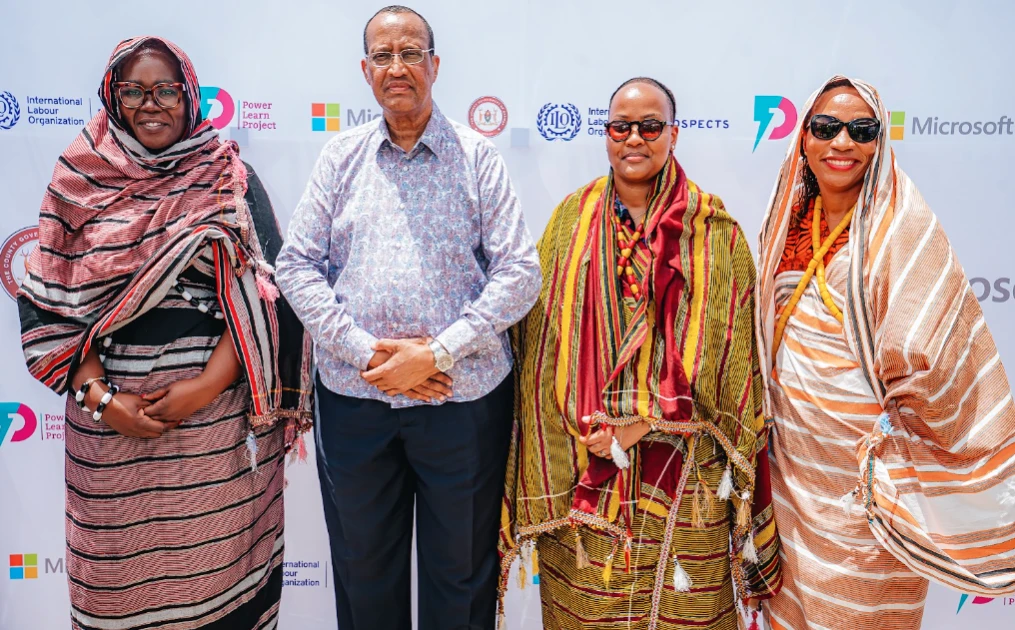
From L-R: Caroline Khamati Mugalia, Garissa Governor Nathif Jama Adam, Mumbi Ndung’u, Co-Founder and Executive Director, Power Learn Project Africa and ILO Kenya Chief Technical Advisor Caroline Njuki. PHOTO | COURTESY

Audio By Vocalize
The 25-week programme, being implemented by Power Learn Project (PLP) in partnership with the International Labour Organization (ILO), Microsoft and the Garissa County Government, is targeting young people in the two refugee-hosting counties.
The programme is supported by the Government of the Netherlands through the PROSPECTS Partnership and combines digital and workplace skills training with professional certification and career support.
Speaking during the rollout at the Garissa County Headquarters, Governor Nathif Jama Adam said the programme would help young people acquire skills needed to participate in the changing labour market.
“I encourage all the young people who have successfully enrolled in the Power Learn Project to work hard and do their best so that they can become part of the digital economy. As a county, we recognise that the future of work is increasingly digital,” he said.
“Our young people must have access to the skills and opportunities needed to participate in that future. This programme brings practical digital learning to our communities while creating pathways that can translate skills into employment, entrepreneurship and sustainable livelihoods.”
The programme has already enrolled more than 700 learners from over 1,000 applications received in Garissa, with women accounting for 35 per cent of the applicants.
Sixteen of the 37 digital hubs partnered under the programme across Garissa and Turkana have also been onboarded and are already delivering training.
PLP Executive Director and Co-Founder Mumbi Ndung’u said the programme was designed to bridge the gap between access to digital skills and actual economic opportunities.
“Talent is universal; access to opportunity is not. Our work with the ILO and Microsoft in Garissa is about correcting that imbalance by building the skills, infrastructure and pathways that allow young people, regardless of geography or circumstance, to compete, create and earn in the global digital economy,” said Ndung’u.
Learners will progress through foundational and advanced courses, with specialised training in cloud computing, artificial intelligence and data analytics.
Microsoft is providing up to 1,000 certification vouchers for graduates of the programme, covering qualifications such as Azure Fundamentals, Azure AI Fundamentals, Power BI Data Analyst and Microsoft 365 Fundamentals.
The Garissa programme builds on a similar rollout launched in Kakuma, Turkana County, in June 2026, as partners seek to expand digital skills and employment opportunities among young people in refugee-hosting communities.
ILO Chief Technical Advisor Caroline Njuki said digital transformation was rapidly changing labour markets, making access to relevant skills increasingly important for refugee-hosting communities.
“Digital transformation is reshaping labour markets faster than policy can keep pace. For refugee-hosting communities, the risk isn’t being left behind; it’s being excluded altogether from the opportunities now defining economic participation,” she said.
Njuki said investing in internationally recognised digital skills would help connect the communities to emerging employment opportunities.
The programme is expected to link learners to employers, entrepreneurship opportunities and remote work as they complete their training.
Join the Discussion
Share your perspective with the Citizen Digital community.
No comments yet
This discussion is waiting for your voice. Be the first to share your thoughts!