

Silent battle between fish and nyama choma wetting appetites in Kajiado
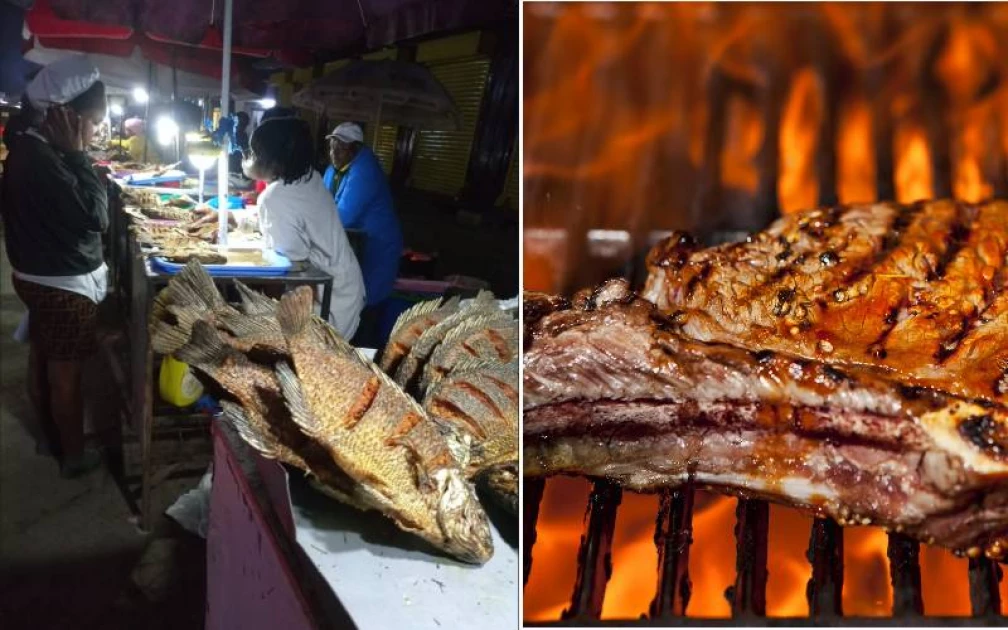
Fish and Nyama choma are both competing for attention in Kajiado towns, with the locals avoiding fish due to cultural beliefs. [Photo/Courtesy]

Audio By Vocalize
Whenever the name Kajiado is mentioned, most people instantly associate it with the delicious taste of nyama choma.
This culinary identity has become so entrenched in the town that any food and beverage investor have to include it in their menu, and have that small nyama choma section sitting strategically at the entrance to entice customers.
Although Kajiado has become home to people from every community, the love for nyama choma remains especially strong, with its popularity transcending age groups.
Despite repeated warnings from health officials about the health risks of excessive red meat consumption, including links to certain diseases, the message has largely fallen on deaf ears.
Nutritionists have long advocated for increased fish consumption, citing its health benefits and role in disease prevention.
However, within the Maasai community, who make up a significant portion of Kajiado's population, fish is not their cup of tea; it’s almost a taboo to eat fish.
Many Maasais believe that fish, with its scale-covered skin, resembling that of a snake, and thus is unfit for consumption; and cultural traditions prohibit them from eating any animal that lives in water.
Peter Setero, a Kitengela resident and restaurant owner, firmly adheres to this cultural belief.
"It goes against our traditions to eat an animal from the water, especially one that moves like a snake," he said.
"To us Maasai, fish is like a snake. We have cows and goats, and that's what we eat."
Similarly, many Maasai traders, often sellers of traditional jewelry, sandals, and clothing, say they leave hotels immediately if they detect the smell of fish.
Kimalel Saitabau, one such trader, commented, "To us, fish is a snake because of its skin. Sometimes you see fish at the market with eyes wide open — how can you eat something that's dead but still staring at you?"
Parmuat Meli, another trader, echoed the same sentiment, adding that their community prefers to consume animals they raise and slaughter themselves.
Despite these cultural reservations, the fish trade continues to thrive in Kitengela, driven largely by customers from other communities.
Miriam Atembo, a veteran fish vendor who has run her business in Kitengela for over 15 years, says she has never had a Maasai customer.
"They don’t consider fish as food for human consumption," she said.
In 2015, Miriam attempted to expand her business into Kajiado town but had to shut down the new branch within a few months due to lack of customers — the majority of the town’s residents were Maasai, with only a small number from other communities willing to buy fish.
She returned to Kitengela, where her customer base and business continued to grow.
Over the years, Miriam has built a strong brand known for supplying fresh fish, and her consistency has paid off. With the increasing demand, fish vending has become a popular entrepreneurial venture for many young people in Kitengela.
Despite the cultural divide, the parallel popularity of both nyama choma and fish in the area shows how Kitengela is gradually becoming a melting pot of culinary diversity — even as deep-rooted traditions continue to influence what ends up on the plate.
Leave a Comment