
Mogoiwet: The 'sacred tree' rooted in kipsigis leadership and legacy
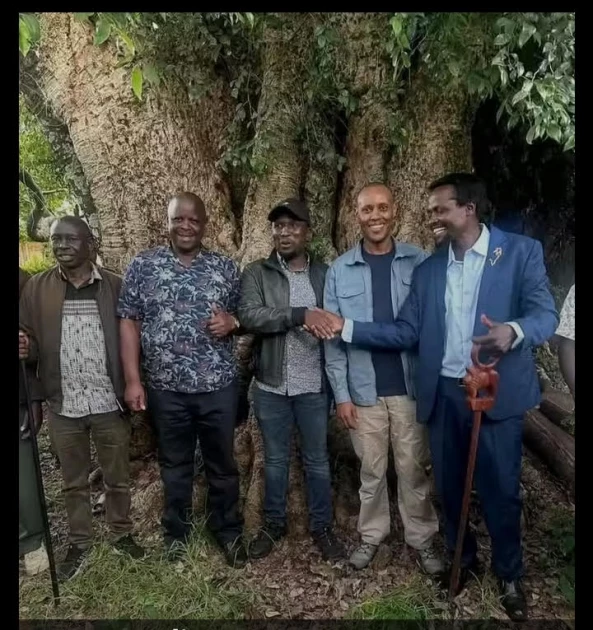
Residents gather the sacred tree.

Audio By Vocalize
In the quiet plains of Angata Barikoi in Transmara South Sub County, Narok County, stands a towering tree that has existed for generations.
Known as Mogoiwet among the Kipsigis people, and identified in English as the Sycamore tree, it is no ordinary tree—it is a revered symbol of unity, power, and prophecy.
Believed to be over 300 years old and located on the compound of Angata Barikoi Primary Shool, the Mogoiwet is more than just a natural wonder. Its massive trunk and whispering leaves carry the weight of tradition, woven deeply into the cultural fabric of the Kipsigis community.
This sacred tree holds a special place in the hearts of locals, especially when it comes to matters of leadership. For centuries, elders have gathered beneath its shade to select and bless community leaders.
The ceremony, conducted with solemn respect, is not merely political—it is spiritual. Leaders chosen here are seen as divinely sanctioned, their blessings rooted in the very soil that nourished their ancestors.
“It is not just a tree—it is where we meet the spirits of our past. When we sit beneath it, we are not alone. Mugeni is there. Our grandfathers are there,” says Joseph Mutai.
The spiritual power of the tree is traced back to a Kalenjin prophet named Mugeni Barng'ettuny Arap Monde. He died in 1918 and was buried near the Sotik Police Station. Mugeni was a nephew to Oloitorian Kipchomber Arap Koilegen and remains a towering historical figure among the Kipsigis.
Kiprotich Sang echoes this ancestral wisdom, noting that the process of blessing a leader under the tree carries deep cultural weight.
“This is not just tradition—it’s a covenant. We believe the spirit of Mugeni still lives here, and when we perform blessings, we are channeling that spiritual authority,” says Sang.
Even in the face of modern challenges, the tree continues to serve as a place of peace and collective identity. Cultural advocate John Rugut says the Mogoiwet plays a vital role in preserving Kipsigis values.
“We find unity here, even in times of conflict. When people gather beneath this tree, they remember who they are. It anchors us," he explains.
For the youth of Angata Barikoi, the tree is both a mystery and a legacy. Joel Kirui, a young community organizer, says that while times are changing, the importance of the Mogoiwet has not faded.
“As a younger generation, we see the tree as a connection to our identity.It reminds us that true leadership is blessed, not bought," he says
Today, as modernization sweeps through rural Kenya, this ancient tree still commands reverence. But there is growing concern about its future. Locals have begun discussions on how to preserve it—some even suggesting it be gazetted as a cultural monument.
“Our children must grow up knowing this tree. It is part of our history, our values, and our prayers. If we lose it, we lose a part of ourselves," says Mary Ngeno,a local teacher.
For the Kipsigis of Angata Barikoi, the Mogoiwet is more than history. It is a living bridge between yesterday and tomorrow—a symbol that as long as its roots hold firm, so too will the values and spirit of the community.
Join the Discussion
Share your perspective with the Citizen Digital community.
No comments yet
This discussion is waiting for your voice. Be the first to share your thoughts!