

Community where no celebration is complete without henna body art

Audio By Vocalize
For women, part of their regimen includes makeup, while for others, they make a statement using their hairstyle.
For others, heena is used for different purposes, including to colour hair naturally as an alternative to using chemicals.
Then there are others who opt for body art using heena paste.
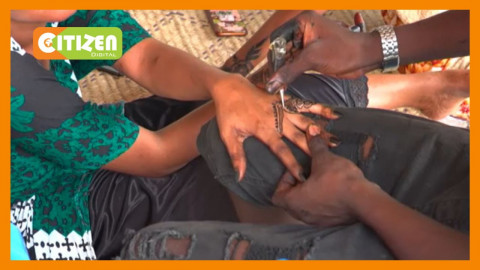
Wananchi Reporting caught up with Singa Kassim, popularly known as Odor, a famous piko and henna artist in Diani to gain a better understanding behind the trend of applying heena on the body.
When we arrive at Singo’s work station, we find customers streaming in and out for different services, from having piko and henna flowers painted on their hands and feet either for celebrations, such as weddings, or just for day to day beauty.
It's an art she learned just three years ago, but one that is doing well. The origin of henna painting is said to be from the Arabs.
“We saw the Arabs drawing using henna, and that's when we started drawing using it, but the henna is also slowly being replaced by a more digital way called piko, which we also didn't know how to do but we would imitate from the Arabs,” Singa said.
This attractive style is preferred by the women of the Digo community to adorn themselves and beautify themselves as well as to please their husbands.
Due to the beauty of the different flowers that are drawn, other communities have also begun to take up the practice.
The henna flowers can be drawn in different designs and on different parts of the body, but the prices differ with the preferred part of the body as well as the design.
Henna painting is mostly done on the hands and feet and sometimes on the chest like in the case of a wedding.
“There are those who like to paint on the thigh, but the price for henna painting on exposed parts of the body like the hands differs from that on unexposed parts,” Singa says.
It is believed that a ceremony hasn’t taken place in many Coastal events if the ladies and women attending the ceremony have not decorated their bodies with henna or piko.
Leave a Comment