

Before apartments came, most Nairobians lived in Sakati
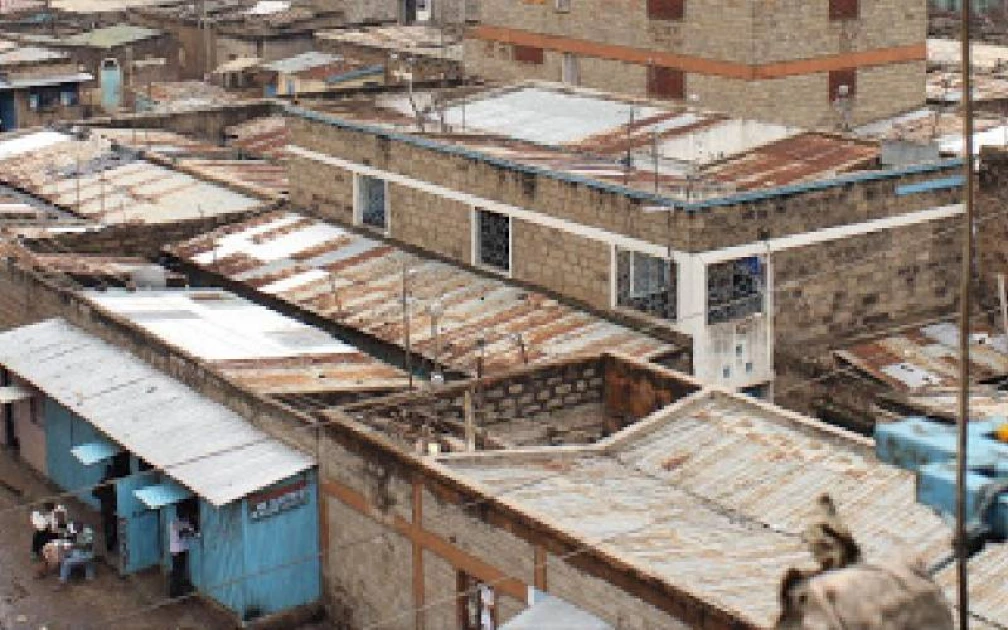
Most SAKATIs were built for bachelors as wives were left in shags. [Photo/Courtesy]

Audio By Vocalize
The vagaries of time and harsh weather over the years have left most of them looking old and beaten from outside – the outer protruding bricks have lost their original colour.
Sakati as they were popularly known – were the buildings to die for in Nairobi’s Eastlands area. Those who could not afford the rent – lived in mud houses, with iron sheet or ‘madebe’ roofs.
Some of these mud houses still stand today -- in areas around Jogoo Road, Majengo, and counting days. Yes, Nairobi’s Eastlands area had a lot of mud houses back in the day.
Sakati (Kiswahili word for ‘The space’) -- ruled the real estate scene in Nairobi’s Eastland area, from post-independence up until late 1990s – with the only competition coming from ‘landi’ (corrupted from the word landhies associated with Indians), Kambi (camps) and Majengo (mud houses adopting Kiswahili style) and occupied by inhabitants from the coast.
The architecture of Sakati was borrowed from India, many of them having come with the railway line and themselves being engineers and architects. The buildings boasted communal washrooms on one side, and a tap for washing utensils at the far end.
Most were built for bachelors (as wives were left in shags) and new jobbers starting out as government clerks.
“All the doors often faced each other in some way. It had a central open space in the middle, well-cemented, and would serve as a playground for children or a walkway for tenants. It was here also that cloth-lines were erected,” said Jeremiah Okombo.
“It was not easy crossing the space in the middle especially whenever wet clothes occupied the shared clothesline. One had to bend hard to avoid soiling clothes, or getting wet. A small thing could lead to a fight,” says Okombo who lived in a Sakati in Kariobangi North in mid -1980s.
The houses lined on the edge of the enclosure – with a shallow drainage tunnel running in the middle or at the far end – and connecting to the common washing area with a tap.
The drainage and the washing area was often the subject of fights between women living in the same Sakati. The fights would arise as a result of some women failing to clear pieces of ugali from the sink – and which would block the drainage.
“Everybody knew what the other was cooking – and you could see inside your neighbour’s house in one rushed look,” says Okombo.
The bathrooms were shared and so were secrets.
“Many landlords copied the Sakati style of houses because there were no architects, and so masons simply copied designs from others,” says Researcher and Historian Bethuel Oduo.
It was not until much later that Madaraka ushered in a new era of apartments-like buildings which mostly targeted Nairobi’s middle class.
Overtime – Sakatis have lost the fight to modern apartments – with many former landlords forced to sell their houses to moneyed investors to put up modern apartments.
Although everybody seems to be building upwards – a few of them still stand today – but it’s only a matter of time before they become part of Nairobi's rich history as population continues to increase.
Just recently – Nairobi governor Johnson Sakaja said that skyscraper buildings will be constructed in Nairobi City if a proposed zoning framework is adopted by the Nairobi County Assembly.
“25 floors were area specific (around airbase) and not a blanket restriction. We have proposed an area specific zoning framework that goes up to 75 floors in some areas. It is before the assembly,” Sakaja posted on X in March.
Nairobi’s population has increased overtime, with the latest population said to be slightly over 5 million, according to information on macro-trends. The data also shows that in 1973, some 10 years after independence, Nairobi, Kenya Metro Area Population was still below 1 million, only hitting a million in 1984.
Leave a Comment