
Why world-class hospitality training is key to growing Kenya’s tourism, exporting talent globally
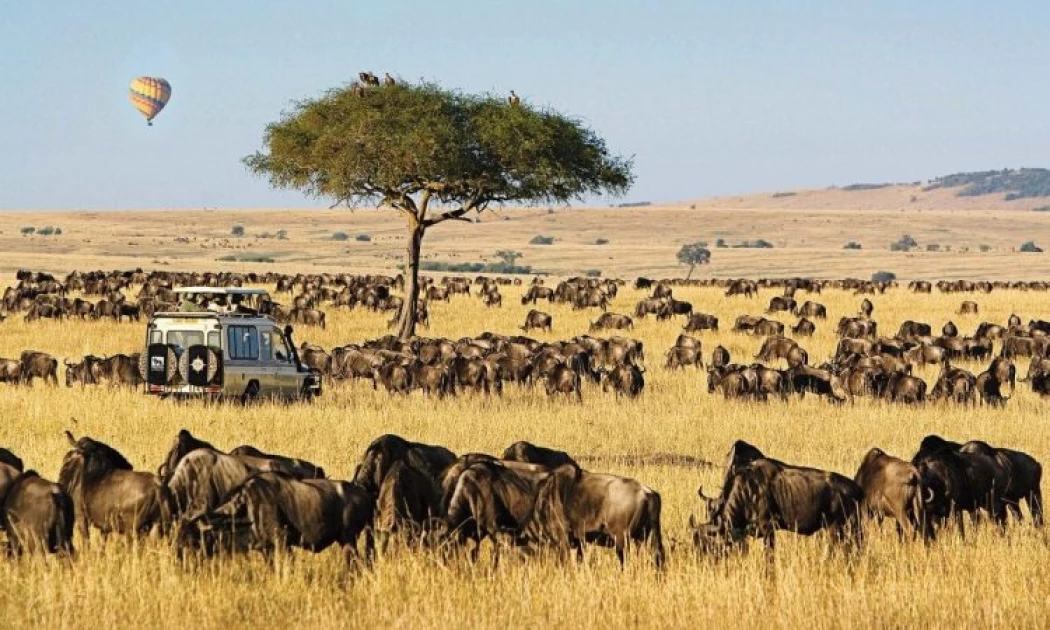
Wildebeests in the Maasai Mara National Reserve. PHOTO| COURTESY

Audio By Vocalize
For decades, Kenya’s tourism industry has depended largely on visitors from traditional markets such as the United Kingdom, the United States and Germany.
But global travel
patterns are changing. Today, Kenya is seeing more tourists from China, India,
the Gulf States, Australia, and West African countries such as Nigeria and
Ghana.
This shift brings new expectations. Travellers are seeking more than game drives and beautiful beach resorts; they are after immersive, meaningful experiences shaped by human interaction.
Some want impeccable
service and luxury, others seek cultural authenticity. But all are shaped by
how they are treated.
This is where Kenya’s real competitive edge lies. The hospitality industry rises or falls on the quality of human connection.
A
well-trained worker can turn a routine trip into a lasting memory. A poor
interaction can undo months of investment in infrastructure or branding.
The government’s goal of attracting five million
international arrivals and 10 million domestic tourists by 2028 may seem
ambitious, but it is achievable. Getting there is not just about more flights or
hotels. It is about preparing the people who run those hotels, staff those
airports, and serve those meals.
According to the United Nations World Tourism Organisation, Africa welcomed 74 million international tourists last year. Kenya received just over 2.3 million, about three per cent of the total.
That puts us behind
countries like Egypt, Morocco, and South Africa. To catch up, Kenya must do
more than promote itself. It must differentiate itself through the quality of
experience.
Institutions must respond to this challenge by offering practical, industry-relevant training. One example is Boma International Hospitality College (BIHC), which recently marked ten years since opening its doors.
While not the only one of its kind, BIHC reflects the broader shift
toward hospitality education that emphasises real-world skills over classroom
theory. Graduates from such programmes are increasingly finding work not just
in Kenya, but in hotels and cruise ships across the world.
This matters for more than just the tourism industry. At a
time when youth unemployment remains high, the chance to work in a global
industry with transferable skills is no small opportunity. A young Kenyan
trained in front office operations or culinary arts is not confined to Nairobi
or Mombasa; they are part of a global talent pool.
Meanwhile, domestic tourism is becoming a major force in its
own right. Over the past four years, local travel has more than doubled.
Nairobi alone now has over 285 accredited hotels. Nearly half of all hotel
bookings in Kenya come from Kenyans themselves. These travellers are not
second-tier customers; they, too, expect good service. And that expectation is
raising standards across the board.
Elsewhere on the continent, untapped destinations from
Western Kenya to rural South Africa are sitting on enormous potential. But
without trained professionals to tell their stories, curate their experiences,
and host their visitors, that potential remains just that: potential.
If Kenya is to strengthen its position on the continent and
beyond, it must focus not only on what visitors see, but how they feel. That
feeling is shaped by human interaction. And that interaction is shaped by
training, empathy, and professionalism.
Investing in people is not charity. It is a strategy. It is
the difference between a one-time tourist and a lifelong advocate. And for a
country like Kenya, where tourism touches everything from conservation to
community development, it is also an investment in shared prosperity.
When we equip our youth with skills, we’re not just opening doors; we are raising the floor. We’re saying that Kenya is ready to compete not just with its scenery, but with its service. And in the long run, that may be the more sustainable advantage.
The writer is the Chair of the Board, BIHC and CEO,
Kenya Association of Hotelkeepers & Caterers
Join the Discussion
Share your perspective with the Citizen Digital community.
No comments yet
This discussion is waiting for your voice. Be the first to share your thoughts!