

OPINION: Trusted local enterprises are the future of school feeding initiatives

Audio By Vocalize

Kenya’s ambition to provide nutritious, locally sourced meals to millions of learners through the National Home Grown School Meals Programme is bold and necessary. With close to three million children reached in 2025 and a longer-term goal of ten million by 2030, the scale of the promise is clear.
National targets, however, tell only part of the story. The more difficult
question is delivery, particularly in low-income urban settlements where the
need is acute, and systems are fragile.
Nairobi’s informal, low-income settlements are dominated by informal schools, which account for 70% of school-going children in the city and still remain beyond the reach of initiatives such as Nairobi City County’s Dishi na County program, which currently serves public schools.
Charitable and donor-funded interventions have attempted to fill this gap, but these are often short-term and focused on specific nutrition or education outcomes, rather than long-term delivery systems.
Mainstream models tend to default to
outsourcing: large caterers, centralised procurement and external logistics.
While on paper this appears efficient, in practice it can weaken local
ownership and detach feeding programmes from the communities they are meant to
serve.
Another approach is taking shape, quieter, less visible in policy
headlines, yet firmly rooted in local communities. In this model,
delivery is anchored in organised local enterprises accountable to the very
families whose children rely on the meals. Schools do not just purchase food;
they anchor local food economies.
The distinction matters. In informal settlements, markets operate as
much on reputation as on paperwork. A vegetable trader, miller, transporter or
cook survives because her neighbours trust her. When school feeding is
delivered by enterprises owned and operated within the settlement, programmes earn
something more durable than a contract: they earn trust.
Here, parents are not only recipients. They are also farmers, traders
and suppliers. If food quality drops, feedback is immediate. If delivery
falters, accountability is close at hand. Trust becomes the underlying
guarantee for food safety and quality long before formal inspection systems
intervene.
Across Kibra, Korogocho and Mukuru, agrifood traders and smallholder
farmers have begun forming legally registered Local Business Associations.
These associations help coordinate supply, improve post-harvest handling, and
collectively engage with schools. Instead of dozens of fragmented suppliers
competing informally, organised networks are able to meet agreed standards and
deliver with greater reliability.
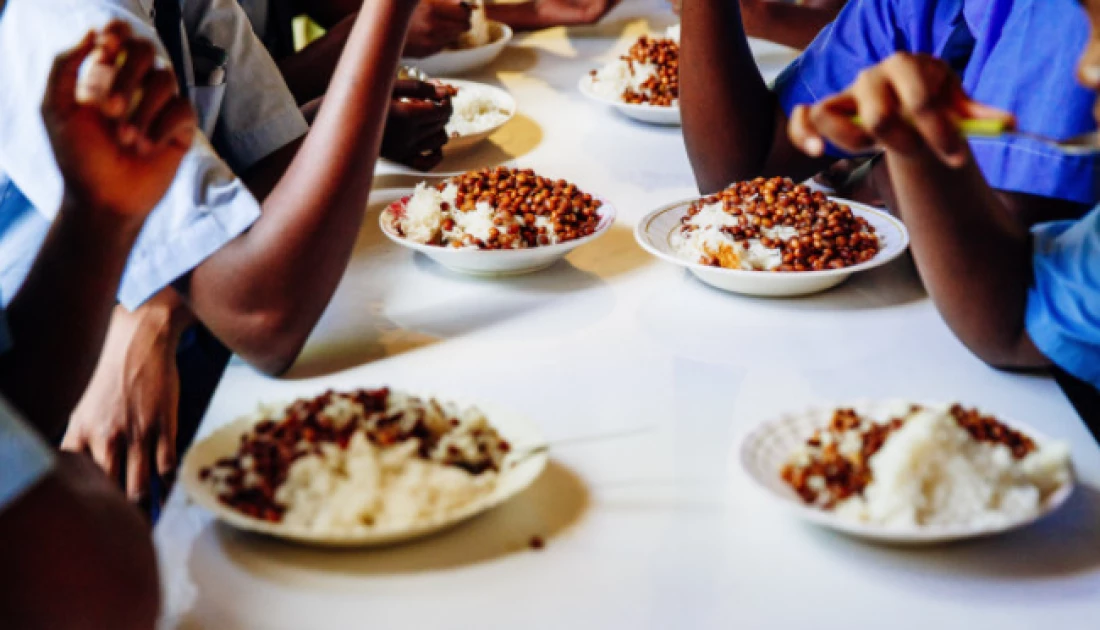
In practice, this coordination has changed how supply flows. In Mukuru kwa Reuben, agrifood traders, who previously operated in isolation, are now pooling resources under the banner of Mukuru Agribusiness Association to provide hot meals to informal schools in their vicinity. Through their recently established community kitchen, the association is introducing menus using diverse and nutritious foods sourced from local producers.
The initiative is
moving towards aligning school demand with farmer production cycles, while
incorporating basic handling standards to ensure quality and accountability.
For informal schools, this redirects their focus on education outcomes and
minimises children's exposure to highly processed, unhealthy snack meals.
This reflects a growing recognition in School Feeding Program policy
conversations: that strengthening farmer organisations and linking them with
urban micro and small enterprises is not peripheral to school feeding, but
central to making it work at scale.
When delivery is embedded in organised local enterprises, the benefits
extend beyond the meal itself. Money circulates locally. A school pays a
trader, who pays a miller, who sources from a farmer, and income returns to
households through rent, school fees and everyday purchases. Feeding budgets
begin to function as economic multipliers rather than isolated expenditures.
At a time when Kenya is grappling with youth unemployment, urban poverty
and food price volatility, it is worth asking whether the success of school
feeding should be measured only in cost per plate, or also in the resilience it
builds within our communities.
Of course, questions remain about standards and scale. Can
locally-rooted enterprises consistently meet nutrition and food safety
requirements?
The experience of Kenya’s small-holder farmers in horticulture export
supply chains suggests they can, particularly when supported by shared systems
where localised initiatives such as the community kitchens and supplier groups
operate under established regulatory guidelines for hygiene, nutrition and
operations. Training and quality assurance are structured; ownership and
relationships remain local.
While still in its infancy, the approach taken by Mukuru Agribusiness
Association is already growing business capacity and creating learning
opportunities for its members in food safety, procurement and basic enterprise
management which are skills that will serve them beyond the school gates.
None of these demands is sweeping reform. It requires thoughtful choices
about who is invited into delivery systems and how those systems are structured
within local government planning processes and programs, such as county
integrated development plans and through inclusive multi-stakeholder platforms
such as Nairobi City County’s Food Liaison Advisory Group (FLAG) committee.
Mapping local enterprises, strengthening their associations and embedding them
into county procurement processes are not radical shifts and, over time, they
may prove to be transformative.
School feeding will always be about children. But it is also about
systems: who supplies food, who earns income, who develops skills, and who is
trusted to deliver when shocks come. If Kenya’s school feeding ambitions are to
endure, expanding not only in reach but also in impact, the future may lie less
in distant suppliers and more in organised enterprises rooted in the
communities they serve. School feeding works best when the people who cook the
food are also the people who care most about its impact.
Rikki Agudah is an agricultural and sustainable agribusiness specialist and former Chair of the Society of Crop Agribusiness Advisors of Kenya. He works on inclusive food systems initiatives across Eastern and Southern Africa.
Leave a Comment