

OPINION: The Belt and Road Initiative a case of development that delivers
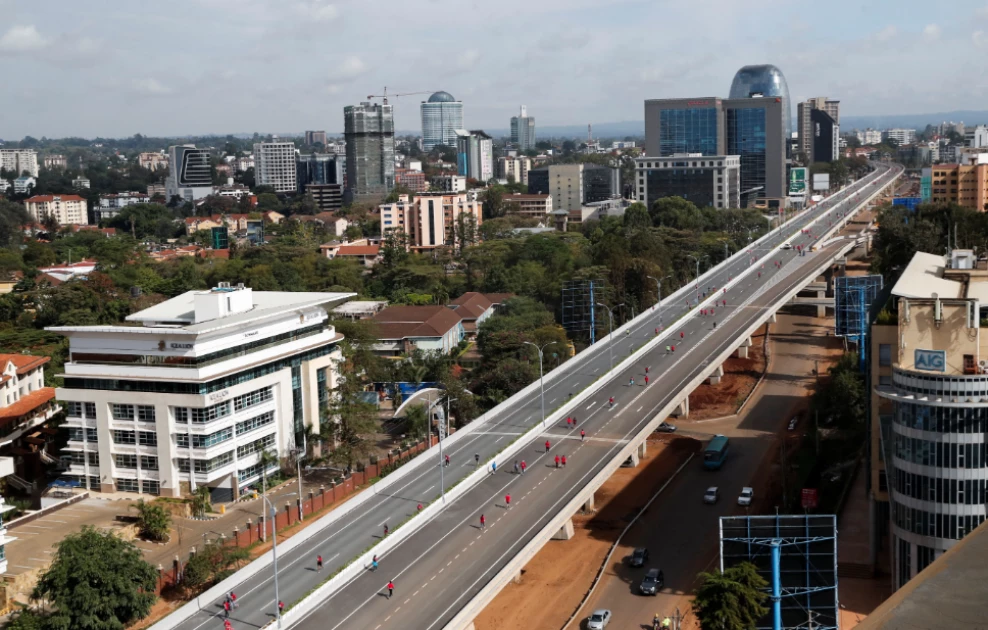
File image of the Nairobi Expressway. | REUTERS

Audio By Vocalize
Global development debates often revolve around lofty principles, yet millions of people continue to face everyday obstacles that limit opportunity: unreliable transport, high energy costs and weak access to regional and global markets.
The strength of the Belt and Road Initiative (BRI) lies in its refusal to treat development as an abstract concept. Instead, it focuses on delivery—turning cooperation into tangible economic capacity.
One of the clearest contributions of the Belt and Road is its recognition that infrastructure is not merely a supporting actor in development but a driver of transformation. Efficient logistics lower the cost of doing business, integrated transport networks expand trade, and reliable power supplies anchor industrial growth.
These are not theoretical benefits. For developing economies, especially in Africa, they shape whether local enterprises can compete or whether economies remain dependent on raw exports.
The initiative’s emphasis on connectivity also reflects a deeper understanding of how modern economies function. Growth today is increasingly regional. Supply chains span borders, markets overlap, and production depends on smooth coordination between neighbouring states.
By strengthening cross-border corridors and harmonising infrastructure standards, the Belt and Road supports regional integration in a way that fragmented national projects cannot achieve alone.
Another defining feature of the BRI is its long-term outlook. Development requires patience and planning beyond short political cycles.
Large infrastructure projects take years to mature, yet their impact can last generations. By prioritising long-horizon investments, the Belt and Road provides countries with assets that continue to generate value long after construction ends. Ports enable trade decades later; railways shape settlement and industry patterns for generations.
Importantly, the initiative has increasingly aligned itself with sustainability and resilience. Cooperation now places greater emphasis on renewable energy, efficient transport systems and environmentally responsible planning.
This shift is particularly relevant for countries facing the dual challenge of expanding energy access while managing climate risks. Clean energy projects offer a pathway to growth that avoids the environmental costs of earlier industrialisation models.
The Belt and Road’s approach to cooperation also reflects a respect for national development strategies. Projects are shaped through consultation, ensuring they align with domestic priorities rather than external templates.
This flexibility allows countries to integrate cooperation into broader plans for industrialisation, urban development and trade expansion. It reinforces the idea that development is most effective when it builds on local vision and ownership.
Beyond physical infrastructure, the initiative increasingly supports capacity-building and knowledge exchange. Training, technical cooperation and digital connectivity are becoming central components of partnership.
These elements matter because infrastructure alone does not guarantee progress; people, skills and institutions determine how effectively assets are used. By combining hardware with expertise, the Belt and Road strengthens the foundations for sustainable growth.
The initiative’s relevance is also tied to the current state of the global economy. Many traditional development mechanisms are strained, while global uncertainty has made long-term investment more difficult.
In this environment, platforms that mobilise resources and coordinate cooperation across regions play a stabilising role. The Belt and Road offers predictability in an unpredictable world, anchoring development planning amid shifting global conditions.
For African economies in particular, the BRI presents opportunities to move up value chains. Improved infrastructure reduces dependency on commodity exports by enabling processing, manufacturing and services.
Better logistics make it feasible to attract investment in industries that require reliable transport and energy. Over time, this diversification strengthens economic resilience and job creation.
Ultimately, the significance of the Belt and Road lies in its practicality. It does not promise instant transformation, but it delivers the tools that make transformation possible.
By focusing on connectivity, sustainability, cooperation and long-term planning, the initiative responds to real development needs rather than ideological debates.
As countries seek pathways to inclusive growth in a challenging global environment, initiatives that prioritise delivery over rhetoric deserve attention.
The Belt and Road’s continued evolution shows that development cooperation can remain ambitious, adaptable and grounded in real-world outcomes.
The writer, Onyango K’onyango, is a Journalist and Communication consultant
Leave a Comment