

Treasury officials struggle to defend controversial Blue Nile agreement
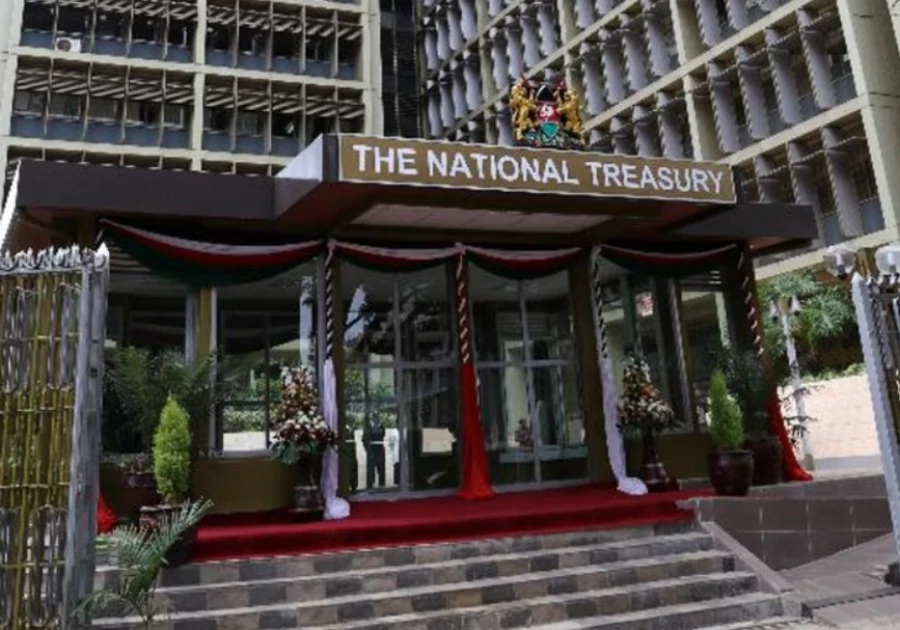
File image of the National Treasury. PHOTO | COURTESY

Audio By Vocalize
Documents placed before the committee showed that the award of the tax relief was done against the law as the institution mandated to develop and pass laws to effect the tax exemption were not involved.
“You have made reference to some gazette notice that was signed, where is that Gazette Notice, is this act an act of Parliament of Kenya,” asked the chair, Samuel Chepkong’a. It is not an Act of Parliament, responded the Treasury Official.
Soon after however, it emerged that the document relied on by the Treasury officials was not domesticated and was not aligned to the East African Community Act.
“Article 2 of our Constitution recognises international treaties which is fine and you have one from Tanzania, but there is a process we just don’t adopt them in a blanket manner, they have to pass through parliament to be domesticated so that is where we are coming from. Where this that Kenya domistaced what you have presented before us, otherwise it is not recognised in Kenya, added Jared Otieno, Nyando MP.
Questioned were also raised on why it appeared with every review of the Finance Laws the provisions were reviewed to suit specific companies.
“I think one further document we would like to see, you signed an agreement with this company (Blue Nile) on the 18th December 2019 then you have a further agreement which is an amendment to this other agreement which was signed 16th January 2020 we would like to see documentation or someone woke up just one day and signed this agreement, the further amendment, was tit signed by the Minister pursuant to any request by this company Blue Nile Rolling mills or under what circumstances?” Did you think this company would be disadvantaged so you said let’s add more and ringfence the agreement, Added Chepkonga.
While seeking a statement from the Committee on Delegated Legislation on 31st July this year, Kiambaa Member of Parliament John ‘Kawanjiku’ questioned the Tax exemptions granted to steel millers.
“Blue Nile Rolling Mills Limited which operates under the Special Operating Framework Arrangement (SOFA) was illegal granted tax exemptions by the Government, the Kiambaa MP Stated.
The award of the SOFA agreement that Blue Nile signed with the government in 2020, exempts the company from paying income corporate Tax for up to 10% in addition to further exemptions on Value Added Tax (VAT), Import Duty, Import Declaration Fees (IDF) and Railway Development Levy (RDL) on raw material imports for 10 years an agreement that many manufacturers have lamented destabilised the steel Industry.
It emerged that the gazette notice the officials relied on was not domesticated and was yet to be placed under the EAC Act.
During the committee session, members raised questions on how much money the Blue Nile Company had benefited from in tax exemptions, the Treasury Officials threw the hot Potato to the Kenya Revenue Authority despite earlier claiming to have the figures. They further did not have any documentation to back their claims that the Company complied with all the requirements needed for a company to be awarded the Special Operating arrangement.
The Treasury officials were also at pains to explain how the agreement with Blue Nile had benefitted the Country as their claim that the company had ring fenced the export of galvanised wires remained unsubstantiated as there were no relevant documentation to back their statement.
Currently, three companies benefit from the SOFA arrangement: Positive Human Vaccine Manufacturing Company, Moderna Human Vaccine Manufacturing Company, which has yet to begin operations in Kenya, and Blue Nile Rolling Mills Limited, a producer of galvanized wire and which was the first company to benefit from the tax exemptions.
For a company to be awarded the SOFA arrangement, majority of the employees must be of Kenyan origin, the officials that came before the committee claimed that the company had 1000 employees, however evidence has shown that only 300 were Kenyans. Further the company is required to have an operating capital of Ksh. 10B shillings but Blue Nile was seemingly favoured as its capital was stated to be Ksh. 2.5B shillings.
The committee sought to know what advisory opinion the office of the Attorney General has issued as it appeared there was collusion between unnamed Treasury officials and their counterparts in the State Law Office to issued skewed opinion to benefit a few individuals.
The Kiambaa MP while requesting the statement had taken issue with the fact that the actions of a few elements within government had threatened the sustainability of the local steel production industry giving undue advantage to a few competitors. Further concerns were raised on how the actions impacted on taxpayers at a time when the Tax man is struggling to manage its tax deficit running into over Ksh. 370B.
The Committee learnt that last year alone, the Government spent over Ksh. 400B in tax exemptions which were a direct charge to the taxpayer prompting the government to employ additional taxation measures to meet its demands.
The committee requested a further two weeks to probe the operations of the steel company and any other companies that have over the years illegally benefited from tax exemptions.
President William Ruto is on record imploring Parliament to institute stricter laws to govern the production industry to encourage investment by local companies and also ensure they remain profitable to facilitate job creation.
Leave a Comment