

Taliban allows men to beat wives as long as they don’t break bones or leave open wounds
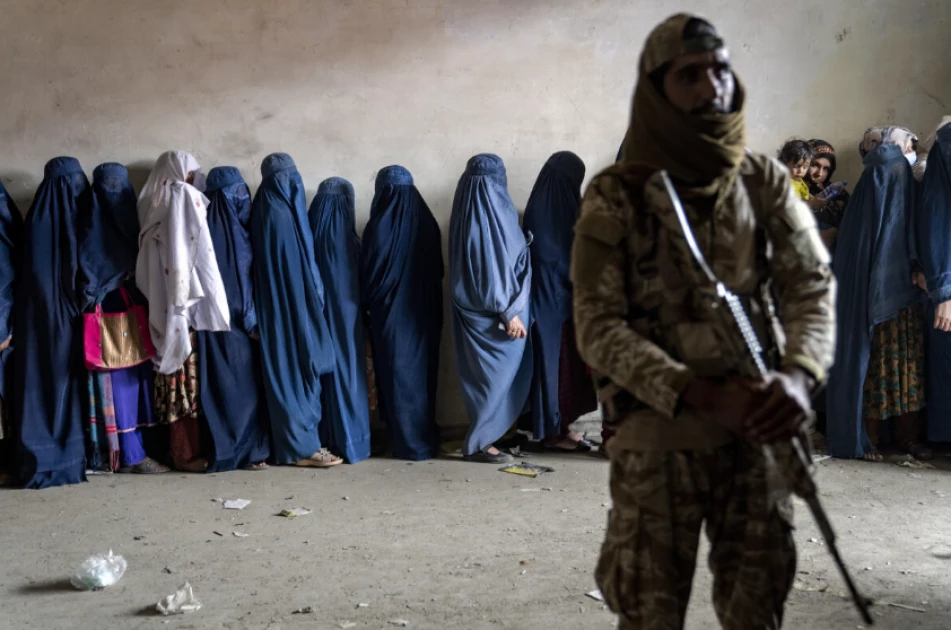
Women in Afghanistan have seen their rights steadily degraded since the Taliban returned to power. | COURTESY

Audio By Vocalize
Taliban authorities in Afghanistan have issued a new decree permitting husbands to physically discipline their wives provided they do not break bones or cause open or lasting wounds, in a move that has sparked outrage among human rights groups.
The directive, which was reportedly issued last month,
surfaced after it was leaked to the Afghan rights group Rawadari and later
translated into English by the Afghanistan Analysts Network.
It is the first time since the Taliban’s return to power in
August 2021 that such punishments have been formally codified in writing.
Under the code, a husband who beats his wife to the extent
that she sustains serious injuries may face limited punishment of
“If a husband beats his wife so severely that it results in a broken bone, or an open wound, or a black and blue wound appears on her body, and the wife appeals to a judge, then the husband will be considered an offender,” the decree states, according to the translated version, as quoted by CNN.
Women’s rights campaigners have described the decree as
devastating, warning that it further erodes protections for women who are
already heavily restricted under Taliban rule.
“The men have the right to rule the women completely…his word is the word of law – that’s it,” women’s rights activist Mahbouba Seraj said.
Activists argue that the legal changes will make it nearly
impossible for women to seek justice.
In Afghanistan, women are barred from leaving their homes
without a male guardian, and under the country’s interpretation of Sharia law,
a woman’s testimony is considered worth half that of a man.
Since reclaiming power, the Taliban have imposed sweeping restrictions on women’s rights. Women have been banned from most forms of employment and from attending secondary school and university. UNICEF estimates that more than two million girls and women have been excluded from education as a result.
The decree also introduces strict penalties for dissent.
Anyone accused of insulting Taliban leader Hibatullah Akhundzada faces 39
lashes and a year in prison. Those deemed to have “humiliated senior officials”
risk six months in jail and 20 lashes.
The death penalty is sanctioned for a broad range of
offences. Judges or imams may sentence to death individuals accused of
spreading beliefs “contrary to Islam” or those who “persistently” engage in
theft, homosexuality, heresy, sorcery, or sexual acts outside heterosexual
intercourse.
Rawadari condemned the document, saying it was “incompatible
with even the most basic standards of fair trial, including the principle of
equality before the law.”
The United Nations has also raised alarm over the worsening
human rights situation, with UN High Commissioner for Human Rights Volker Türk
describing the decree as “legitimising violence against women and children,”
and warned that “Afghanistan is a graveyard for human rights.”
“Afghanistan’s women and girls face extreme gender-based
discrimination and oppression that amounts to persecution. The system of
segregation is reminiscent of apartheid, based on gender rather than race,”
Türk said.
Activist Seraj said the impact of the decree is already
being felt across the country.
“I cannot tell you the number of calls I’m getting from
women who are desperate all over Afghanistan,” she said. “When you have these
kinds of laws being implemented and the husband can decide on everything then
forget it. At least before there was a fear of the courts and judges. Women would
complain. Now what?”
Leave a Comment