

Supreme Court Judge Lenaola warns AI, deepfakes could undermine elections
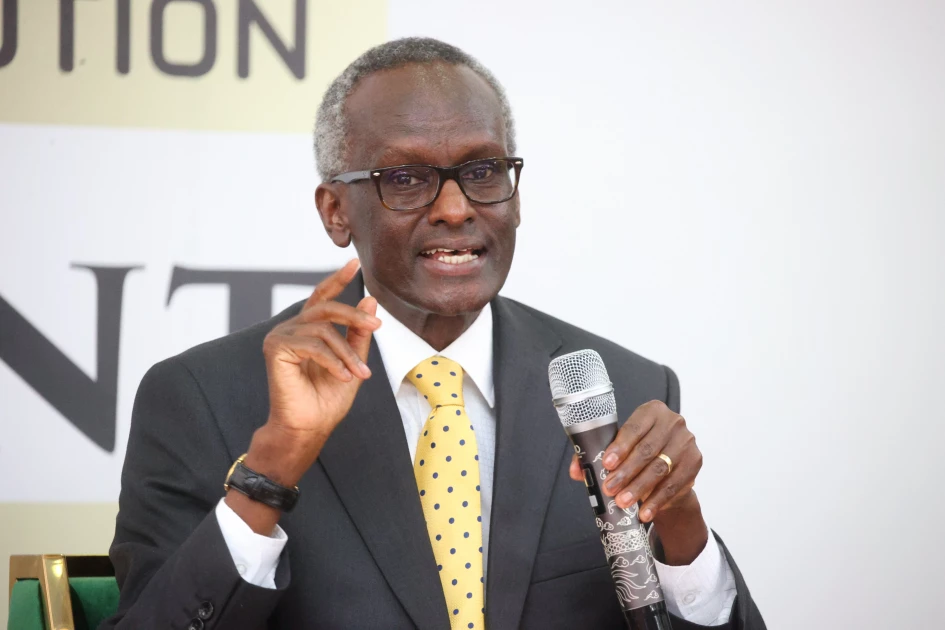
Supreme Court Judge Isaac Lenaola speaks at a past event. PHOTO | COURTESY

Audio By Vocalize
Supreme Court Judge Justice Isaac Lenaola has raised concerns
over the growing threat posed by misinformation and emerging technologies such
as artificial intelligence (AI) to democratic processes, warning that the country
must prepare to confront the dangers of disinformation and deepfakes.
Speaking during the launch of the law school and Bachelor of
Laws programme at Zetech University, Justice Lenaola said the age of
misinformation, disinformation and fake news has raised serious questions about
the place of truth and accuracy in modern society.
The Supreme Court judge noted that the rapid advancement of
artificial intelligence has introduced complex challenges that legal
practitioners and judicial officers must be ready to confront.
Justice Lenaola revealed that he is part of a group of African
judges currently reflecting on the implications of artificial intelligence on
elections across the continent.
According to him, one of the key questions they are grappling
with is how electoral processes could be manipulated through the use of
deepfake technology.
Justice Lenaola illustrated a hypothetical scenario in which
voters in a particular region receive manipulated messages on the eve of an
election warning of impending violence, noting that such targeted
misinformation could frighten residents into staying away from polling
stations, effectively suppressing votes in that area while other regions
proceed to vote.
“We are asking ourselves what happens in an election where one
candidate uses deepfakes to disenfranchise a section of the population. They
may feed phones with violent images and warn people not to leave their homes,
claiming that women will be raped and houses burned," he said.
"If a candidate knows that a particular region does not
support them, such messages could discourage people there from voting."
The judge challenged law students, legal scholars and
practising advocates to begin thinking about how courts would handle such cases
if they were brought before them.
Deputy Vice Chancellor in charge of Academic and Student Affairs
at Zetech University, Prof. Alice Njuguna, said the establishment of the law
school marks a significant milestone for the institution as it seeks to
contribute to the development of the legal profession.
“We remain committed to upholding the highest standards in
legal education and training to ensure our students are competent. We look
forward to working with the Kenya School of Law to ensure our graduates are
well prepared to transition into the legal profession,” she said.
Also speaking during the event, the Chief Executive Officer of
the Council of Legal Education, Prof. Jack Mwimali, said the accreditation of
the Bachelor of Laws programme reflects the university’s commitment to meeting
the required standards in legal training.
Prof. Mwimali said the council remains committed to
safeguarding the quality of legal education in Kenya while supporting institutions
that demonstrate readiness to offer credible programmes.
Leave a Comment