

Stakeholders mull local manufacture of vaccines to curb overreliance on donors

Audio By Vocalize
With Africa currently importing more than 99 percent of its vaccines and the bulk of its essential medicines, experts warn that the continent remains highly vulnerable to global supply disruptions, price volatility and geopolitical pressures.
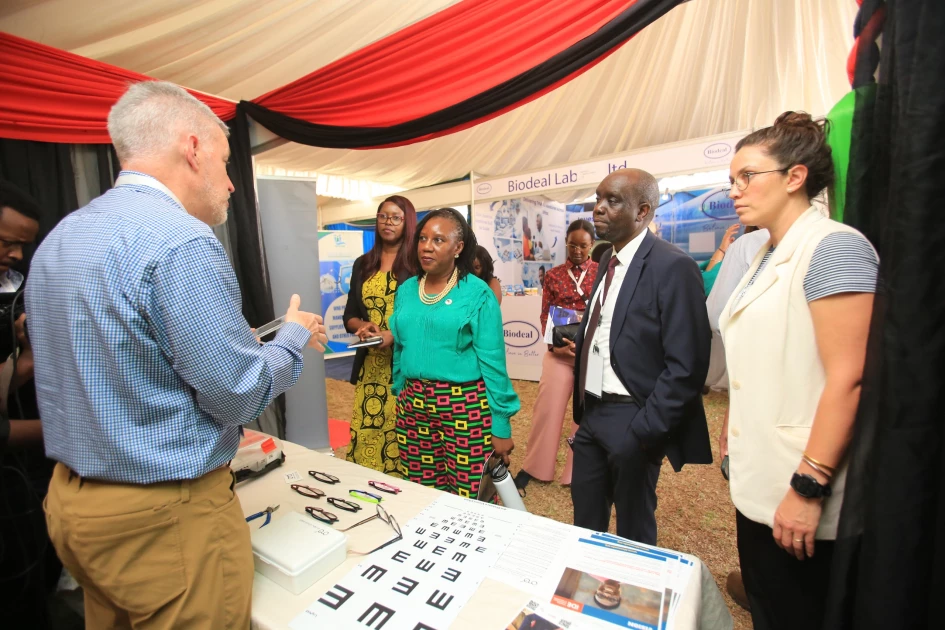
The concern dominated discussions at the East Africa Regional Global Health Security Summit held in Ruiru, Kiambu County, which brought together more than 1,000 stakeholders from governments, research institutions and the private sector.
Speaking at the summit, Dr. Mazyanga Lucy Mazaba, Regional Director of the Africa CDC Eastern Africa Regional Coordination Centre, said Africa’s overreliance on donor support has exposed major weaknesses in national health systems.
“Africa does not have adequate access to many of the health commodities it needs. Our financial systems have largely depended on international funding, and that is why we must strengthen our own systems and secure our own commodities,” said Dr. Mazyanga.
She revealed that Official Development Assistance (ODA) to the health sector has dropped by more than 70 per cent over the past year, creating major risks for countries heavily dependent on donor support.
“When a country relies on donors for more than 80 per cent of its health budget, you can imagine what happens when that funding stops. Some countries even lost critical health data after organisations managing those systems shut down and exited,” she added.
Dr. Mazyanga described Africa’s reliance on external funding as risky and urged member states to strengthen preparedness, prevention and response mechanisms.
“We have launched the African Epidemics Fund to mobilise resources that member states can access when responding to health emergencies,” she said.
BioVax Kenya Chief Executive Officer Dr. Wesley Rono said the company is working towards producing Kenya’s first locally manufactured vaccine antigen by 2027, with newborns expected to be the first beneficiaries through pneumonia vaccines.
“We are focusing on routine immunisation and currently prioritising three products. Our goal is to have our first antigens ready by the third quarter of 2027,” said Dr. Rono.
He noted that Africa’s push for vaccine self-sufficiency is being slowed by a severe shortage of skilled personnel, revealing that the continent requires at least 13,000 specialised professionals to meet 60 per cent of its vaccine demand.
“The same challenge exists in Kenya. As we build the factory, we are training staff through global initiatives in Egypt, South Korea and South Africa to ensure we are ready for production,” he said.
Dr. Rono added that Kenya aims to reduce the importation of raw materials used in vaccine production by 50 per cent to improve sustainability and cut costs.
He said decisions on which vaccines to manufacture first will be guided by national needs, production feasibility and available technology.
Vision 2030 Delivery Board Chairman Dr. Emmanuel Nzai said Kenya’s healthcare system has become increasingly expensive due to heavy reliance on imported medical products.
“Manufacturing medicines is a highly complex process. It requires skilled human capital, supportive policies and a reliable market,” said Dr. Nzai.
He disclosed that Kenya will need about KSh300 billion to establish and operationalise a vaccine manufacturing facility as part of its Vision 2030 health agenda.
Leave a Comment