
Saba Saba protests: Total shutdown of Nairobi CBD has protesters declaring win over government
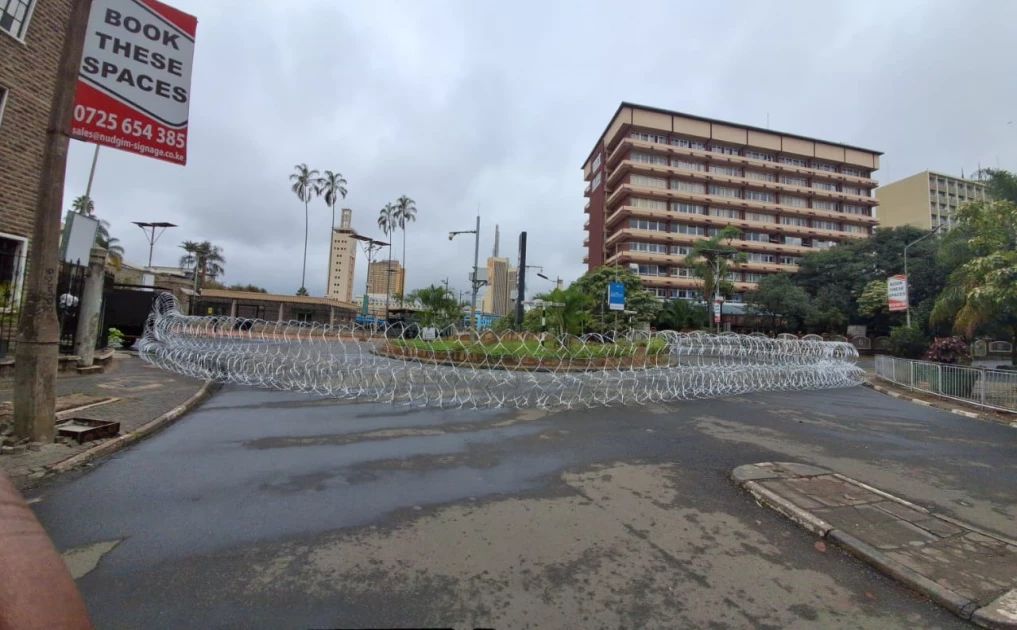
Post-apocalyptic scenes inside Nairobi CBD as police blocked access to the Capital ahead of the Saba Saba protests on July 7, 2025

Audio By Vocalize
Worried over a potential torrent of protesters flooding the streets on Saba Saba, a day meant to mark the 35th anniversary of the original Saba Saba riots on July 7 1990, the government pulled out all its might by planting hundreds of heavily armed police officers on major highway arteries, effectively blocking all movement and barricading all roads which lead into the Nairobi CBD.
On a chilly Monday morning, Kenyans witnessed dystopian scenes as the streets of Nairobi remained shockingly empty, with only a few police cars, ambulances and media vans allowed to drive through.
From Tom Mboya Street to Kenyatta Avenue, Biashara Street to Luthuli Avenue, all shops remained shut, as only a few souls strolled by, while police held fort, guarding an empty city with a biting cold piercing through the atmosphere.
As early as 5am, police had arbitrarily mounted roadblocks along major highways and junctions - at the Kihunguro bypass, at Roysambu, at Ruaraka, along Waiyaki Way, at Mlolongo, in Kitengela, in Ngong and in countless other roadways, as travellers remained shut off the city, stranded, confused and bewildered in the early morning cold.
Online, Kenyans took to their social media platforms to pontificate on the matter, many finding it rather absurd that the government, in an attempt to prevent riots and disruption of businesses, had itself effected the very same outcome it had thought it was thwarting.
Many also pointed out the irony of a government struggling to maintain sanity and normalcy in the city while, at the same time, preventing the application of the same by shutting down the city.
Someone captured it best when he said: "To prevent protesters from closing roads, disrupting business and causing massive losses, the government has closed roads, disrupted business and caused massive losses."
The general consensus was out - the government had caved in and, sensing a humiliating beating from the people, who have normally shut down businesses and crippled the economy on major protest days, the government ended up inadvertently worsening a premature outcome, creating a crisis that could, potentially, have been avoided.
Someone on X wrote, "Hear me out. And correct me if I'm wrong. Today was not going to be even that massive. The hype wasn't all that. But the government fell for the trap. And now they've crippled the city themselves, without the help of protesters."
Someone else opined, "This is the best form of protest. Civil disobedience. Now the police are protesting. In fact, this is a Public Holiday formula unlocked! All we need to do is whisper “maandamano” and boom, holiday activated!"
Eric Gachoka also had something to say, writing," Wait a minute, they said it’s a Normal work day but no one can get into town? The Genz’s have already won even without doing anything! The government is eating it's own self!"
On her part, activist Hanifa Adan satirically asked, "Why are the police protesting and blocking roads everywhere disrupting people’s businesses and the economy? Were they sent by Gachagua?"
Allan Kavati also shared an insightful perspective, saying, "No business looted. No car burnt. No Kenyan shot. No police officer throwing teargas. No goons walking around with clubs. I think Saba Saba was a Success at 8.00 am. Congratulations Ruto, you protested against yourself!"
The ludicrous move by the police has also been widely welcomed by Kenyans, as they celebrated the blockage of movement as a successful 'Stay At Home' tactic which will save lives and energy while at the same time driving a point home.
Hanifa Adan, again, wrote, "Guys, this is a brilliant way of protesting idc. The police getting rained on as they block every road while we stay at home warming our beds. Total shutdown and forced holiday executed by the the state!"
Saba Saba is remembered as the day when bloody nationwide protests took place on July 7, 1990, when Kenyans, led by Charles Rubia, Kenneth Matiba and others, took to the streets to demand free elections and the approval of multiparty democracy in Kenya.
Yearly, peaceful protests are held on July 7 to mark the historic date when Kenya's constitution was challenged, allowing the formation of other political parties.
Join the Discussion
Share your perspective with the Citizen Digital community.
No comments yet
This discussion is waiting for your voice. Be the first to share your thoughts!