

Owalo promises to lower income tax, VAT if elected president in 2027
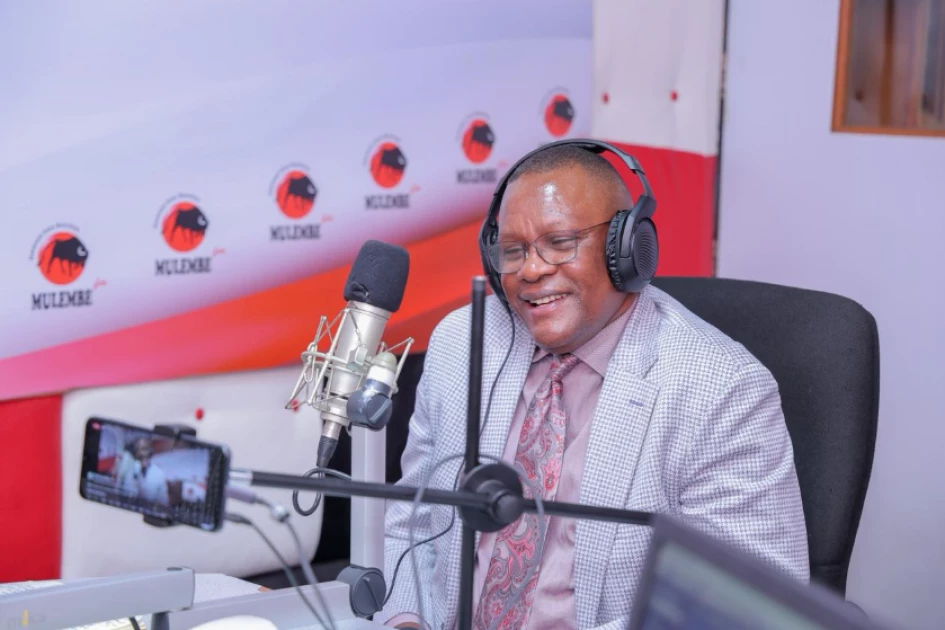
Former CS and presidential hopeful Eliud Owalo during an interview on Mulembe FM on March 12, 2026. PHOTO | COURTESY

Audio By Vocalize
Former Cabinet Secretary and
presidential hopeful Eliud Owalo has outlined an
economic reform agenda centred on tax relief, stricter financial discipline and
expanded regional development.
Speaking
during an interview on Mulembe FM on Thursday,
Owalo said easing the tax burden would be among the first steps under his
administration.
“I
will reduce income tax to 25 percent, reduce VAT from 16 percent to 12 percent
and do away with digital tax completely,” he said.
Owalo
argued that lowering key taxes could unlock business activity while allowing
households to retain more of their income, ultimately injecting momentum into
the broader economy.
On
corruption, the long-time management consultant said tackling graft must remain
a top priority, describing it as the single biggest obstacle to effective
governance.
“The
biggest problem ailing our governments is corruption. When I joined government
as CS for ICT, there were only 350 services on eCitizen. I expanded them to
22,000, boosting revenue from Ksh.60 million to Ksh.1 billion a day.
Digitalisation works,” Owalo said.
According
to him, technology-driven systems can seal revenue leakages, improve
transparency and restore public trust in government.
Beyond
the national outlook, Owalo also mapped out development priorities for Western
Kenya, a region he said holds significant untapped economic potential.
He
identified the revival of the sugar sector as a key step toward stabilising
incomes for farmers who depend on the industry.
Owalo
also proposed reforms in the mining sector to ensure that communities where
minerals are discovered benefit directly from the proceeds.
He
further pointed to the strategic location of Busia
and Malaba along the Northern Corridor, saying
the two border towns could evolve into vibrant commercial hubs supported by
logistics parks, cross-border markets and agro-processing industries.
Owalo
added that a grain corridor strategy centred on Trans
Nzoia and neighbouring counties, alongside a strengthened Lake
Victoria blue economy, could expand agricultural output, fisheries and regional
trade.
The proposals, he said, are aimed at
building a more inclusive economy, promoting regional growth and strengthening
public services across the country.
Leave a Comment