
New funding model to revive stalled Northern Kenya road projects - Kindiki
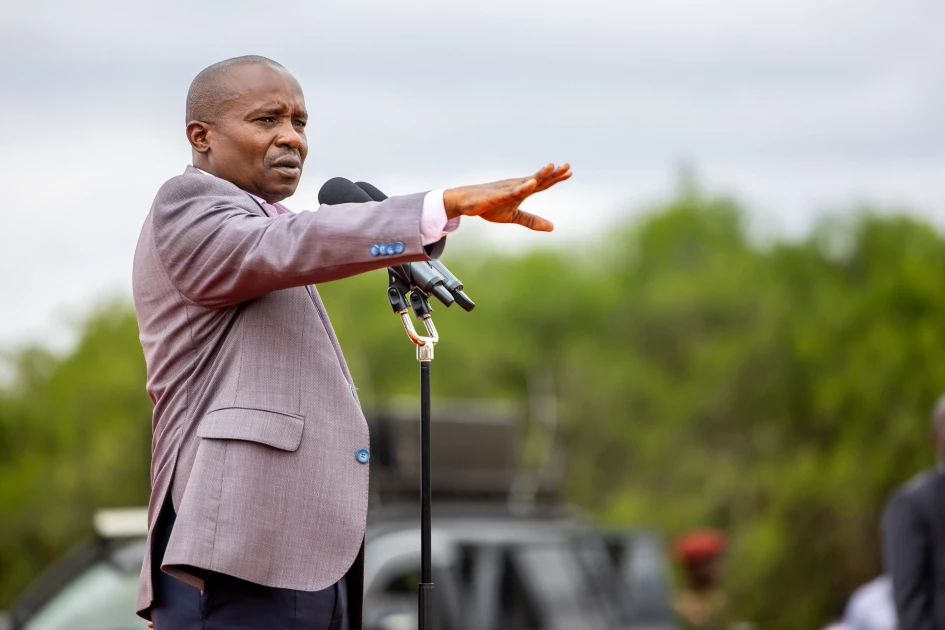
Deputy President Kithure Kindiki.

Audio By Vocalize
Long-delayed road projects in northern Kenya are set to resume after years of inactivity, Deputy President Kithure Kindiki has said, citing a new funding approach that has brought contractors back to site.
Speaking after meeting Members of
Parliament from the region at his official residence in Karen, Kindiki said the
securitisation of the Roads Levy has unlocked resources to restart key
corridors, some of which had been abandoned for more than six years.
Among the priority projects is the
750-kilometre Isiolo–Modogashe–Wajir–Kotulo–Elwak–Rhamu–Mandera road, seen as
vital for opening up the region to trade, improving access to services, and
strengthening security operations. Others include the Lamu–Ijara–Garissa and
Isiolo–Mandera roads.
“Many contractors that had abandoned sites
are now back,” Kindiki said. “The financing model will expedite the completion
of the northern Kenya roads. The completion of this road will be a game-changer
for the region and the whole of Kenya.”
The roads form part of the Bottom-Up
Economic Transformation Agenda, which also targets expansion of electricity,
water supply, modern markets and affordable housing. While reaffirming that the
Isiolo–Mandera route will be completed as planned, the Deputy President did not
give updated timelines or milestones for the works.
Away from infrastructure, Kindiki said the
government will maintain the eased vetting process for Kenyans living along the
borders seeking identification documents, describing it as a measure to end
past discriminatory practices.
On health, he reported that Universal
Health Coverage under the Social Health Authority has enrolled more than 25.4
million people. Efforts are now focused on fixing operational bottlenecks such
as delayed approvals and fictitious claims, and ensuring medicines move
directly from KEMSA to health facilities.
Kindiki also defended the affordable
housing programme as a national initiative that will extend to towns in Wajir,
Garissa, Mandera and other counties, in line with projections that 60 percent
of Kenyans will live in urban areas within two decades.
Leaders from the North Eastern
Parliamentary Caucus welcomed the renewed push on roads and other
infrastructure, calling it the most significant investment in the region since
independence, but urged the government to ensure steady funding to avoid
further delays.
Join the Discussion
Share your perspective with the Citizen Digital community.
No comments yet
This discussion is waiting for your voice. Be the first to share your thoughts!