

Nairobi County hits record Ksh.13.8B in own revenue
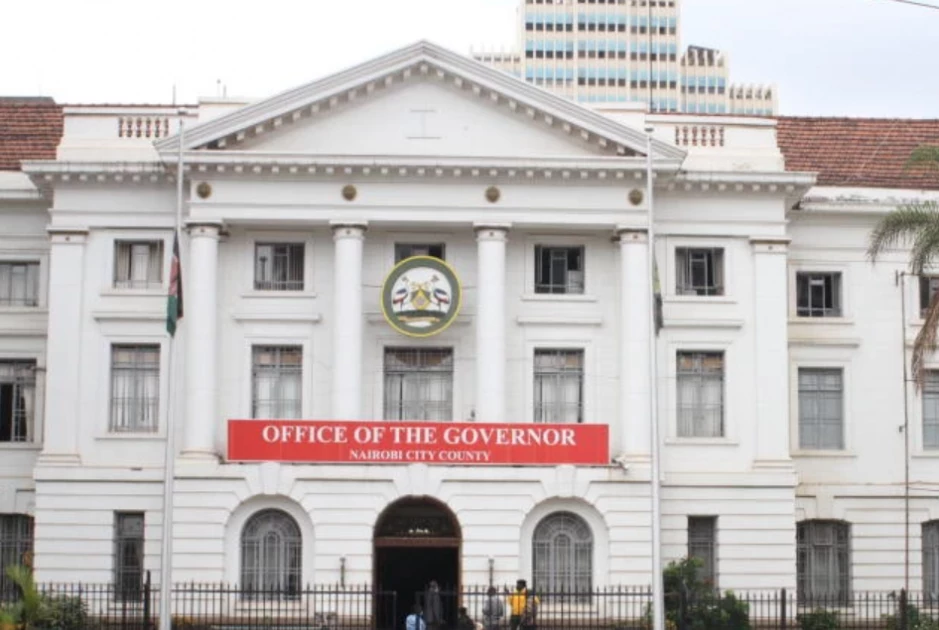
File image of the Nairobi County government headquarters at City Hall.

Audio By Vocalize
Nairobi City County has recorded its highest revenue collection since the onset of devolution, reaching KSh 13.7 billion for the 2024/2025 financial year.
This marks a notable increase from
last year’s KSh 12.8 billion—an additional KSh 1 billion—highlighting the
success of ongoing reforms and intensified revenue collection efforts.
Nairobi Governor Johnson Sakaja acknowledged the achievement despite
recent political unrest in the city.
“KSh 13.7
billion is a record since devolution. It's up from last year’s KSh 12.8
billion—a strong KSh 1 billion increase. With this momentum, we can aim even
higher. It’s possible when we all play our part as government and as citizens,”
said Sakaja.
County
Receiver of Revenue, Tiras Njoroge, attributed the growth to aggressive
collection drives and enforcement measures, particularly targeting land rate
and rent defaulters.
“Under
Governor Sakaja’s leadership, our revenue collection efforts are delivering
results. We cannot have a city of millions sustained by just a few
contributors. Everyone must take responsibility. We’re continuing enforcement
on land rates, unified business permits (UBP), Nairobi Pay, house rents, and
more,” Njoroge said.
The Housing
Department also reported a significant rise in house rent collections, reaching
KSh 800 million in the 2024/2025 financial year—the highest in over a decade.
Housing Chief Officer Lydia Mathia noted this was a sharp increase from KSh 500
million in 2023/2024 and nearly double the KSh 439 million collected in
2021/2022.
She
attributed the spike to enhanced enforcement, digital rent tracking, and
recovery campaigns, which peaked in May 2025 when the county collected a record
KSh 200 million in a single month.
The revenue
announcement comes just days after Finance and Economic Planning CEC Charles
Kerich tabled a KSh 44.6 billion budget for the 2025/2026 financial year.
The budget
allocates KSh 31.2 billion to recurrent expenditure and KSh 13.4 billion to
development, meeting the constitutional requirement for counties to dedicate at
least 30% of their budgets to development, as outlined in the Public Finance
Management Act, 2012.
“In the
health sector, KSh 849 million has been set aside for the construction,
rehabilitation, and equipping of health centers, including the procurement of
essential supplements and vitamins,” said Kerich.
An additional
KSh 400 million will go toward supplying county hospitals with
non-pharmaceutical essentials to ensure smooth operations and the continued
availability of basic medical items.
Kerich added
that infrastructure development remains a priority, with major upgrades and
expansions planned for key hospitals, including Pumwani Maternity and Mama Lucy
Kibaki Hospital. The improvements will include the installation of modern
diagnostic tools and the revamp of the county’s health data systems.
The county’s
school feeding programme—a flagship initiative under Governor Sakaja—has been
allocated KSh 700 million. While slightly lower than last year’s KSh 800
million, the funding is expected to sustain operations. The county constructed
over 10 modern kitchens last year to support the programme, which has improved
both nutrition and attendance in public schools.
For education
support, KSh 857 million has been allocated for bursaries. Each of Nairobi’s 85
wards will receive KSh 7 million, with the remainder supporting continuing
students under the Executive Scholarship Programme.
To strengthen
grassroots development, KSh 2.15 billion has been set aside for Ward
Development Programmes. Kerich told the Assembly that 145 projects were
completed in the previous year and that the new funding will accelerate ongoing
works in all wards.
The roads
sector will receive KSh 2.8 billion for road construction and rehabilitation
across the county, while KSh 1 billion has been earmarked for the development
and upgrading of stadiums and sports complexes.
Kerich
emphasized that the budget aims to address Nairobi’s growing demands while also
cushioning residents from ongoing economic challenges.
“We will not
increase taxes during these difficult times. Instead, we’re focusing on
widening the tax base and tapping into previously uncollected revenue sources,”
he said.
He also
revealed that Nairobi County posted KSh 13.4 billion in own-source revenue in
the previous financial year, up from KSh 10 billion, largely due to expanded
collection efforts and system reforms.
Leave a Comment