

Kenya’s Foreign Ministry protests after Tanzania denies access to Boniface Mwangi
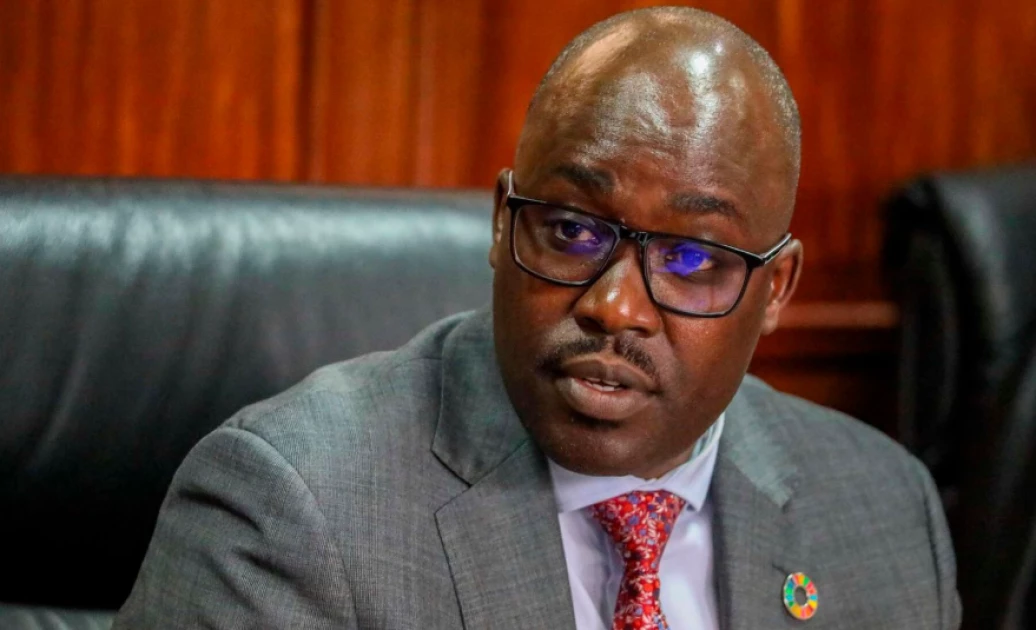
Kenya's Foreign Affairs Principal Secretary Korir Sing’oei. | FILE

Audio By Vocalize
Kenya’s Ministry of Foreign Affairs on
Thursday said Tanzanian authorities have denied it access to activist Boniface
Mwangi since he was arrested in Dar es Salaam on Monday.
Mwangi was arrested by suspected military
officers after travelling to observe Tanzanian opposition leader Tundu
Lissu’s treason trial on Monday. His whereabouts remain unknown.
In a statement, the ministry said “despite
several requests, officials of the Government of Kenya have been denied
consular access and information to Mr Mwangi.”
“The Ministry is also concerned about his
health, overall wellbeing and the absence of information regarding his
detention,” it said.
Nairobi urged Dodoma to “expeditiously and
without delay” facilitate consular access to or release of Mwangi, per
international legal obligations and diplomatic norms.
Kenya and Tanzania are state parties to the
1963 Vienna Convention on Consular Relations, which provides that consular
officers shall be free to communicate with nationals of the sending state and
to have access to them.
Further, consular officers have the right
to visit a national of the sending state who is in prison, custody or
detention, to converse and correspond with him, and to arrange for his legal
representation.
The Kenyan activist’s wife, journalist
Njeri Mwangi, on Wednesday said she had visited the Tanzania High Commission in
Nairobi where officials told her they did not have information about her
husband.
“I last spoke to Boniface on Monday
afternoon. The Tanzanian authorities are saying they have deported him but why
is there no communication? Where is Bonnie?” she told reporters
in Nairobi.
“Give us back Boniface, wounded
or dead. It has been very agonising for my family and it is not fair
or right what they are doing to him.”
On Tuesday, a Tanzanian rights group said
they had been told by police that Mwangi and fellow Ugandan activist Agather
Atuhaire, who was also arrested in Dar, had been deported.
However, Amnesty International said the duo was held
incommunicado by military officers.
Mwangi was among several East African
activists and lawyers who travelled to Tanzania to stand in solidarity with
Lissu.
Most were, however, denied entry upon landing at the Julius Nyerere
International Airport in Dar es Salaam on Sunday and Monday, detained then later deported to Nairobi.
Later on Monday, President Samia Suluhu
told a televised address that foreign activists would not be allowed to “interfere” in Tanzania's affairs.
"We have started to observe a trend in
which activists from within our region are attempting to intrude and interfere
in our affairs," she said, urging her security and defence organs “not to
allow ill-mannered individuals from other countries to cross the line
here."
The latest events have sparked uproar over
what critics see as a worrying trend of arbitrary arrest and persecution of
opposition figures and their supporters in the larger East African region.
In Uganda, opposition leader Kizza Besigye
is also facing treason charges and Kenya’s Foreign Ministry has admitted “cooperating
with the Ugandan authorities” in his November abduction in Nairobi, where he
was then taken across the border for trial in a Kampala military court.
Leave a Comment