
Kenya marks World Accreditation Day with focus on trade and market access

Audio By Vocalize
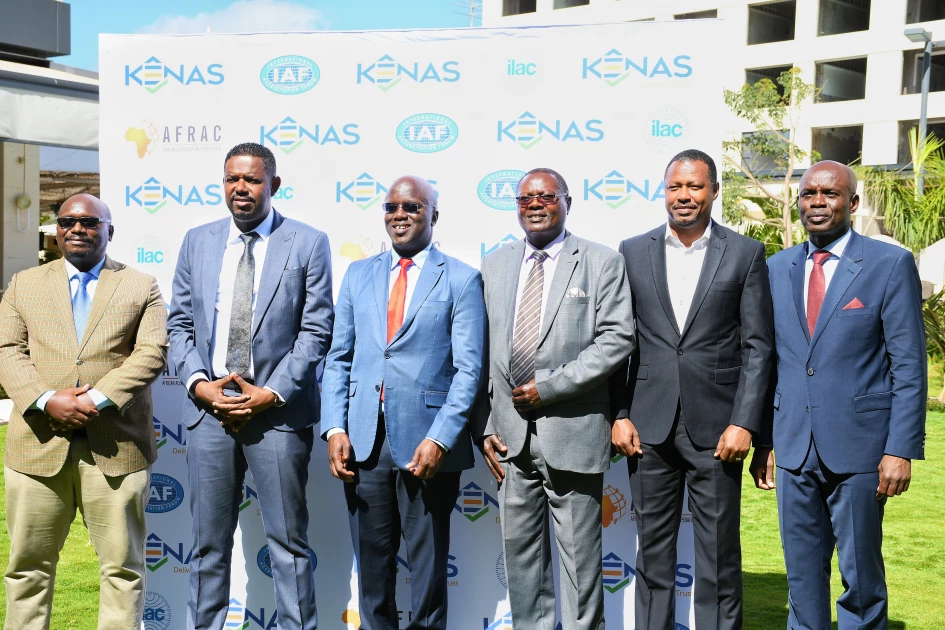
Speaking at the event, the Principal Secretary in the State Department for Investment Promotion noted that while Kenyan products are increasingly in demand locally and abroad, meeting required standards is key to gaining consumer trust and expanding globally.
“We have introduced several initiatives to support businesses in accessing international markets,” he said. “This includes helping them meet the necessary compliance requirements.”
Kenya Accreditation Service (KENAS) CEO Dr. Walter Ongeti highlighted the significance of accreditation for small and medium-sized enterprises (SMEs), describing them as central to the country’s economy.
“Accreditation not only confirms that SMEs meet safety and quality benchmarks, but also improves their chances of securing financing and scaling operations,” he said. Certified products are more likely to meet local and international regulatory standards, he added, which enhances their marketability.
Stakeholders also pointed to the role of accurate measurement in boosting industrial performance. Proper measurement systems improve product consistency, reduce waste, and support regulatory compliance, contributing to both customer satisfaction and cost savings.
Access to financing remains a key hurdle for SMEs. Angela Mwirigi, Head of Digital Banking at Kenya Commercial Bank, said accreditation can help bridge this gap by offering a credible benchmark for assessing business reliability.
“With digital platforms, we no longer rely solely on physical presence to evaluate businesses,” she said. “Accreditation gives us an objective measure to better assess and support SMEs.”
To date, KENAS has accredited Conformity Assessment Bodies (CABs) across 13 countries, including Kenya, Rwanda, Nigeria, and Uganda. A significant 83% of these accredited bodies are micro and small enterprises.
Join the Discussion
Share your perspective with the Citizen Digital community.
No comments yet
This discussion is waiting for your voice. Be the first to share your thoughts!