
Kang’ata refutes claims linking him to Ethiopian Airlines crash payout scandal
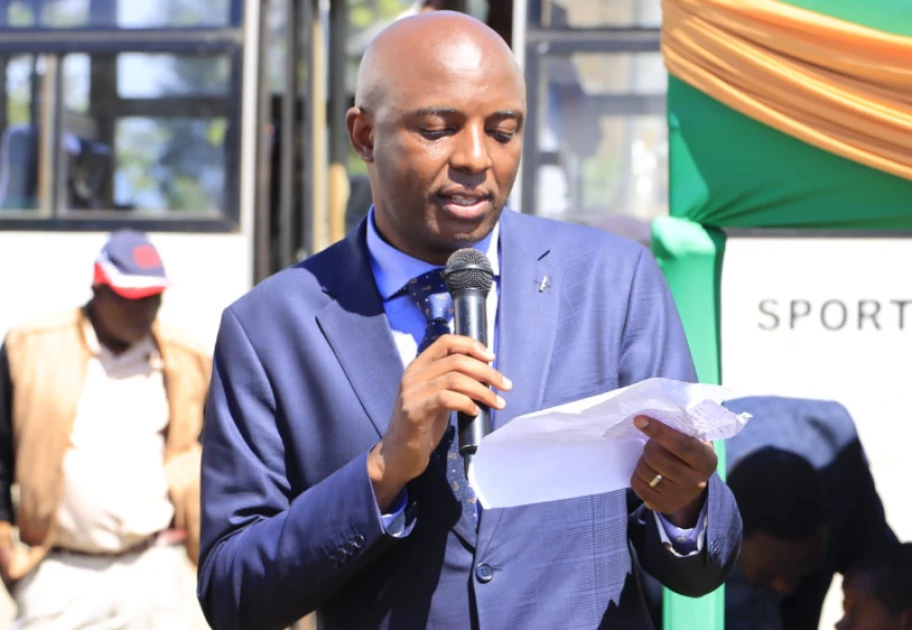
Murang’a Governor Irungu Kang’ata during a past public address. PHOTO | COURTESY

Audio By Vocalize
Murang’a Governor
Irungu Kang’ata has issued a response following allegations implicating him in
a compensation scandal related to the 2019 Ethiopian Airlines Flight 302
crash.
According to the
Governor, who acted as a lawyer for some of the relatives of the victims, he
did not benefit from the compensation, as well as the persons alleged to be his
staff in the report aired on NTV on Wednesday.
Kang’ata said that
all victims were compensated, including those he personally represented and no
one has complained.
He reiterated that
the case was also duly closed and that he will continue to use his legal skills
to fight for Kenyans.
“All real victims
whom we represented in the United States got paid, and none has complained.
None of the eight mentioned were compensated. This is a 2019 issue that was
duly closed, and all compensation relating to my clients (Kenya accident
victims) duly paid," he said.
"My Senate
debate on the issue did not confer any gain either to myself or purported
staff. I'll continue using my legal skills to fight for Kenyans successfully,
including in the US and wherever else.”
According to a
documentary on NTV, during Kang'ata's tenure as Murang’a Senator, eight
individuals allegedly connected to his office posed as relatives of the crash
victims in a bid to fraudulently access compensation from Boeing.
In the exposé, two
of Kang’ata's former staff members in the Senate between 2017 and 2022, Davis
Mburu Karanja and Peter Njuguna, alongside alleged associates Jane Wairimu and
John Kunyia, implicated the Governor in a fraudulent scheme.
They said they
cannot understand why the Murang’a County chief included their names in a
petition purporting to be members of families of those who perished in the
incident, yet they had not lost anyone in the tragedy.
The petition,
received by the Senate on June 19, 2019, asked the House to press the
government so it could expedite issuance of certificates so that the next of
kin could pursue compensation.
"When I heard
that the Ethiopian airline had been paid, I decided to find out more about the
case. So one night, I typed my name and the phone number in a link that had
been provided. That was when I saw my name appearing in there," Davis
said.
"There is a
certain link. There was a petition about the Ethiopian air incident where I am
appearing together with other staff members who I worked with in the Senate. It
showed I was affected by the loss of the people who perished in the
incident."
Flight 302, which
crashed near Bishoftu, Ethiopia, in March 2019, claimed the lives of all 157
people on board, including 32 Kenyans.
The incident was
linked to malfunctions in the Maneuvering Characteristics Augmentation System
(MCAS), an automated flight control feature.
Investigations
revealed that erroneous sensor data triggered the MCAS, causing the aircraft to
enter a nosedive that pilots could not override.
In November 2021,
Boeing formally accepted responsibility for the crash, acknowledging that its
actions contributed to the tragedy.
Following Boeing's
admission of liability, a $500 million (Ksh.64.5 billion) victim compensation
fund was established, with each eligible victim granted approximately $1.45
million (Ksh187 million).
In Kenya, families
of the 32 victims began receiving these settlements, with total compensation
amounting to over Ksh4.8 billion.
The compensation
amounts varied based on factors such as the victim's age, profession, and
financial status at the time of death.
Leave a Comment