

Kamlesh Pattni: Inside the nine lives of Africa's most notorious golden boy
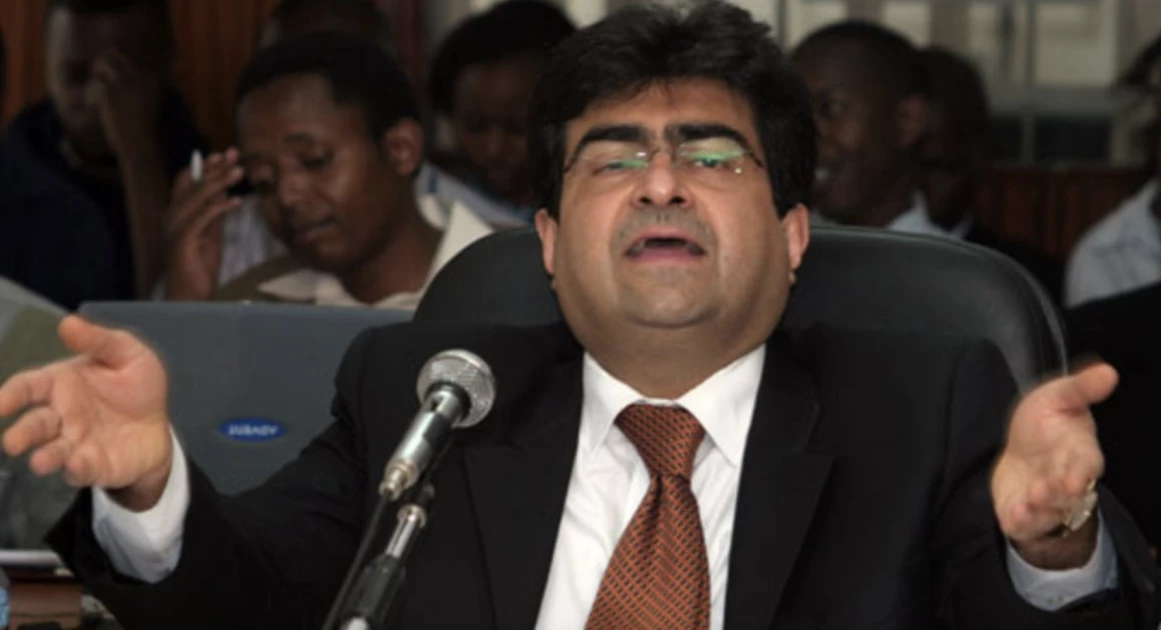
File image of Kenyan gold dealer Kamlesh Pattni. Photo I File

Audio By Vocalize
Since he was first
thrust into the limelight, to be publicly prosecuted over his role in the 1990s
Goldenberg scandal, the Kamlesh Pattni saga has continued to unfold radioactively, mesmerising the masses and painting him into the ultimate
villain in a menacingly cruel scheme of deceit, wile craftsmanship and cunning
guile.
A rotund Kenyan
man of Indian origin, who liked to wear crafty smiles and loads of gilded
jewellery, and who also boasted a full head of bouffant hair, Pattni quickly
became the unlikely rockstar of President Mwai Kibaki's purge on corruption, as
he entranced Kenyans with his witticism, cheeky gambits and inscrutable aura.
Despite being
fully aware of the reason he was being paraded on national television every day,
Pattni still carried himself pompously - he would waltz into the courtroom
while flashing that unmistakable smile, winking his way through the press,
throwing around his beguiling charm and leaving the courtroom in a total
collapse of his brassy charisma.
He didn't treat
the occasion with the seriousness or even superficial solemnity it
deserved, despite having calculatedly siphoned billions from the Kenyan economy
and almost driven the nation to its knees, economically.
Every day, while
appearing before the Justice Samuel Bosire-led commission, alongside some of
his co-accused, Pattni made sure to make the day about himself; either by his
quirky quips or cartoonish countenance, Pattni would sweep the headlines clean
with his intrinsic knack at confounding the viewer.
This is a tiny
character who, at just 25, was accused of cheating Kenya out of $600 million (Ksh.78
billion by current rates) with an intricate web of sleek
conspirators with whom he purportedly pirouetted into unimaginable wealth.
Having closely
studied then-Finance Minister Prof. George Saitoti's June 7, 1990, budget
speech, which outlined ambitious proposals aimed at promoting Kenya's economic
growth, whose key strategies included the promotion of "industrial and
other non-traditional exports," Pattni knew just what to do - and how to
quickly, and ruthlessly, amass a fortune.
Aided by some
powerful figures in the then-Moi government, who included James Kanyotu, head
of the omnipotent Special Branch, Pattni embarked on a large-scale gold export
scheme - at the very core of the business, a lot of cross-country smuggling,
duplicity, widespread sleaze and malfeasance took place.
A ruthless felon,
Pattni would hop from Treasury to the Central Bank, present sheafs of
manipulated receipts, cheat his way through the State House corridors,
double-cross high ranking government officials, outwit banking honchos and
seamlessly wire billions to himself - all at the expense of a dirt-poor nation
reeling with sanctions and a looming general election.
After years of
hogging the headlines, an arduous investigation, and sneering through his clear
sunglasses, Pattni would be controversially cleared of all charges; a judicial
decision which, more than anything, emboldened the master manipulator,
permanently engraving the Kamlesh Pattni insignia on Kenyans' minds.
Bolstered by the
hypnosis he had just cast over the Kenyan populace, Pattni would go on to get
'born again', establish a church and install himself as the head preacher -
ever the suave operator, he would baptise himself 'Brother Paul', possibly
hoping to tap into the mass religious hysteria prevalent in the Kenyan
Christian community.
After the church
thing failed to take off - or make sense, Pattni would retreat to the
backwaters, perhaps to summon a new ingenuity to propel himself to greater
heights, while at the same time using the same Machiavellian tricks which
crystallised his notoriety in the first place.
Late last year,
Kenyans would, once again, wake up to yet another classic Pattni conspiracy
after the Office of Public Affairs, a department under the U.S. Treasury, placed
sanctions on Pattni, his brother-in-law Mukesh Mansukhlal Vaya and 26 other
individuals and companies in relation to a Goldenberg-type scam he had
orchestrated in Zimbabwe.
At the same time,
the U.K.'s National Crime Agency would also announce sanctions against the serial
fraudster after he was found guilty of using his company Suzan General Trading
to defraud the Zimbabwe government, under a programme intended to, you guessed
it, boost mineral exports.
The revelation,
which was part of Al Jazeera’s ‘Gold Mafia,’ a four-part series investigating
some of Southern Africa’s largest gold smugglers and money launderers, showed
that Pattni was running a gold smuggling syndicate in Zimbabwe, from his base
of operations in Dubai.
Undercover Al
Jazeera reporters pretending to be Chinese criminals would be offered several
options by Pattni to launder more than $100 million (Ksh.13 billion).
"He would do
this by effectively turning the dirty money into gold that is exported from
Zimbabwe to Dubai, where he owns several gold-trading companies," Al
Jazeera reported.
During the
secretly recorded conversations with Al Jazeera reporters, Pattni claimed that
the country’s president, Emmerson Mnangagwa, was aware of his gold-smuggling
and money laundering operations.
When asked about
Mnangagwa’s involvement, Pattni said: “He knows, of course, yes. But he can’t,
he will not talk too openly. When you work, you must always have the king with
you, the president.”
Despite the
sweeping U.S./U.K. sanctions, and the resulting negative publicity the Al Jazeera
exposé brought him, the ever-conniving Pattni still managed to deviously warm
his way into the heart of the Niger junta government in an attempt to
'establish a gold refinery and gemstone processing hub' in the capital, Niamey.
The agreement,
signed on Wednesday, April 23, between Niger and Dubai-based Suvarna Royal Gold
Trading LLC, where Pattni serves as CEO, is supposed to pave the way for the
creation of Royal Gold Niger SA — a new company that will install a gold
refinery, jewellery manufacturing plant, and gemstone polishing centre.
An excited
Commissioner-Colonel Abarchi Ousmane, Niger’s Minister of Mines, would proudly
- maybe ignorantl y- remark: "From now on, Niger’s gold will not only be
extracted; it will be transformed here, for the benefit of Nigeriens. Thanks to
this partnership, we are not just signing an agreement — we are making
history!"
Pattni quietly seeps into African governments
armed with a brazen smile, a sly tongue and a pot of poisoned chalice, has,
once again, squeezed himself a seat at yet another government - and as usual,
not to change the fortunes of the poor Nigerien people but to siphon as much as
he can, swindle as many as he can and bamboozle as widely as he can.
A gluttonous goblin
who knows no limits and harbours no restraint, Pattni appears unstoppable in
his notorious march into Pan-African dominance; as long as mineral deposits
exist, Pattni's ghost shall hover.
In their naive
dalliance with Pattni, Niger may find themselves circling the same cul-de-sac
of deciet and treachery the gold merchant has mastered. Unfortunately, this is
Pattni's dance floor, and the music doesn't stop until he signals the DJ.
Leave a Comment