

Japan hangs 3 death row inmates in first executions since 2019
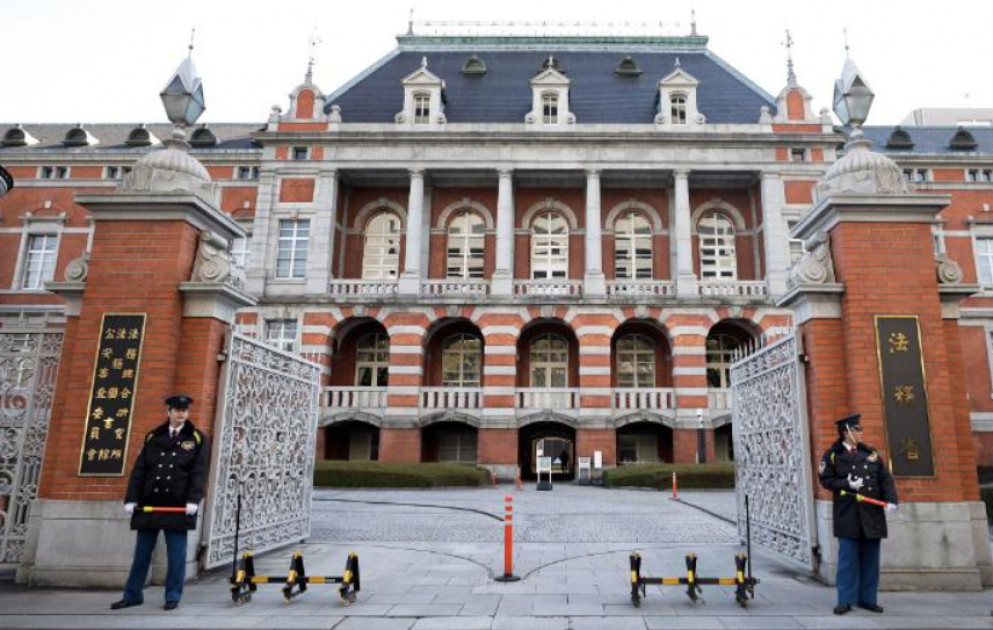
Security officers stand guard in front of an entrance gate to the Ministry of Justice in Tokyo on January 6, 2020.

Audio By Vocalize
Japan
executed three death row inmates by hanging on Tuesday, marking the
first executions the country has carried out since 2019 and the first under Prime Minister Fumio
Kishida.
One
of those put to death was Yasutaka Fujishiro, 65, who murdered seven people
including his aunt and neighbors in 2004, according to Japan's Justice
Ministry.
The
other two, Tomoaki Takanezawa, 54, and Mitsunori Onogawa, 44, killed two
employees in pachinko (game) parlors in 2003, the Justice Ministry confirmed.
"These
are extremely brutal cases, taking precious lives for selfish reasons. I think
these are terrible incidents not only for victims who lost their lives but also
for bereaved families," Justice Minister Yoshihisa Furukawa said at a news
conference.
All executions in Japan are carried out by hanging. Prisoners
often learn of their execution just hours before it's due to take place. Their
families are usually notified about the execution only after it is over,
according to rights group Amnesty International.
Japan's
use of the death penalty -- and the manner in which it is carried out -- has
long angered rights groups and campaigners working to abolish the practice.
"The
recent appointment of Prime Minister Fumio Kishida was a chance for progress on
human rights in Japan. But today's abhorrent resumption of executions is a
damning indictment of this government's lack of respect for the right to
life," said Chiara Sangiorgio, death penalty adviser at Amnesty
International, in response to Tuesday's executions.
"After
two years without executions, this feels like a missed opportunity for Japan to
take long overdue steps to abolish the cruel practice of the death
penalty."
Japan
is one of only a handful of nations that continues to use capital punishment --
among industrialized democracies, only parts of the United States use the
practice. Amnesty has repeatedly called on Japan to establish an immediate
official moratorium on all executions as a first step toward total abolition.
In
November, two death row inmates launched a lawsuit against the government,
demanding it change the practice and seeking compensation for the impact of the
"inhumane" practice, according to Reuters.
Japan
has resisted calls to change and there are many in the country that support the
death penalty.
"The
abolition of the death penalty is an important issue relating to the foundation
of the Japanese criminal justice system," said Deputy Chief Cabinet Secretary
Seiji Kihara at a news conference. "It is not easy to decide on the death
penalty, but considering that these crimes are still going on, I don't believe
it is appropriate to abolish the death penalty."
Leave a Comment