

International Women’s Day: 'We are not yet there on safeguarding women and girls' - Ojobo
{{caption_text }}

Audio By Vocalize
This day honors and recognizes the women and girls who are promoting the development of digital education and transformational technology.
Ms. Ojobo Ode Atuluku, the International Programme Director for Christian Aid, an international development charity, notes that the celebration highlights the significance of safeguarding the rights of women and girls in digital environments and tackling online and ICT-facilitated gender-based violence.
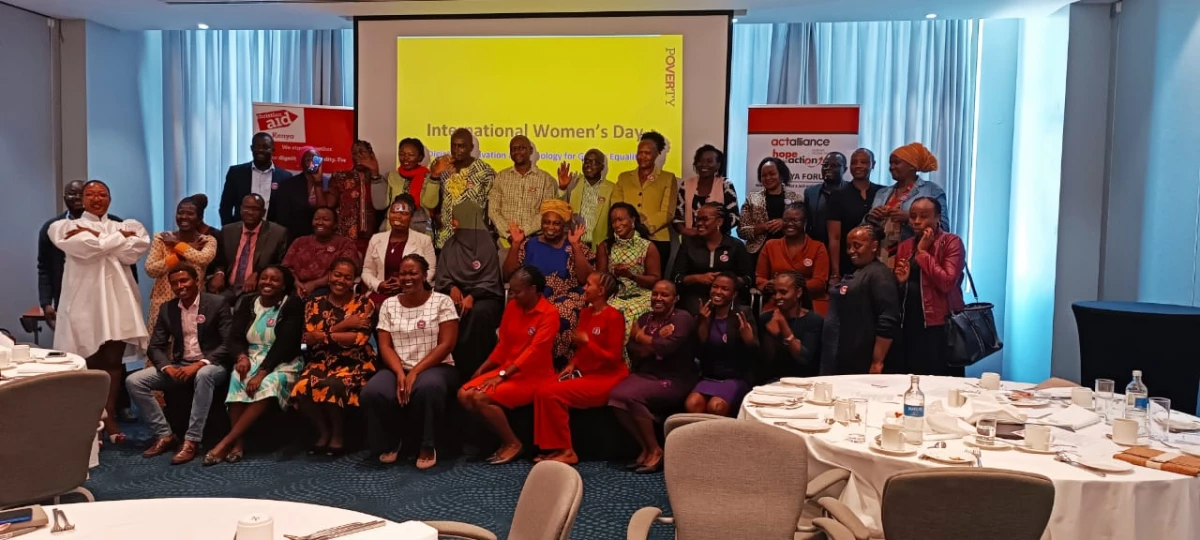
Speaking in Nairobi during Christian Aid's commemoration of International Women’s Day, Ojobo adds that as the world highlights the strides towards gender equality, it also draws attention to the enormous amount of work that remains to be done to safeguard women and girls.
“We need to study how the digital gender gap contributes to growing economic and social disparities,” she said.
“There is interest in young women but their lifestyles are one of the barriers, and that's why it is important for them to get all the support they can get. Like the Nairobi project forces on teen mothers, what time do they have to look after their children? Some finish their training and get employed but they have no one to live their babies as they work,” Ojobo added.
The International Programme Director for Christian Aid notes that despite the enormous progress made, there is a very huge barrier to how much an NGO can achieve and urges all the stakeholders to work together towards a common goal.
“The structures are not there, we are calling on all stakeholders to put in structures so that there is an equality not just between gender male and female but also in women in urban areas and women in rural areas,” she said.
Janet Ngombalu, Country Director for Christian Aid notes a gender-responsive approach to innovation, technology and digital education can increase the awareness of women and girls regarding their rights and engagement.
“We have come up with different solutions like M-Health that helps women in antenatal care continue to get reminders and updates on their antenatal care services. We provide youth and teen mothers access to digital solutions...,” she said.
Technology plays a huge role in people's lives, from education, bank transactions, health care and even accessing government services. Almost everything currently goes through a digital process.
However, according to the United Nations, 37% of women do not use the internet. Even though they account for nearly half the world’s population, 259 million fewer women have access to the Internet than men.
Alice Wanini, a women's rights advocate in Mukuru Kwa Reuben told Citizen Digital her biggest wish is for women to be heard by the government.
“The government should meet us where we are at the grassroots level and educate women and young girls so that we collectively transition from analogue to digital. Lots of these are digital now, even accessing government services you need some digital skills, but a lot of women in informal settlements do not have digital skills,” she said.
Currently, a persistent gender gap in internet access prevents women from fully utilizing technology. Participation in tech design and governance is still significantly hampered by their underrepresentation in STEM education and jobs.
However, they are all too frequently forced out of the digital places they occupy due to the persistent fear of gender-based violence online and the lack of legal remedy.
United Nations data indicate thta if women are unable to access the internet and do not feel safe online, they are unable to develop the necessary digital skills to engage in digital spaces, which diminishes their opportunities to pursue careers in science, technology, engineering, and mathematics (STEM) related fields.
By 2050, 75% of jobs will be related to STEM areas and yet today, women hold just 22% of positions in artificial intelligence, to name just one field.
Leave a Comment