
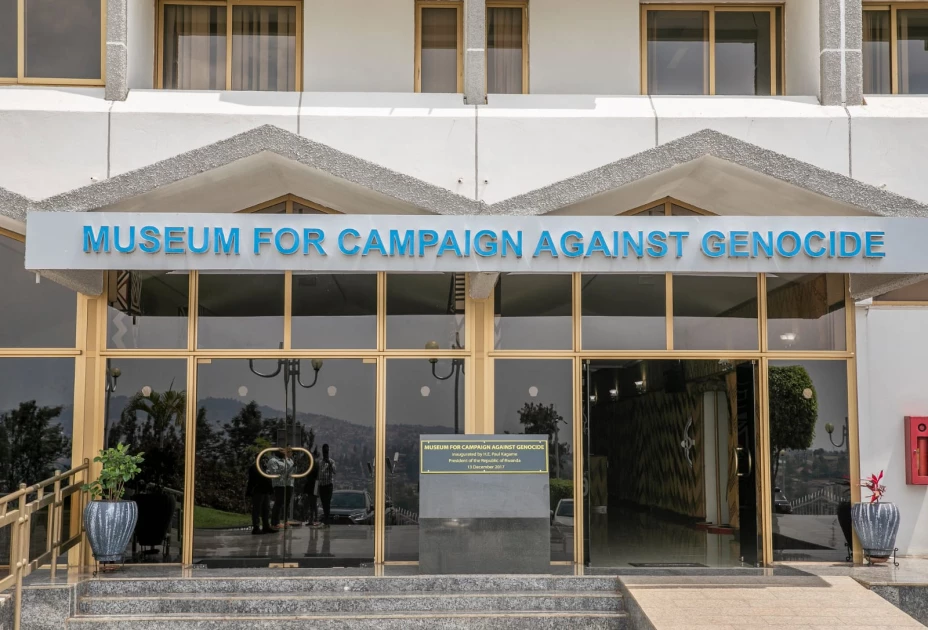
Inside Rwanda’s Campaign Against Genocide Museum

Audio By Vocalize
The museum commemorates the major role played by the Rwanda Patriotic Army (RPA) in ending the 1994 genocide, which resulted in the deaths of close to a million people and the displacement of over two million Rwandans.
From December 1993 to April 7, 1994, when the mass killings began, the building—formerly known as the Conseil National de Développement (CND)—housed several leaders and 600 RPA soldiers as the country prepared for the establishment of a broad-based Transitional Government and the National Transitional Assembly.
According to museum manager Médard Bashana, plans for the Transitional Government collapsed on April 6, 1994, after a plane carrying former Rwandan President Juvenal Habyarimana was shot down while approaching Kigali International Airport.
"The killing of former President Juvenal Habyarimana sparked the mass killings of Tutsis and moderate Hutus by government forces and the Interahamwe militia group," Bashana explained.
Soon after, former members of the Armed Forces of Rwanda (FAR) began attacking the museum building, aiming to eliminate Rwandan Patriotic Front (RPF) leaders who were present.
"The intention of the FAR soldiers became clear—they wanted to kill RPF politicians and the 600 RPA soldiers stationed right in the middle of enemy territory as the mass killings of the Tutsi began across the country," Bashana added.
Bashana says President Kagame who was then Chairman of the RPA High Command immediately ordered the 600 RPA soldiers to secure the building and prevent FAR’s Special Forces and the presidential guards from advancing towards the building.
On April 7, 1994, Kagame issued an order for his troops to act swiftly to stop the mass killings of the Tutsi.
"Kagame’s mission was to stop the genocide, overthrow the genocidal regime, and restore peace across the country," Bashana noted.
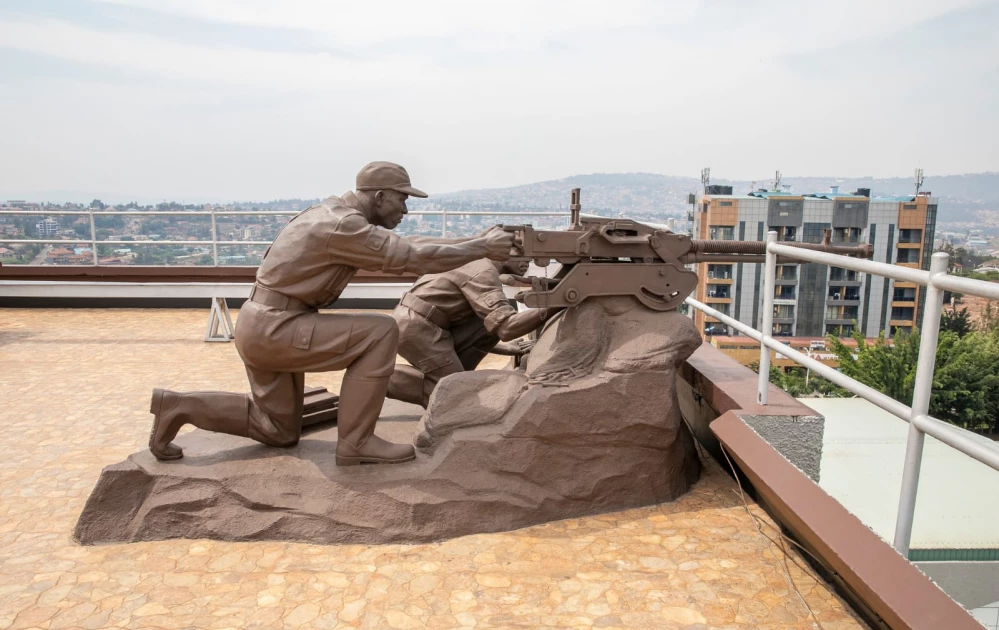
To help defend against the heavily armed FAR soldiers advancing from nearby camps, the RPA mounted a 12.7mm heavy machine gun on the CND rooftop.
Operated by Maj. (Rtd) David Rwabinumi, this gun played a critical role in repelling attacks from genocidal forces stationed at Camp Kanombe and the notorious Presidential Guard.
"The gun was instrumental in keeping the enemy at bay between April 7 and April 21, 1994. The monument is a tribute not only to Major Rwabinumi but to all RPA soldiers who risked their lives during that battle," Bashana explained. To honour Maj. (Rtd) Rwabinumi, who operated the machine gun day and night for two weeks, the Rwandan government erected a monument on the exact spot where the gun had been mounted.
The museum is now a major attraction where tourists from around the world come to learn firsthand how the RPA ended the 100 days of genocide against the Tutsi.
Leave a Comment