

How the US-Iran war proved Nigeria's Dangote right and the oil idea Nigeria tried to kill
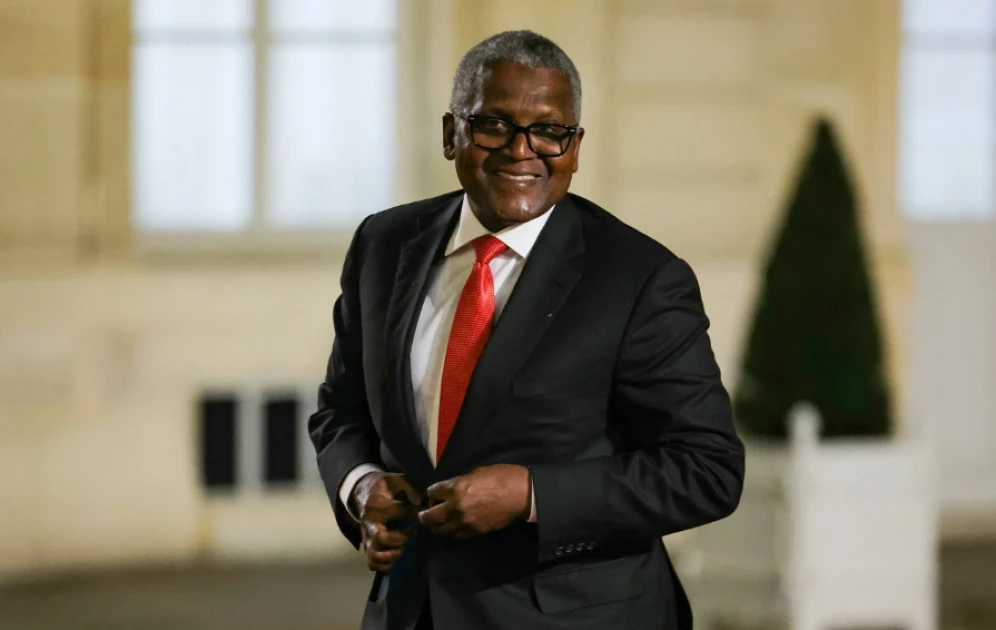
Dangote Group’s CEO Aliko Dangote, in Paris in November 2024. © Thomas SAMSON / AFP

Audio By Vocalize
For three decades, Nigeria lived a peculiar humiliation: Africa’s largest crude oil producer, shipping raw barrels to Rotterdam and Houston, then buying back refined petrol at a steep premium, its citizens queuing for hours at fuel stations in a country sitting atop billions of barrels of black gold – crude oil.
Successive governments spent $18 billion, or more, trying to repair four state-owned refineries that never meaningfully ran again. Into that landscape of endemic failure stepped Aliko Dangote with an audacious wager: a $20 billion, single-train oil refinery on the Lagos coast that he said would end Nigeria’s import dependency and supply fuel not just to his country, but to the entire African continent.
Most people told him he was dreaming. An individual businessman doing what the Nigerian government would not do? Scorned and ridiculed in equal measure, his resilience has borne fruit, albeit the first fruits, as the Dangote Refineries in Nigeria is suddenly courted and sought after by not only African countries wary of running out of oil but even by countries beyond the continent, courtesy of the Israel-Iran-US war.
The Crisis That
Proved Dangote Right
On February 28, 2026, the United States and Israel launched coordinated airstrikes on Iran, in the process killing Iranian Supreme Leader Ali Khamenei. This triggered a cascade of secondary crises including the closure of the Strait of Hormuz and Iranian retaliatory strikes across nine Gulf Cooperation Council states.
Within
days, the energy order and rapport that Kenya, and Africa in general, had
depended on for more than half a century began crumbling. But then, there is
one man, an African, with the infrastructure to fill the gap - Aliko Dangote.
What the Iran war has done, in brutal fashion, is run Africa's energy, a
security stress test. It has unveiled one man's, ridiculed, obstructed
megaproject to be the only thing fit-for-purpose.
The Scale of the
Disruption
The Strait of
Hormuz is not merely a shipping lane. It facilitates approximately 20 million
barrels of oil per day and roughly 20 percent of global seaborne oil trade.
Around 110 billion cubic meters per year of Liquefied Natural Gas (LNG) exports
that travel through the Strait, representing 19 percent of global LNG trade in
2025, have been disrupted since February 28. Arabian Gulf’s “QatarEnergy” have
ceased LNG production from its 77 million tons per annum facility in Ras Laffan
following Iranian military attacks on its facilities.
Brent crude prices
jumped to almost $119 per barrel on March 9, the highest since mid-2022, before
retreating toward $95 per barrel following comments that the war's end was
imminent, since then, it has risen to about $107.78 currently. The war more
than doubled the price of kerosene-based products like diesel and jet fuel, as
refineries lacked certain types of crude oil.
Africa's Structural
Vulnerability Exposed
For decades, African
countries made a choice, often by necessity, to depend on the world's most
geopolitically volatile region for their refined petroleum products. About 75 per cent of refined fuel imports in East and Southern Africa come from the
Middle East, according to energy consultancy CITAC. Therefore, when Iran sealed
the Strait of Hormuz, these supply chains did not just slow down, they stopped.
The first sector
worldwide to feel this pinch is the Aviation sector. It has been significantly
disrupted due to the closure of airspace on key flight corridors between
Africa, Asia and Europe, forcing airlines to reroute along longer paths that
circumnavigated the Middle East, adding to journey time and fuel costs. Aviation
consultants are concerned that East African carriers, like Kenya Airways, which
are already not so profitable, face an imminent and immediate operations cost
shock.
Dangote Refineries Rapid Tangeant
(Green) Total clean product exports (bpd) (Purple) Shipments to African countries (bpd)
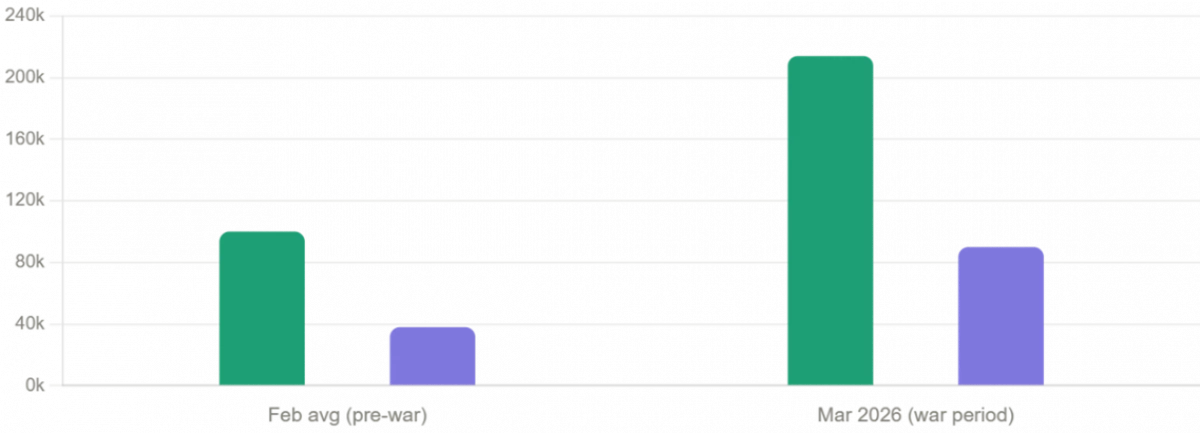
Source: Kpler tanker-tracking data / Reuters, March 2026
The Dangote
Petroleum Refinery sold 12 cargoes amounting to 456,000 tons of refined
petroleum products, delivered to Côte d'Ivoire, Cameroon, Tanzania, Ghana and
Togo. These represent the refinery's first exports of petrol since it achieved
its 650,000 barrel-per-day capacity in February. Tanzania's inclusion is
particularly significant as it marked the first time Dangote fuel had reached
East Africa, a region previously entirely dependent on Gulf suppliers.
The Dangote
Refinery, with its large-scale capacity and proximity advantage, is emerging as
a key beneficiary, offering shorter delivery times and potentially lower
freight costs compared to cargoes sourced from Europe or the Gulf.
The Scramble for
Long-Term Contracts
South Africa is
seeking a 12-month standard supply contract with the refinery as part of a
broader scramble by African governments to secure alternative energy sources.
The significance of this cannot be overstated, as South Africa has the
continent's most sophisticated energy sector, with its own refining capacity,
yet it is now knocking on Dangote's door. Ghana and Kenya have also expressed
interest.
Dangote painted the
current oil sector situation plainly when he said, "Right now it is not
about pricing, it's about availability. I think the situation will continue for
a while." That framing, availability over pricing captures the fundamental
shift. African governments that once shopped for the cheapest cargo are now
willing to pay a premium simply to secure supply, full-stop.
The Geopolitical
Lesson
For decades, Africa has depended heavily on imported fuel cargoes from Europe and the Middle East, often of lower quality, leaving the continent exposed to logistical delays and external supply shocks. The Iran-Israel-USA war has simply made visible what always existed; a continent structurally dependent on foreign refiners, with no buffer when those supply chains break.
The shift toward sourcing fuel from
within the continent reflects a broader push for energy security and reduced
reliance on external markets. By leveraging regional refining capacity, African
countries can mitigate exposure to geopolitical shocks, currency volatility,
and logistical disruptions.
Internal
Constraints
Within Dangote Refineries, there are real constraints; however, as over 75 per cent of its output is reserved for Nigeria's domestic needs, leaving only 25 per cent available for export. Nigeria itself is facing a surge of more than 50 per cent in domestic pump prices since the war began, creating intense political pressure on Dangote to prioritise home supply.
The Nigerian energy sector regulator, the NMDPRA,
recently announced it had halted granting import licenses to all fuel marketers, making the refinery the only legal source of supply inside Nigeria, a double
bind when export demand is surging simultaneously.
Furthermore, the
refinery's own crude sourcing remains partially dependent on imports, since
Nigeria's domestic crude production has struggled to meet OPEC allocations. The
war's effect on global crude prices raises feedstock costs even for a domestic
refinery.
Yet the larger
strategic picture is unambiguous. The increased demand for Dangote's output
could reshape trade flows and pricing structures within Africa's fuel market,
while strengthening Nigeria's position as a regional energy exporter and
generating foreign exchange earnings.
When Dangote unveiled his plans in September 2013, securing an initial $3.3 billion in financing for what he estimated would be a $9 billion project, the scepticism was immediate and voluminous. The obstacles were not merely financial. Dangote himself recalled encountering difficulties in finding reliable engineering, procurement and construction contractors. Construction alone took a decade. But the physical scale of what was being built was staggering: the world’s largest crude distillation column, weighing 2,350 tons and standing 112 meters tall, was installed by a specialist Dutch firm in 2019.
The world’s heaviest refinery regenerator, at
3,000 tons, was transported across Nigerian roads in what engineers called the
heaviest cargo ever moved on a public road in Africa.
The refinery was inaugurated on May 22, 2023, in
a ceremony attended by President Bola Tinubu and several African heads of
state. Nigerians celebrated. But within months of the facility beginning
meaningful production, it became clear that some powerful interests were
determined to ensure it did not succeed.
At the heart of the resistance was crude oil
supply. The Dangote refinery found itself unable to consistently source the
domestic crude it needed to run at capacity, forcing it to import barrels from
the United States, Brazil and Middle Eastern suppliers at dollar-denominated
costs, an irony almost too stark to believe: Nigeria’s largest refinery,
importing crude oil.
Then came the regulator. The head of the Nigerian Midstream and Downstream Petroleum Regulatory Authority (NMDPRA) made public comments that many Nigerians interpreted as deliberately undermining the refinery rather than supporting it.
An outraged Dangote responded directly: “It is disheartening that instead of safeguarding the market, the regulator is undermining it.”
Nigeria’s National Assembly was so
alarmed that it dispatched the House Speaker, Tajudeen Abbas. Tests found that
petrol from the Dangote refinery registered a Sulphur content of 87.6 parts per
million as compared to over 1,800 and 2,000 ppm detected in competing imported
samples. The refinery was producing cleaner fuel than anything Nigeria had ever
seen.
The fuel marketers who had for years profited
from importing petrol were next in line. When the refinery began undercutting
their prices and, at one-point driving petrol to N739 per litre (approx. Ksh.69) compared to
competitors who were selling at over N900 (approx. Ksh.86), a full-blown price war erupted
across Nigeria’s downstream sector. Consumers, for the first time in memory,
found filling stations competing for their attention. The NNPC itself was
forced to slash prices to remain relevant.
The Petroleum and Natural Gas Senior Staff
Association of Nigeria (PENGASSAN) picketed oil and gas facilities in September
2025 after the refinery dismissed approximately 800 employees it accused of
sabotage. The Depot and Petroleum Products Marketers Association of Nigeria
(DAPPMAN) entered the fray, alleging in newspaper advertisements that Dangote
was merely re-exporting imported finished petrol under the guise of domestic
refining, a charge the company categorically and furiously denied, calling the
campaign the work of “unpatriotic and unscrupulous individuals who
cannot afford to see Nigeria stop imports.”
The turning point arrived through a combination of political intervention and sheer persistence. President Tinubu ordered the NNPC to sell crude to the Dangote refinery in naira, reducing the refinery’s dollar exposure. A 15 per cent import duty on petrol and diesel was imposed on imported fuel, tilting the competitive landscape toward domestic production.
The Independent Petroleum Marketers Association of Nigeria, which
controls more than 85 per cent of filling stations nationwide, entered a
strategic partnership with the refinery. NNPC ended its role as sole off-taker
in October 2024, opening the market to direct sales and eliminating the hidden
subsidy that had been propping up an unsustainable arrangement.
By February 2026, the refinery had reached its full designed capacity of 650,000 barrels per day and it promptly announced plans to expand its production capacity. Nigeria’s petrol import bill fell nearly 29 percent in 2025 to $10 billion, down from $14.06 billion the year before.
Refined petroleum product exports, a line item that had barely existed before, generated $5.85 billion in foreign exchange. Gasoline was flowing to the United States. West Africa was receiving diesel and aviation fuel. The refinery had become a structural driver of Nigeria’s national accounts, according to the Central Bank of Nigeria.
The macroeconomic numbers are extraordinary
for a country accustomed to petroleum sector disappointment. Nigeria’s goods
account surplus reached $14.51 billion in 2025, up from $13.17 billion the year
before. External reserves climbed to $45.75 billion by December 2025 which, is
a 13.83 percent gain year-on-year. The country that had exported crude and
imported everything refined was, for the first time in its independent history,
a net exporter of refined petroleum products.
The refinery supplies fuel that complies with
Euro 5 environmental standards, cleaner than the High-Sulphur imports Nigeria
had been receiving for decades from suppliers who, were offloading low standard
products that failed to meet standards in more regulated markets. Nigerian motorists,
and other regional nations around them are now receiving among the
highest-quality road fuel available anywhere in the world.
In October 2025, Dangote announced that expansion to 1.4 million barrels per day was underway — a doubling of capacity that would make his facility the largest refinery on earth, overtaking India’s Jamnagar complex run by Reliance Industries. Honeywell announced a technology partnership to support the expansion, targeting completion by 2028.
The
refinery’s petrochemical complex will produce 830,000 metric tons of
polypropylene annually, with plans to expand to 2.4 million tons by 2028. It is
already the largest single-train refinery in the world. Dangote Refineries can
process heavier, cheaper crudes more efficiently than most rivals. In December
2025, Dangote unveiled plans to list a 10 percent stake on the Nigerian
Exchange, offering investors dividends payable in US dollars.
The significance of what has been achieved extends
well beyond Nigeria. For generations, African nations have watched their
natural resources extracted, shipped abroad, refined by others, and sold back
to them at a profit. African cocoa, rubber, coffee, tea, minerals… the story
script in all these cases can and should change. The Dangote refinery is the
most visible challenge yet to that model. It establishes, in concrete and
steel, the proposition that Africa can and must add value to its own raw
materials before export.
But the central question is whether one
man’s vision, sustained through a decade of ridicule, obstruction, crude supply
denial, union battles, regulatory hostility and market warfare, could break Africa’s
oldest industrial curse? The answer, at
least for now, is an unambiguous, “yes!”. Aliko Dangote bet on Nigeria when
almost no one else would. The numbers, right now, say he was right.
Leave a Comment