

Cultural heritage explored during Belt and Road culture seminar in Beijing
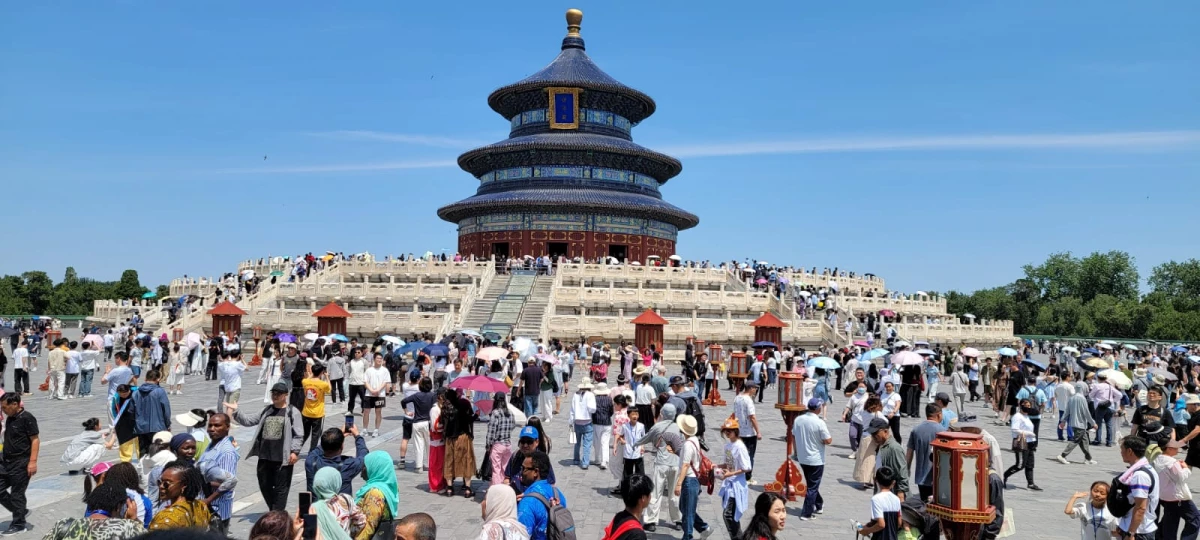
Tourists at the Temple of Heaven, where numbered columns reflect ancient beliefs linking earth to the heavens through seasons, months, and solar terms. PHOTO|Moses Elvis

Audio By Vocalize
As part of the Seminar on Digital Culture Construction for Belt and Road Countries, organised by the Central Academy of Culture and Tourism Administration, delegates visited two of China's most historically significant landmarks: the Temple of Heaven and the Great Wall of China.
Located in South Beijing, the Temple of Heaven is a UNESCO World Heritage Site with over 600 years of history. Built during the Ming and Qing dynasties, it was once the ceremonial site where emperors prayed for good harvests. The site exemplifies traditional Chinese beliefs in the unity of heaven, earth, and humanity.
Architecturally, the temple reflects ancient cosmological principles. Its main structure, the Hall of Prayer for Good Harvests, incorporates symbolic use of columns: four central columns represent the seasons, twelve middle columns signify the months of the year, and twenty-four outer columns correspond to the traditional solar terms of the Chinese agricultural calendar. This spatial symbolism illustrates the philosophical emphasis on harmony with nature and time.

Now attracting between 50,000 and 100,000 visitors daily, the Temple of Heaven continues to be a major cultural site. During the visit, 32 participants from eight countries—Armenia, Bulgaria, Egypt, Gambia, Kenya, Fiji, Uruguay, and Jordan—engaged with the site's historical and spiritual context, gaining insight into China’s imperial traditions.
The group also toured the Great Wall, one of China's most iconic structures. The wall’s origins trace back to the Western Zhou Dynasty in the 9th century BC, when early beacon towers were used for military communication. These towers evolved over time into a vast network of walls, watchtowers, and fortresses spanning thousands of kilometres—designed to protect China’s northern borders.
Participants climbed one of the historic watchtowers, offering a physical connection to the Wall’s enduring role in Chinese history as a military and cultural landmark.
These visits offered participants a deeper understanding of China’s heritage while fostering cultural exchange among countries involved in the Belt and Road Initiative.

Leave a Comment