

Biden nominates former MasterCard CEO Ajay Banga to head World Bank
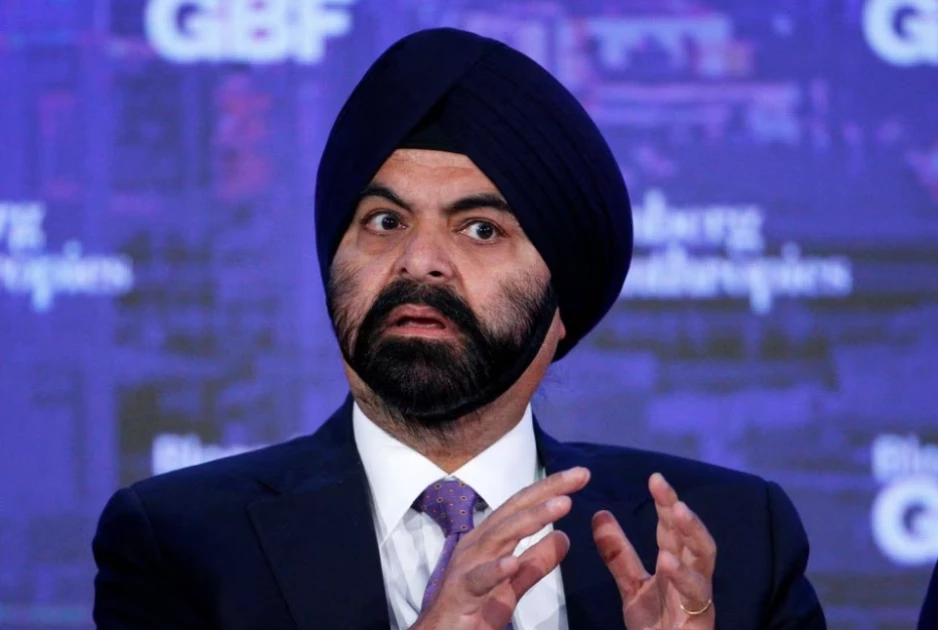
Mastercard President and CEO Ajay Banga speaks at the Bloomberg Global Business Forum in New York, U.S., September 20, 2017. REUTERS/Brendan McDermid/File Photo

Audio By Vocalize
U.S.
President Joe Biden on Thursday nominated former MasterCard CEO Ajay Banga to
become president of the World Bank, hailing his business experience in his
native India and his commitment to mobilizing private funds to expand financial
inclusion and help developing countries grapple with climate change.
The World Bank on Wednesday said it expects to
select a new president by early May to replace David Malpass, who announced his resignation
last week after months of controversy over his views on climate change and
pressure by Treasury Secretary Janet Yellen for him to adopt "bolder and
more imaginative" reforms.
Scott
Morris, a senior fellow at the Center for Global Development and a former U.S.
Treasury official, said: "I think the speed of the nomination, less than
48 hours after the WB board launched the process, reflects a desire to
discourage any challengers and wrap it up quickly."
Biden's
nomination of Banga, 63, now a U.S. citizen, all but assures he will assume a
job that oversees billions of dollars of funding, putting someone with close
ties to emerging markets at the helm of the bank as it races to better help
developing countries address climate change and other pressing challenges.
“Ajay
is uniquely equipped to lead the World Bank at this critical moment in
history," Biden said in a statement. "Raised in India, Ajay has a
unique perspective on the opportunities and challenges facing developing
countries and how the World Bank can deliver on its ambitious agenda to reduce
poverty and expand prosperity.”
Biden singled Banga's decades of experience
building global companies and building public-private partnerships to tackle
urgent challenges such as climate change, and said he had a proven track record
working with global leaders.
Banga's
work in India and other emerging markets, his "obsession" with
expanding financial inclusion, and his deep knowledge of new technologies could
help bridge the growing divide between rich countries and emerging markets,
said Luis Alberto Moreno, who worked closely with Banga while serving as
president of the Inter-American Development Bank.
"He can really be a force for
change," Moreno said, noting that Banga enjoyed the trust of financial
markets whose support was urgently needed to help raise the trillions of
dollars needed to deal with global challenges.
The bank has historically been headed by
someone from the United States, its largest shareholder, while a European heads
the International Monetary Fund (IMF), but developing countries and emerging
markets have pushed to widen those choices.
Banga's nomination is the first to be made
public, but the bank will accept nominations from other member countries
through March 29. Germany, another major shareholder, this week said the job
should go to a woman since the bank has never been headed by a woman in its 77-year
history.
A senior U.S. administration official said
they did not know if other countries would nominate candidates for the post.
Asked about Washington's decision to skip
nominating a woman, the official said Banga had "a personal conviction and
excellent track record promoting diversity, equity and inclusion in the work
that he does" and would bring that view to the bank.
But Jeff Hauser, who heads the progressive
Revolving Door Project, demanded Biden retract the nomination of a top official
from a "rapacious international private equity firm" who had
previously only worked in private sector firms.
"Neither private equity, nor MasterCard,
nor Citigroup, nor PepsiCo, nor Nestlé, nor Dow promote shared prosperity. They
all do vastly more to exacerbate inequality than to fight it," he said in
a statement.
Oxfam International said the next bank
president should be chosen through a transparent global process. “The World
Bank is not a U.S. bank, a commercial bank, or a private equity firm. For a job
of this stature, we need more than a tap on the shoulder from President
Biden."
Banga, born into a Sikh family in India, is
vice chair of General Atlantic, a U.S. private equity firm that administration
officials said has invested over $800 million in EV charging solutions, solar
power and sustainable farming. He also serves as honorary chair of the
International Chamber of Commerce.
He retired in December 2021 after 12 years at
the helm of Mastercard Inc, where he helped 500 million unbanked
people join the digital economy, averted layoffs of the bank's 19,000 employees
during the COVID-19 pandemic, and led work on climate, gender and sustainable
agriculture.
Vice President Kamala Harris said Banga
brought "great insight, energy and persistence" to his role as
co-chair of the Partnership for Central America, which has mobilized $4.2
billion in public, private and non-profit funds to advance economic opportunity
in Northern Central America.
Treasury's Yellen said Banga clearly
understood the importance of retooling the bank to help developing countries
address climate change, prepare for future pandemics and mitigate the causes
and consequences of conflict and fragility.
"Mr. Banga’s track record of forging
partnerships between the public sector, private sector, and non-profits
uniquely equips him to help mobilize the private capital and press for the
reforms needed to meet our shared ambitions," she said.
Biden's climate envoy John Kerry said Banga
brought the "new thinking and creative vision regarding finance"
needed to meet the challenge of the energy transition.
Leave a Comment