

Beyond exams: When survival competes with learning in rural schools

Audio By Vocalize
For most children, mornings bring anticipation: books, uniforms, and the promise of another school day.
For thirteen-year-old Blessing (not her real name), mornings carry something heavier.
Before lessons or homework, she must first confront the quiet realities of loss, responsibility and uncertainty.
Blessing lives with her grandmother, Miriam Mmboga, in their modest home. Her father died from COVID-19 when she was seven. He had gone to Saudi Arabia to work when he succumbed, and her mother left her in her grandmother’s care. Mmboga herself is unwell, living with a painful breast swelling that remains undiagnosed despite several hospital visits.
Even so, Blessing attends school like other children. But grief and responsibility follow her into the classroom.
“Sometimes I feel very tired in my heart,” Blessing says quietly. “Even when I go to school, my mind is not always there.”
Despite the emotional strain, she wakes early each day, dresses for school, and helps around the home before setting off on foot.
Across rural Kenya, stories like Blessing’s are common. Poverty, illness, and family hardship often shape the education experience long before a child enters the classroom.
Health challenges weigh heavily on families. National health data indicates that non-communicable diseases (NCDs) now account for 61.7 percent of hospital deaths in Kenya, up from 52.4 percent in 2023, highlighting the growing burden of chronic illnesses on households and the healthcare system.
In a nearby village lives Angel, another student whose education is shaped by illness.
Angel lives with sickle cell anemia, a condition that brings frequent pain and extreme fatigue. Some days, attending school becomes impossible.
“Sometimes I want to go to class, but I feel very weak,” she says. “Even sitting in class becomes hard.”
Her father, a technical training graduate who now serves as a pastor, works tirelessly to support his children. Angel’s medical care is covered through the Social Health Authority health scheme, but the family still faces financial strain.
Angel’s brother, who also lives with sickle cell disease, was forced to drop out of school. Today he helps their father at church, where he has become a talented pianist.
These experiences illustrate a difficult truth: for many children, education competes daily with survival.
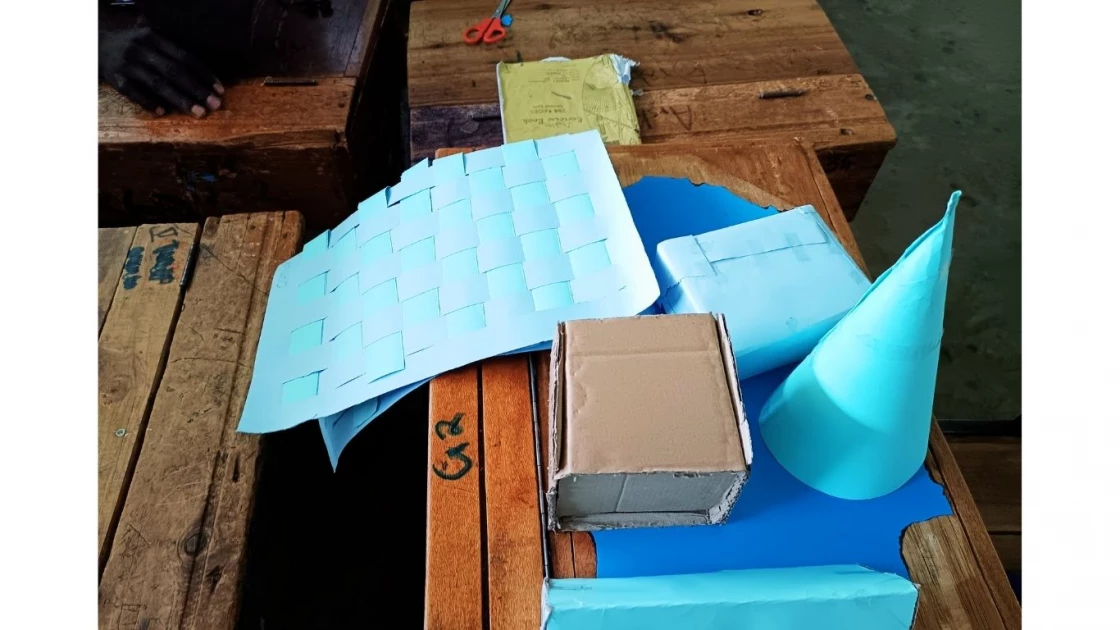
Kenya’s Competency-Based Curriculum (CBC) was introduced to transform learning by moving beyond traditional exams. The curriculum aims to equip students with practical skills such as creativity, critical thinking, collaboration, and resilience.
It also emphasizes social-emotional learning, ethical reasoning, and active citizenship.
But in classrooms across rural communities, teachers often face challenges far beyond textbooks.
“Children come to class worried about food or whether someone at home will be okay,” says Mr. Innocent Mukunza, a teacher in the area. “No matter how well you teach, life skills lessons are hard to absorb under those conditions.”
Education experts say repeated illness, trauma, and chronic stress can significantly affect children’s cognitive development. Concentration becomes difficult, memory weakens, and emotional regulation suffers.
“Without psychosocial and medical support, even the most ambitious curriculum struggles to achieve its goals,” Cynthia Tambasi, a counsellor at Eregi teachers' training college, says.
Beyond national education reforms, broader continental and global commitments also emphasize inclusive learning for every child.
The African Union through Agenda 2063 envisions an Africa where education equips young people with the skills and values needed to drive social and economic transformation.
Similarly, the United Nations Sustainable Development Goal 4 calls for inclusive and equitable quality education for all. Frameworks such as the Comprehensive Refugee Response Framework and the African Charter on the Rights and Welfare of the Child stress the need to remove barriers to learning, including poverty, illness, and distance from schools. Yet for many children in rural communities, these barriers remain part of daily life.
Organizations like UNICEF advocate for a holistic approach to education that goes beyond academics. Their framework emphasizes inclusion, equity, accountability, and compassion, while promoting life skills such as empathy, teamwork, honesty, and self-control.
These skills help children navigate complex social realities and develop the resilience needed to overcome adversity.
Kenya’s education system is also incorporating these ideas through Value-Based Education initiatives developed by the Kenya Institute of Curriculum Development (KICD).
Under this framework, core values including love, responsibility, respect, unity, peace, integrity, and social justice are integrated into daily learning across subjects.
Seven core competencies underpin the curriculum: communication and collaboration, critical thinking and problem-solving, creativity, citizenship, learning to learn, self-efficacy, and digital literacy.
Together, these principles aim to nurture learners who are not only academically capable but also socially responsible and ethically grounded.
Yet the experiences of children like Blessing and Angel raise important questions for policymakers.
How can life skills education succeed if children arrive in school burdened by grief, hunger, illness, or caregiving responsibilities?
“Children cannot separate learning from their lived reality,” explains Tambasi. “If a learner is grieving, hungry, or sick, their ability to absorb competencies is limited.”
Still, hope persists.
Blessing continues to attend school, holding on to a dream of a different future.
“I want to finish school,” she says. “I just hope one day learning will feel easier.”
For Angel, every day she manages to sit in class is a quiet victory over pain.
Their journeys reveal a simple but powerful truth: education success cannot be measured only by exams or grades. It must also be measured by whether children are supported enough emotionally, physically, and socially to truly learn.
In many rural communities, schools do what they can. Teachers offer guidance, neighbors lend support, and families make sacrifices.
But the gap between education policy and lived reality remains wide.
According to Mr. Innocent Mukunza, values are not taught as a separate subject in school but are integrated into everyday classroom activities. Teachers encourage students to express themselves through discussions, group work, and collaborative learning.
“In class, we allow learners to share their opinions and listen to one another,” he explains. “Through group discussions, they learn respect, teamwork, and how to appreciate different views.”
Students are also encouraged to reflect on their thoughts and experiences through writing. By composing essays and short reflections, learners are able to express what they are thinking and feeling, helping teachers understand their perspectives while nurturing honesty and self-awareness.
“These activities help children practice values,” says Mukunza. “When learners listen to each other and work together, they begin to understand that everyone’s voice matters.”
Through such classroom practices, values like cooperation, tolerance, and integrity become part of students’ daily learning experience rather than abstract ideas taught from textbooks.
Until survival stops competing with learning, the promise of transformation through education will remain unfinished.
According to Elizabeth Owiti of Mizizi Elimu Afrika, “Efforts to integrate life skills and values in education require a broader system-wide approach that goes beyond the classroom.
Through the Action for Lifeskills and Families programme across Kenya, Uganda, and Tanzania, we are working with governments to strengthen policies, teacher training, and assessment systems so that life skills are not just included in the curriculum, but effectively practiced.
However, for such reforms to succeed, learning environments must also address the realities children face at home, including poverty, illness, and emotional distress, which directly affect their ability to engage and learn.”
For children like Blessing and Angel, every school day is an act of resilience.
And in their determination lies a reminder: education is not only about passing exams. It is about hope, dignity, and the possibility of a better future.
Leave a Comment