
Auditor General exposes deep funding crisis in public education sector
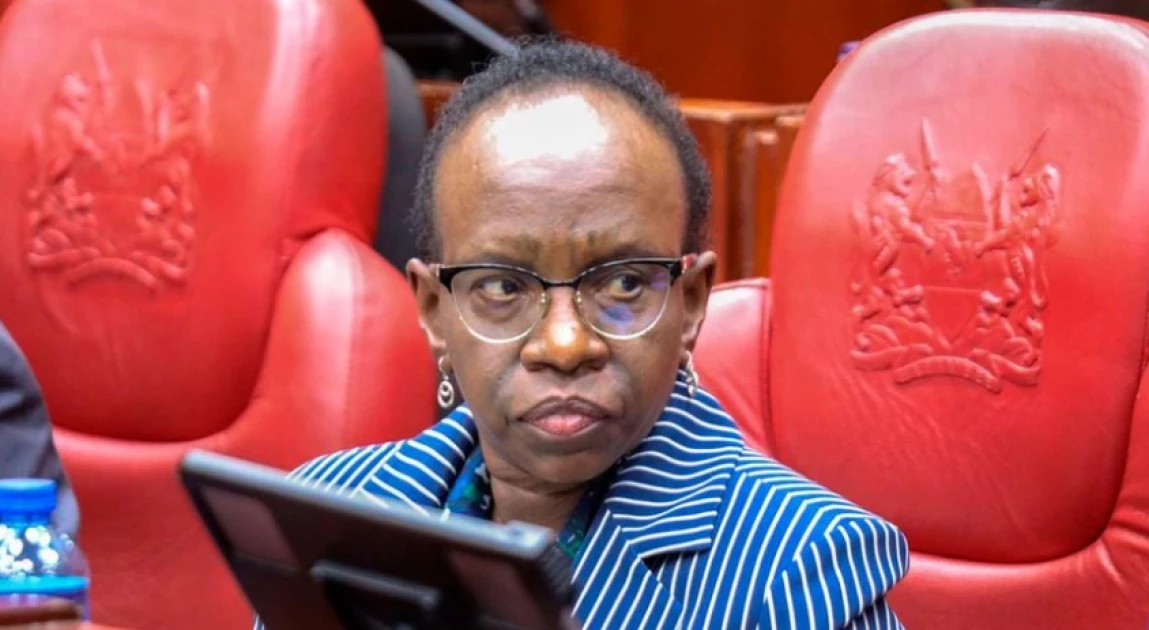
Auditor General Nancy Gathungu during a past Parliamentary committee appearance. PHOTO | COURTESY

Audio By Vocalize
The Auditor General’s office has laid bare the challenges facing the public education sector in the country, with many schools suffocating under debt.
In a special
report tabled before the Public Accounts Committee of the National Assembly,
Auditor General Nancy Gathungu revealed that the National Government has
consistently underfunded public schools.
In an audit
conducted between the 2021 and 2024 financial years, it was revealed that the
Government underfunded public schools to the tune of Ksh.117 billion, with
secondary schools being the most affected.
Speaking
before the committee chaired by Tindi Mwale, the Director of Audit in the
Auditor General’s office, Justus Okumu, said secondary schools had received
Ksh.71 billion less over four years. Junior secondary schools received Ksh.39.9
billion less than the budgeted amount, while primary schools were short by
Ksh.14 billion during the period under review.
“The main
problem facing public schools is underfunding. The Ministry comes up with a
budget for various school activities, but it is always scaled down. As a
result, some activities are either shelved or undertaken, leading to the
accumulation of pending bills,” he told the committee.
During the
audit, the National Education Management Information System (NEMIS) also came
under sharp scrutiny for showing inconsistent student numbers compared to
actual enrollment in schools. The system was blamed for the underfunding of
some schools, while others received more funds than they were entitled to.
According to
the audit, 354 secondary schools were overfunded by Ksh.3.5 billion, 99 junior
secondary schools were overfunded by Ksh.30.8 billion, and 270 primary schools
received an excess of Ksh.79.9 million, totaling Ksh.3.7 billion in
overfunding.
Meanwhile,
some schools were underfunded, prompting committee members to question the
integrity of the NEMIS system.
“The very
nature of NEMIS was designed to disenfranchise some regions of the country.
That is why, in many cases, the student numbers in NEMIS are half of what
actually exists in schools. We hope this historical injustice will be addressed
when we consider this report,” said Funyula MP Oundo Mudenyo.
More puzzling
were revelations about capitation funds sent to schools that, according to the
Auditor General, were non-existent.
Details in
the report showed that an audit inspection of 83 sampled schools found that 14
schools received capitation funds totaling Ksh.16.6 billion, yet investigations
revealed they did not exist.
“However, the
schools did not appear in the County Director of Education’s records, and the
CDEs were not aware of their existence,” Okumu told MPs.
The audit
also revealed that six of the sampled schools, which had ceased operations,
still received capitation amounting to Ksh.889,348. Thirteen schools that
received Ksh.11 million during the audit period had registered names that
differed from those captured in NEMIS.
“We want to
know who authorized the transfer of funds to ghost schools, and we demand to
know which heartless public officer pressed the button to send money to them.
Action must be taken,” said Funyula MP Mudenyo.
Committee
Chairperson Tindi Mwale stated that the Ministry of Education will now be
summoned to explain the issues raised in the audit report.
“We shall write to the Ministry and ask them to respond to the discrepancies highlighted in the special report. Special reports are prioritized, and we are going to move swiftly and demand answers from the accounting officer,” he said.
Join the Discussion
Share your perspective with the Citizen Digital community.
No comments yet
This discussion is waiting for your voice. Be the first to share your thoughts!