

A year in, Haiti mission leader warns of shortfalls in troops, funds, gear
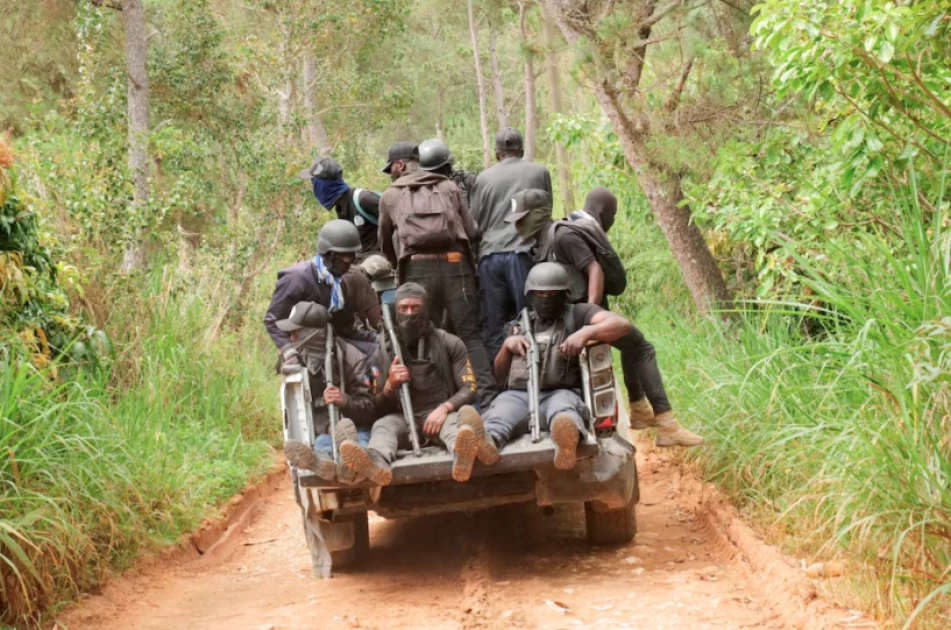
Members of a neighbourhood watch drive up a hill while patrolling a residential area after gangs torched homes, amid a surge in violence that has displaced approximately 1.3 million people in six months, according to U.N. estimates, in Furcy, Haiti June 24, 2025. REUTERS/Jean Feguens Regala/File Photo

Audio By Vocalize
The commander of the United Nations-backed security mission
in Haiti, mandated to fight powerful armed gangs in the nation, on Thursday
called on more countries to lend their support as he marked one year since the
first troops deployed.
The first deployment of police from Kenya, which is leading
the mission, arrived last June, over a year and a half after Haiti's government
had first requested urgent support.
"As a new model, funded by voluntary partners, the
mission faces challenges - including funding, personnel and logistics - that
are being addressed to enable the mission to achieve its objectives on
schedule," Godfrey Otunge, commander of the Multinational Security Support
(MSS) mission, told reporters at an event in Port-au-Prince, the capital.
While the U.N. aimed for the mission, which was sent to aid
the Haitian National Police, to reach some 2,500 troops, well under half are
currently deployed. More than 3,000 personnel were pledged in initial
commitments.
In a note sent to the U.N. Security Council last week,
Kenyan President William Ruto said 991 troops were currently deployed, mostly
Kenyans but also 150 Guatemalans, 78 Salvadorans, 23 Jamaicans, six Bahamians
and two Belizeans.
He said that many were on standby because existing contracts
for logistical support could not provide for them.
"The MSS is also operating below the required
capabilities in terms of equipment and operational support necessary to execute
the mission effectively," Ruto added. "The equipment levels stand at
below 30% of planned capabilities."
Despite the lack of resources, Otunge said on Thursday that
the mission had managed to establish two key strategic bases in the Artibonite
department, the area outside the capital, worst hit by the violence.
Haitian leaders have repeatedly called for the voluntary
mission to be converted into a formal U.N. peacekeeping mission in
order to shore up resources, but efforts stalled at the Security Council after
opposition from Russia and China.
Gang violence in Haiti has displaced some 1.3 million people
from their homes, fueling hunger and insecurity, while hospitals have shut
their doors, and much of the economy, judicial system and government remain
paralysed.
Some 580,000 people were displaced before the first
deployment.
Leave a Comment