

60% of femicide cases in Kenya happen within family units - task force on GBV reveals
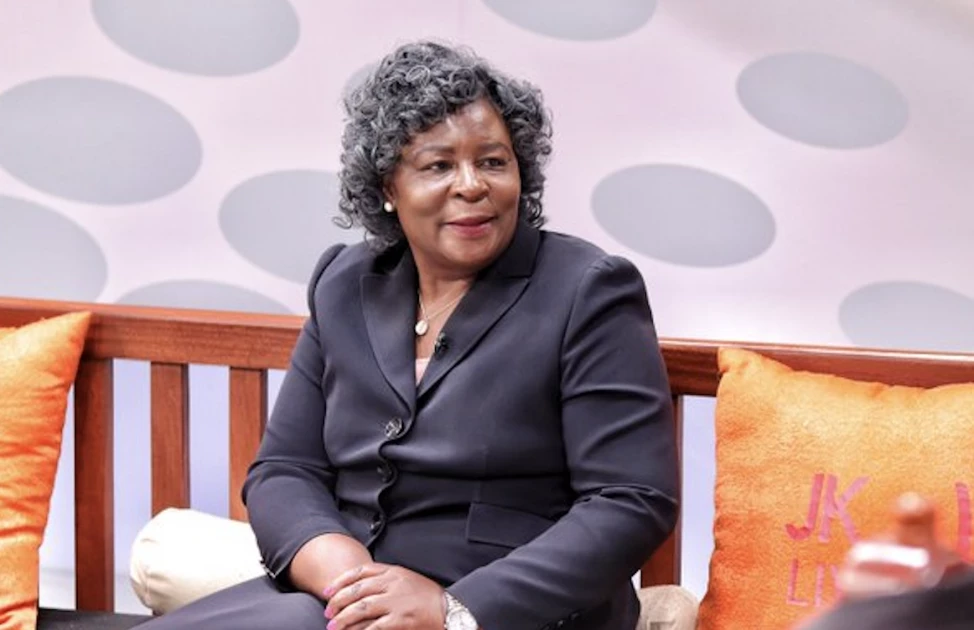
Dr Nancy Baraza, Head of Department, Public Law, School of Law, University of Nairobi. Photo I JKLive

Audio By Vocalize
This revelation was made during the National Gender Sector Working Group (NGSWG) bi-annual meeting held in Nairobi on Thursday, June 5, where the government unveiled critical updates on gender equality and gender-based violence (GBV) initiatives.
The Justice Nancy Baraza-led Working Group updated the stakeholders on crucial government initiatives to combat gender-based violence while simultaneously integrating gender perspectives into climate action strategies.
Justice Baraza, who leads the 42-member committee, revealed that 60 per cent of the femicide cases happen within the family unit. raising concerns about the devastating impact on women and children in society.
"The biggest thing that has happened to the cause of gender equality in this country is the government as the primary duty bearer to set up this technical working group as an acknowledgment of the fact that the country is reeling under the pressure of the social burden of gender inequality, of GBV, and femicide," Justice Baraza stated.
The committee, gazetted on January 10, 2025, uncovered disturbing patterns in their nationwide consultations.
"We did realise or did hear that 60 per cent of the femicide in this country is happening within the domestic arena. It is as a result of persistent domestic violence, which we never talk about," Justice Baraza revealed.
The findings paint a troubling picture of violence within what should be safe spaces.
"The private space... The family where it is supposed to be loving and caring. That is the epicenter of femicide and domestic violence," she noted, highlighting how the crisis extends beyond women and girls to affect young boys as well."
Despite the challenging 90-day framework and budgetary constraints, Justice Baraza expressed optimism about public engagement: "Kenyans are tired. And they want a solution. And they want to engage."
Alongside efforts to combat violence, the government announced advances in its national care policy currently at high levels of approval. Cabinet Secretary Hanna Wendot Cheptumo, who served as Chief Guest at the stakeholder meeting, emphasised its significance in recognising unpaid care work.
"This policy recognizes and values unpaid care and domestic work as enshrined in Sustainable Development Goals, Target No. 4," CS Hanna said.
"Once in force, it will guide the government on valuation and remuneration of unpaid care work, particularly among the vulnerable, thereby impacting on poverty reduction efforts as a whole.”
Recognising climate change as a critical gender issue, Kenya has launched two groundbreaking documents: the Granular Gender and Climate Change Vulnerability Hotspot Mapping Study and the National Gender and Climate Change Action Plan.
"Mainstreaming gender into climate action is non-negotiable. These two documents will go a long way in guiding the effective integration of gender into climate policies and programs, including finance," the CS declared.
The government also officially launched the Gender, Climate Change and Disaster Risk Reduction subcommittee as the sixth thematic area of the gender sector. This new body will coordinate climate change matters from a gender perspective and implement the newly launched documents.
The push for meaningful women's participation in leadership remains a priority, with the government following up on the pending constitutional implementation of the not-more-than-two-thirds gender principle currently before Parliament.
The Cabinet Secretary called for broader commitment: "It is my goal to you all, particularly our male allies, that we endeavour to adhere to this principle in our institutions, our community structures, including cultural and religious ones, so that we leave no one behind in our development process.
Kenyan women continue to break new ground in traditionally male-dominated sectors.
The CS highlighted the appointment of "our very own first female major general in the Kenyan defence forces, our able Fatouma Hamed," noting that such levels not only elevate the voices of women but also challenge historical gender stereotypes and discriminatory practices.
The technical working group's findings and recommendations, combined with the new climate action frameworks, position Kenya as a leader in addressing the intersection of gender equality and contemporary challenges.
“A positive step towards finding solutions, and Kenya's willingness to confront these issues head-on offers hope for meaningful progress in the months ahead,” Justice Baraza noted.
Leave a Comment