

PROFILE: EatOut Kenya CEO Mikul Shah on success, privilege and what restaurants are getting wrong
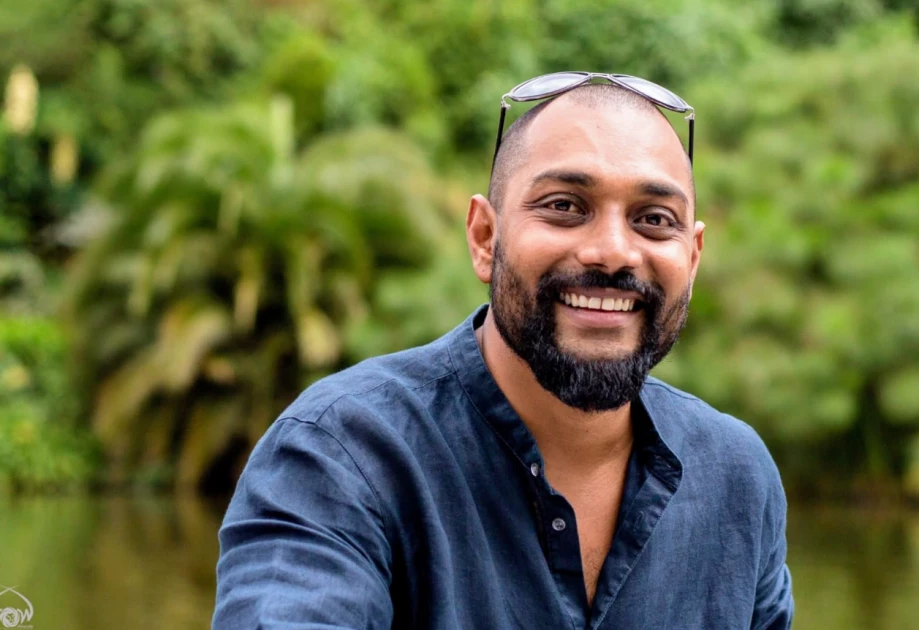
EatOut Kenya CEO Mikul Shah. PHOTO | COURTESY

Audio By Vocalize
We went looking for Mikul Shah in Tigoni on a morning that couldn’t quite decide whether it wanted to be cold or warm or just dramatic. The air was crisp in that polite, highland way, the kind that makes you pull your jacket closer. We got lost once. Then again. The gate to is home, we were told, was “right by the road,” which turned out to be code for “hidden in plain sight.” Eventually, after a few wrong turns, quiet laughs, and the kind of hesitation that makes you question your Google Maps loyalty, we found it.
Inside, the pace
immediately slowed. Tigoni does that to you. Time stretches. Noise retreats.
And suddenly you understand why someone who spends their life dissecting
cities, restaurants, and people would choose to live somewhere that insists on
calm.
Mikul Shah is best
known as the CEO and Founder of EatOut Kenya, the platform that quietly but
decisively changed how Kenyans discover where to eat, long before hashtags and
food influencers became a profession. Over the past decade and a half, he has
sat at the centre of Kenya’s evolving dining culture, documenting it,
critiquing it, nudging it forward.
Beyond EatOut, his
fingerprints are all over the lifestyle and hospitality media space: Yummy
magazine, currently on a short hiatus and set to return in 2026; Nomad
magazine, which he sold in 2019 after helping build it into a respected travel
and culture title; Nairobi Restaurant Week; the Nairobi Supper Club; and a long
list of tech-driven hospitality and travel ventures that reflect his appetite
for good food. At his core, however, he remains what he has always been; just a
tech guy solving human problems.
What makes Mikul
compelling isn’t just the businesses, though. It’s the way he talks about them;
without hype, without ego, and with the kind of blunt honesty that only comes
from having survived both success and collapse.
He has seen it all,
and what he emerged with was perspective: the kind forged by age and travel,
sharpened by loss, and softened by the quiet, unsettling understanding that
nothing in this life is permanent.
Mikul spoke to Citizen
Digital over coffee and biscuits, seated outdoors in his garden,
where the Tigoni chill lingered gently in the air and time seemed to be in no
particular hurry.
As a
self-proclaimed foodie, have you ever just had to finish food out of
politeness, not to break a chef's heart?
I was brought up
in a very traditional way, where you couldn’t leave food on your plate. From a
young age, we were taught that you finish everything and you don’t complain.
You take less food, finish it, and if you want more, you go and get some more.
But you don’t leave food on your plate.
Even if it's
bad?
For me, I come
from a culture and a time - and I always say I’m an old guy - where that’s just
how things were done, whether you liked it or not.
If I’m at a
restaurant and I don’t like the food, I’ll simply say, sorry, I don’t like it,
and I won’t eat it. But at home, especially if your mother was cooking, there’s
no way. You eat whatever you’re given, you don’t complain, and you move on.
That’s just how I’ve been brought up.
What was the
light bulb moment that led to the birth of EatOut Kenya?
I was born and
raised in Mombasa, then I went to the UK and finally moved back to Kenya in
2009 after living in London for about 10 years.
When I moved back,
I came to Nairobi. I was a foodie and my background is in tech. At the time,
the undersea cable had just been connected and the internet had become fast and
affordable, but restaurants and hotels had almost no digital presence. None of
them knew how to get online.
One day I invited
some friends to a restaurant for my wife’s birthday; it was an amazing restaurant
with great food, a live band, and good service. My friends, who had lived in
Nairobi for about 30 years, asked me how I found the restaurant. I had only
been in the country for six months at the time.
That’s when I
realised that there was a clear gap in the market, and it hit me. Because how was
a stranger in Nairobi showing people who’ve lived here for 30 years new places
to eat? All these restaurants already existed, nobody just knew where they
were.
There was a small
window between about 2010 and 2015, before Facebook and Instagram became
dominant, where we helped restaurants create their first online presence. We
started by documenting all the restaurants in Nairobi, giving them space on our
website, and charging them to be there.
So now 15 years
later, how would you describe the progress of Kenya's food and restaurant
culture, in general?
It’s very
interesting. I think if you look at where we are now, Nairobi is at par with
most global cities. In Africa, if you set South Africa aside, I’d say we’re
probably leading when it comes to the range of culinary options available.
Covid was a very
strange moment for the restaurant industry. The entire sector was shut down,
and it was incredibly difficult; people had to let staff go, businesses were
bleeding. But it did two very clear things.
First, it killed
all the bad restaurants. If someone had been struggling for four years before
then, Covid gave them a reason to finally say, this isn’t working. Those
restaurants shut down. The good ones survived, went through Covid, and are
still here today.
The second thing Covid
did was psychological, especially for people with money. A lot of people
started asking themselves; “Am I just going to work like this forever? What if
another Covid comes and I never did the one thing I wanted to do?” And
strangely, for many people, the dream is to open a restaurant or a hotel.
So post-Covid,
what we’ve seen in Kenya is that the bad restaurants closed, the good ones
survived, and then a huge number of new restaurants opened in Nairobi. Many of
them were started by people who had money and finally decided to pursue
something they were passionate about. That cycle will repeat itself. The good
restaurants will be here for 20, 30, even 40 years. The bad ones will find an
excuse in a few years to shut down, but the reality is they weren’t running
good restaurants in the first place.
Fifteen years ago,
there were only a handful of high-end restaurants, and people would drive
across town just to get to them. Today, the options have exploded. Even if
you’re driving to your favourite restaurant on the other side of town, you’ll
pass 500 others on the way.
We’re also
benefiting from a generation of young, relatively wealthy Kenyans who studied
abroad. They experienced different cuisines and came back asking, why isn’t
this in Kenya? That’s why today you can find Peruvian, Mexican, Japanese,
Vietnamese, Indonesian restaurants in Nairobi; cuisines that simply didn’t
exist here before.
So Yes, I
genuinely feel that today, outside of maybe Johannesburg and Cape Town, Nairobi
is probably the strongest culinary city on the continent.
As somebody who
visits a lot of restaurants by the nature of your work, what’s your go-to
comfort restaurant in Nairobi?
That’s a very good
question. Most of the restaurants I deal with are higher-end places; the kind
people save up for, or the kind the wealthy like to go to all the time.
But strangely,
after about 15 years of doing this, I would say I don’t really enjoy going out
to eat at restaurants the way I used to. I feel like I’ve seen a lot. And I get
disappointed a lot.
At this point, I
probably have between five and ten restaurants that I go to regularly, almost
weekly. The rest of the time, I’m just trying new places; something that’s
opened, something I’ve never been to. I’ll try it once, maybe twice. If I love
it, I’ll go back. But most of the time, I circle right back to my small list
again, and again, and again.
And one of those
places, ironically, literally just has plastic chairs and serves chicken tikka at
some sort of a car park.
For me, comfort
now is consistency. I don’t care if something is high-end, mid-range, or
low-end. What I can’t stand is expecting high-end and getting low-end, or
expecting low-end and getting something even worse.
What I love is
knowing exactly what I’m walking into. If I’m going to a simple place, I know
I’ll sit on a plastic chair, the waiter knows me, I know the food, I know the
taste. It’s consistently okay, and honestly, that’s enough.
So these days, my
favourites are very simple: there’s a pizza place in Gigiri I go to often, a
cheap falafel joint I return to regularly, and a kebab chicken tikka place that
never lets me down. Everything else is experimentation.
Nairobi is in a
phase right now, especially post-Covid, where so many restaurants have opened
that even if you went out once a week, it would take you two years to try them
all. And by the time you’re done, another batch will have opened anyway.
So Yes, my comfort
restaurants today aren’t the fanciest in Nairobi. They’re just the ones that
show up the same way every time. And at this stage in my life, that consistency
feels like luxury.
Besides EatOut,
you also juggle a lot of other companies, going by your LinkedIn profile. Is
there a project you tried that failed, and what did you learn from it?
What you see on
LinkedIn is the very small number of things that actually make it. I’ve always
considered myself a serial entrepreneur. And as I’ve gotten older, I’ve shifted
more into angel investing.
I love startups. I
love new business ideas. I enjoy spotting gaps and opportunities and helping
build businesses around them. But I’m not a great people person, so at some
point, someone smarter than me needs to take over and really run the business.
Even within our
own companies, you mostly hear about the successes. But there are tons of
failures; some completely outside your control, some very much in your control,
and some just down to mistakes you’ve made. That’s part of the process.
There’s also a
clear underlying theme in everything I do. First, I’m a tech person. I studied
Computer Systems Engineering and spent about a decade in the UK working in the
tech space, particularly education technology.
So, with every
business I’ve worked on, the question has always been: how can tech solve a
problem, and how can it make a business better or more efficient? That thinking
runs through everything I do.
Today, that focus
is very much on hospitality - travel, logistics, restaurants, hotels - but at
the core of it all, it’s still about using technology to make things work
better.
As a serial
entrepreneur, when things fly off the rails and the pressure piles up, what
keeps you grounded?
Honestly, Covid was
something none of us had ever experienced before. Businesses always have ups
and downs, but there are moments that completely change how you operate; not
just as a business, but as a person. Covid was one of those moments for me.
Another was the
Westgate attack. My team was doing a cooking show at Westgate on the day it
happened. People were shot, my team members were injured, and I was supposed to
be there but got caught up elsewhere. Experiences like that permanently change
how you view work and life.
Every election
season brings its own stress as well, navigating uncertainty becomes part of
doing business in Kenya. But Covid was on a different level. The hardest part
for me was letting people go.
At the time, we
were a funded company with investors, so we had built a large team. When Covid hit,
our investors wouldn’t extend further funding to keep the business afloat or
cover salaries. The choice was brutal but simple: either let some people go, or
shut the entire company down within weeks.
I had to let go of
about 40 people in a very short space of time. That took a while to recover
from emotionally, because it wasn’t like these people had other jobs lined up
waiting for them. It wasn’t something I wanted to do, but there genuinely was
no alternative.
At the same time,
Covid hit us personally. We lost family members. My wife’s brother passed away
on a ventilator. It was just relentless.
So, I don’t think
there’s an easy answer to how you stay grounded. What helped me was
perspective. Even in the middle of all that, you could step outside in Nairobi
and see someone sitting by the roadside with a baby who hadn’t eaten all day.
And you realise that
you think your problems are big, but there are people dealing with far worse
and still pushing on. Living in a city like Nairobi, where the contrast between
wealth and poverty is so stark, can humble you very quickly.
It forces you to
ask yourself, if they’re surviving with so little, why am I convinced that my
world is ending? I still had my family. I still had a home. I still had
options.
That perspective
doesn’t erase the pain, but it keeps you human. And if you lose that
perspective in a city like this, then something is wrong, and you’ve turned
into a machine that only exists to make money.
So, for me,
staying grounded is constantly reminding myself that yes, things are bad, but
they can be much worse. And if others can keep going, then so can I.
If we could
talk about your personal life for a minute, and I hope you indulge me here, what’s
the most memorable thing you remember about your childhood?
That I was on the
beach almost every single day. Maybe I missed a few days here and there, but
for the most part, the beach was my life.
The other big
thing, and this is probably the most important, is that I grew up at a time
when there were no mobile phones and no internet. I’m an old guy. The world
today is completely different, both for good and for bad.
On the positive
side, people today are far more knowledgeable, you have access to information
from everywhere. Awareness levels are much higher, and that’s a good thing.
But at the same
time, we’re losing social skills. There’s more distraction, more addiction to
phones, and things we still don’t fully understand, like how constant
connectivity affects attention and behaviour. The reality is, most of us wake
up and the first thing we do is check our phones.
When I was a
child, that didn’t exist. You went outside. You met your friends. You swam,
played football or volleyball on the beach, and just spent time together. That
was our entire world. We didn’t even know what existed outside it, and because
of that, we were perfectly happy.
My childhood was
fantastic, but it was simple. Very typical Mombasa life. Slow. Easy. Nobody was
in a rush. If you said you’d meet at 4pm, you met at 4pm, because there was no
phone to explain why you were late. You just had to show up on time.
I now have two
kids, one who’s 18 and another who’s 15. Their access to information is on a
level I could never have imagined at their age. And that’s incredible. But I
also try to focus on making sure they have people skills; that if there’s no
phone or internet, they can still talk, connect, and build relationships.
Today, you see a
three-month-old baby who already knows how to press “Skip Ad” on YouTube. From
such a young age, we’re connected to everything.
So, when I look
back, what I remember most is how simple life was. Beach every day. Friends. No
rush. No noise. Just a small, happy world, and honestly, it was enough.
I was going to
ask how differently you’re raising your children from how you were raised, but
I feel like you’ve already answered that.
Yeah, to some
extent.
I think the
biggest challenge when you grow up with a certain level of privilege is that
you don’t always realise it is privilege, and that can quietly build
ego.
That’s the main
thing I try to teach my children. It doesn’t matter who you think you are, there
will always be people above you and people below you, and most of us sit
somewhere in the middle. But you have to treat everyone the same, because life
can change very quickly.
The person you
look up to today can lose everything tomorrow. The person you look down on
today could be far ahead of you in a few years. Nothing is fixed.
When you go to fancy
schools, live in certain neighbourhoods, and grow up around comfort, it’s very
easy to lose perspective and start thinking you’re important. That’s a
dangerous place to be.
When I was growing
up in Mombasa, none of us thought we were important. We just wanted to go to
the beach. Life was simple.
Nairobi is very
different. It’s a big city. There’s more comparison; which car you drive, which
phone you have, what you’re wearing. Add the internet and constant visibility,
and that pressure is even stronger.
So my focus with
my kids is simple: don’t confuse privilege with importance. You didn’t earn
everything you have, and you won’t keep everything forever. If you understand
that early, you grow up grounded.
You’ve called
yourself an “old guy” quite a few times. How old are you, really?
How old do you
think I am?
I’m 46, turning 47
next year. I was born in 1979.
What keeps you
awake now? What do you feel worries you at this age?
That’s an
interesting question. I’m naturally a worrier, always have been. I also don’t
sleep much, about five hours and I’m done.
So, the funny
thing is that we live in Tigoni, and there’s a fish eagle and a cockerel that
start making noise at around 5.30am, so I’m usually up by then and I’m happy
with that.
I do get paranoid
and nervous sometimes, but as I’ve gotten older, I’ve realised that work is
actually the least of my worries now. For the last two decades, work was
everything. I was always anxious about what might happen next.
But then you go
through things like Covid. You go through something like the Westgate attack,
where people you know actually died. After that, you ask yourself: what’s the
worst that can really happen?
So, while I’m
still a natural worrier and a bit of a perfectionist, I like to stress over
small details. I wouldn’t say anything really keeps me awake at night anymore.
I think about life
from two angles now: family and health. As long as I’m healthy and mobile, that
already puts me in a good place. Serious illness changes everything, so I try
to live well, eat better, exercise more, drink water, sleep when I can.
I also think about
whether I’ll be around long enough to see my kids grow, maybe even meet my
grandkids one day. Health becomes very real as you get older.
Financially, I’ve
learned perspective. During Covid, I genuinely couldn’t sleep, worrying about
laying people off, unpaid suppliers, survival. But I’ve already been through
that. I’ve already been through Westgate. And despite how terrible those
moments were, I’m still here.
So now I try not
to worry too much because I know that whatever comes next, even that will pass.
As you get older,
you realise that everything comes and goes. If you let it consume you too much,
you go with it.
The Nairobi
Supper Club sounds like an exclusive, elites-only club. What was the thinking
behind it?
First of all, none
of the things I’ve done - whether it’s EatOut, the food magazine, Nairobi
Restaurant Week, or Nairobi Supper Club - are ideas I invented. That’s
important to say. I’m not that smart. [Laughs]
What I’ve been
good at is seeing concepts that already exist elsewhere in the world, then
figuring out when the timing is right and how they can work in Kenya.
For example, New
York Restaurant Week has been running for about 40 years. I experienced it
there, and because of the relationships we already had in the industry, we
looked at our market and realised Nairobi could support something similar.
That’s how Nairobi Restaurant Week came about.
The Nairobi Supper
Club started very organically during Covid. At the time, there was a national
lockdown and inter-county travel restrictions. All the businesses I was
involved in were shut down, and mentally, it was a tough period; being locked
in one house, not knowing what was next.
So we decided to
move back to our property in Tigoni, which had previously been used for other
things. Friends would come over and spend the whole day with us. Once a month,
we’d host a group of friends, and everyone would bring their own food and we’d
eat together. That was it. That was the beginning.
Eventually, we got
tired of cooking ourselves and started asking chefs to come and cook for us.
Then friends began bringing friends, people we didn’t even know, and that’s
when we decided to make it a ticketed event. That was about four years ago.
The reason it
feels exclusive, and why it indeed is exclusive, is very simple. It happens in
our home, and we only do it once a month. We can only host 25 people at a time.
That naturally limits access and also explains the pricing.
For me, though,
it’s not about the price point, it’s about value. My benchmark is simple: if
you spend Ksh.15,000 here, you should feel like it’s the best Ksh.15,000 you’ve
ever spent on an experience.
We generally get
three types of guests. The first are wealthy Kenyans who come regularly. For
them, it’s not about the money, they come for the experience and consistency.
The second group
is what I’d call normal wananchi. For them, Ksh.15,000 is a lot of money. But
for special occasions; say a wedding anniversary, a milestone birthday, they’re
willing to save up and come once in a while.
The third group is
travellers; expats and foreigners. For them, it’s actually already great value,
because if you had this same experience in Europe, you’d easily pay three times
what we charge here.
So while it might
look elite from the outside, the real idea has always been simple: a small,
intimate, high-quality experience that feels worth every shilling, no matter
who you are.
There’s a
two-part question I ask all my interviewees. First: what’s your definition of
success? And second: do you consider yourself a successful person?
That’s a very
interesting question, and it’s something I’ve been thinking about a lot
recently.
I think success is
traditionally defined in two ways: financial success (being rich), and fame.
What I’ve realised
is that when we leave this planet, all the financial success stays right here.
We’re not taking anything with us to our graves.
As for fame, the
real question is how people remember you when you’re no longer here. Will they
remember you as someone who was kind and humble and did good work? Or will they
remember you as a bad person?
For me, success is
simple. I want to be remembered as a good person who did good for society. The
rest doesn’t really matter to me. If that’s achieved, then I consider that a
successful life.
Of course,
everyone wants more money. There’s no real end to human desire when it comes to
wealth. I was in an Uber ChapChap recently when a nice car passed us, and the
driver said, “Someday, I want to drive that car.”
I told him, “Listen,
the guy in that car probably wants the Mercedes in front of him, and the guy in
the Mercedes is tired of traffic and wants a helicopter.”
There’s no finish
line to greed. So for me, success isn’t about how much you accumulate, it’s
about how you’re remembered when you’re gone.
What do you
spend most of your money on?
Travelling. I
don’t buy jewellery or watches, and I drive a very practical car.
For me, and
honestly for anyone out there, travel is the one thing worth spending money on.
Nothing opens your mind the way seeing other places does. When you travel, you
meet different people, understand how they live and work, and you educate
yourself in a way no classroom can.
I’ve been to about
40 countries so far. If I can get to 100 by the time I’m done, I’ll be very
happy.
You’ve been
directly involved in the evolution of Kenya’s restaurant scene over the past
decade. What’s one thing restaurants do today that irritates you?
The way waiting
staff are treated and trained.
For some reason,
unlike in many other countries, being a waiter isn’t really seen as a respected
job in Kenya. I’ll go to a new restaurant and the waiter asks, “What would you
like to eat?” My response is always, “What should I eat?” I mean, it’s your
restaurant, you just opened, there’s a huge menu and I’m confused, you should
be able to guide me.
But the reality is
that many of them haven’t even tasted the food or the wine themselves. That’s
where the problem starts. Restaurant owners need to invest more, both money and
knowledge, into training their staff.
If you go to a
restaurant in South Africa, order a steak and ask what wine to pair it with,
the waiter can sit with you for three hours and explain the different options
in detail. That level of knowledge changes the entire experience.
We have amazing
food and stunning restaurants in Kenya. But too often, more effort goes into
designing the space than into thinking about service. And service is what keeps
people coming back.
Leave a Comment