

Losing weight is hard. Here are 5 things to keep in mind
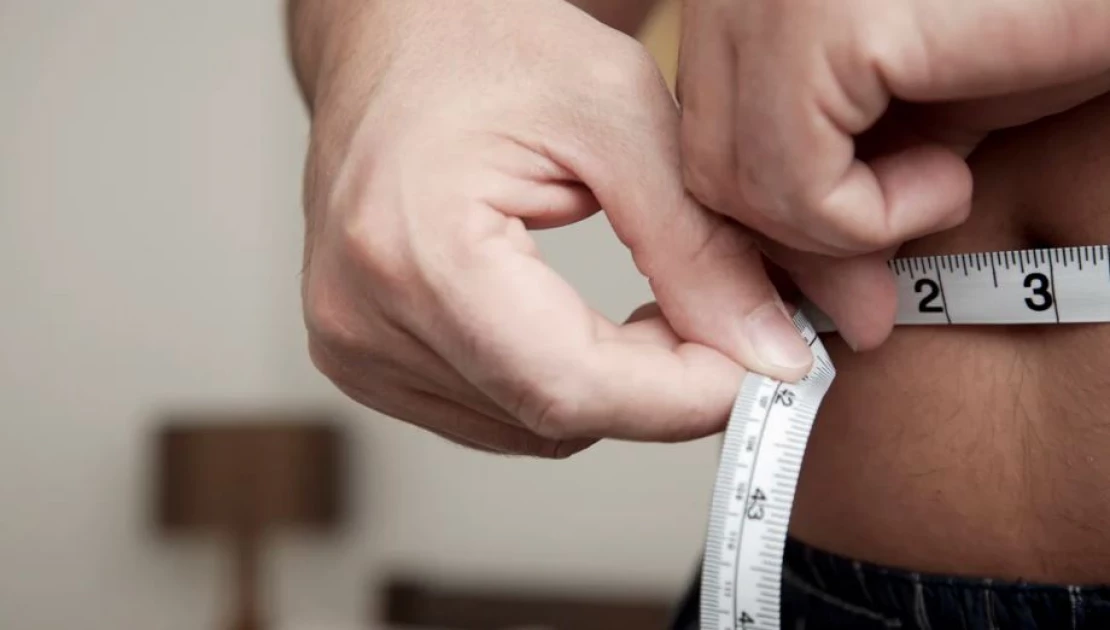
There are evolutionary reasons why it's hard to lose weight and keep it off. Fat helped early humans stay alive, keep their brains working and make them healthy enough to reproduce. PHOTO/COURTESY: CNN

Audio By Vocalize
If you think it’s hard to lose weight and keep it off, you are not alone — and you are also 100% correct. Long-term weight loss is really difficult to achieve, studies have found.
Estimates vary, but it’s
believed that more than 80% of people who lose a substantial amount of weight
regain it within five years.
But failure to shed pounds
is often not about lacking the willpower to make important lifestyle changes,
such as eating healthier, reducing calories and increasing physical activity.
The dirty little secret is
that our bodies are programmed by evolution to hold on to fat.
“We evolved not to lose
weight intentionally,” paleoanthropologist Daniel Lieberman told CNN Chief
Medical Correspondent Dr. Sanjay Gupta recently on the podcast Chasing Life.
Lieberman, a professor and
chair of the Department of Human Evolutionary Biology at Harvard University,
studies why the human body looks and functions the way it does.
“All animals need some
fat, but humans have evolved to have exceptionally high levels of fat, even
thin humans,” he said.
“And so we are under
exceptional sort of biological pressure, always, to put it on and keep it as
long as we have it, for when we need it.”
Humans are fundamentally
adapted not to be happy or healthy but rather to be reproductively successful,
Lieberman said.
And for that, we need fat,
a lot of fat — which is why Lieberman calls humans “an unusually fat species”
compared with other mammals, even other primates.
“We have these big brains,
which cost a huge amount of energy. … It’s 20% of our metabolism,” he said.
“And a baby, when it’s
born, half of its energy is paying for its brain. It needs a lot of fat. So …
human babies are born very fat because they have to have that energy to make
sure that they can keep their brain going.”
Lieberman said fat is
storable energy. It helped early humans stay alive, powered their bodies to
find food, kept their brains working and made them healthy enough to reproduce.
“It’s like money in the
bank account. And so individuals who have appropriate levels of fat did better
in our evolutionary history than those who didn’t,” he said.
“And so we were selected
to make sure that we always could put it on, because there were always times
when we had to lose it.”
Lieberman said humans
never evolved to lose weight deliberately.
And while our bodies
haven’t really evolved from those earlier times, our environment has — and that
is, what Lieberman called, a big mismatch.
Nowadays, we don’t have to
run from wild animals, travel long distances on foot, or hunt and gather our
next meal.
We can pick up a
smartphone to call an Uber or Uber Eats and experience all manner of modern
conveniences.
As a result, many people
now live with weight issues and obesity, and all of the “mismatch diseases”
that stem from that.
“So mismatch diseases are
defined as conditions or diseases that are more common or more severe when we
live in environments for which we’re poorly or inadequately adapted,” Lieberman
said, referring to our modern-day “obesogenic environment” that often
contributes to weight gain.
“And so, of course, it’s
hard. It’s because we evolved not to lose weight intentionally. And so, losing
weight requires dieting, requires tricking your body and overcoming those
adaptations — which your body’s going to fight you every, every inch of the
way.”
Lieberman, who said we
need to be “extremely compassionate” toward those who face weight challenges,
including ourselves, suggests keeping these five things in mind:
Not all humans are meant
to be stick figures or willowy waifs — no matter what you see on television, at
the movies or on social media.
“Fat is especially
important for humans,” Lieberman wrote in an email. “Even thin humans have
between 15-25% body fat, which is three to four times more than most mammals.”
You will always have a
certain amount of fat, and it is necessary in some ways.
Fat actually helps us
survive and thrive.
“We evolved to store a lot
of fat — a source of stored energy — because of our energetically expensive
bodies and life history,” Lieberman said.
“That fat helps fuel our
big brains and our high cost of reproduction all while staying physically
active.”
Even so, “we never evolved
to store a lot of belly fat, which can lead to health problems,” Lieberman
pointed out.
“So having a lot of fat
around the middle is a sign to do something.”
Don’t worry if your weight
goes up and down a few pounds over short periods of time.
“Much of that variation is
due to water,” Lieberman said.
“For most of human history
people regularly cycled through times when they took in more energy than they
used and stored the surplus as fat and then drew on those fat reserves during
lean times when they used more energy than they consumed.”
If you find it hard to lose
weight, don’t blame yourself.
“Humans evolved to store
plenty of fat when possible and then use it when needed,” Lieberman said.
“But we never evolved to
voluntarily consume less energy than we used — that is, diet.”
Lieberman said dieting
triggers the body’s starvation responses that cause dieters to crave food and
save energy by slowing down their metabolism.
“So when people diet, they
almost always struggle to overcome ancient, fundamental adaptations to prevent
their bodies from losing weight,” he added.
If you are wondering which
is more important for weight loss — exercise or dieting — the answer is both,
but for different reasons.
“You can lose more weight
by dieting than exercising,” Lieberman said.
“But exercise helps
prevent gaining or regaining weight, plus it has many, many other benefits for
both mental and physical health.”
And as for that mismatch
between our Stone Age bodies and our modern, obesogenic environment, Lieberman
said we have to “figure out how to engineer our worlds to help us make the
choices that we would like to make.”
Leave a Comment