

The rise of smart towers: Why Nairobi developers are going green
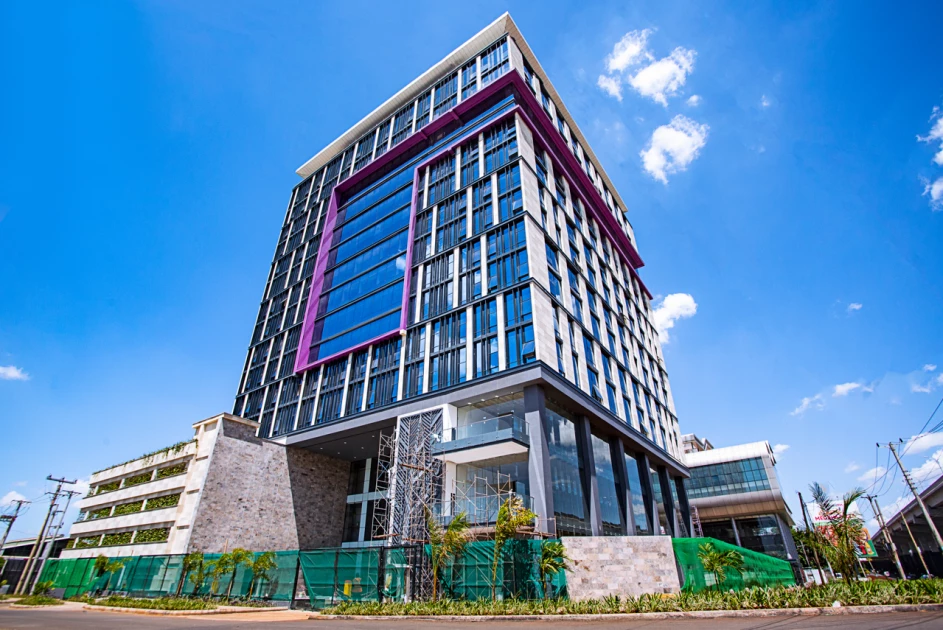
The recently completed Purple Tower along Mombasa Road.

Audio By Vocalize
Investors in Nairobi’s property industry have been forced to
rethink traditional real estate models due to an oversupply of office and
commercial space.
Gone are the days when buildings with basic amenities and
uninspired architecture could attract tenants.
In today’s competitive property market, developers are under
pressure to innovate by incorporating smart and sustainable features that not
only set their properties apart but also deliver real value to potential
tenants.
Conventional office blocks with outdated designs and standard
utilities are losing their appeal.
In response, investors are leaning into creativity and are
embracing advanced technologies and sustainable design to deliver something
fresh and future-focused.
Real estate stakeholders across Nairobi are increasingly in
agreement that the market is shifting rapidly away from conventional
developments.
Instead, there is a growing demand for spaces that prioritise
innovation and long-term value for both investors and tenants.
According to Joseph Ngure, a seasoned estate agent based in the
city, the past decade has marked a significant change in developers’
priorities.
“The trend has changed dramatically. Today’s developers are
designing experiences. The goal is no longer to merely fill space, but to
retain tenants by reducing their operational costs and enhancing their
day-to-day convenience,” he explains.
Ngure points to the rise of green technologies in Nairobi’s
middle- and high-end property segments. Energy-saving lighting, solar panels,
rainwater harvesting, greywater recycling and intelligent climate control
systems are increasingly becoming standard features.
Beyond cost savings, he notes, comfort and smart functionality are
emerging as key selling points. High-speed internet infrastructure, biometric
or smart access systems, energy-efficient elevators and the use of sustainable
building materials are now common in Nairobi’s new commercial and residential
developments.
While this trend is still gaining ground in Nairobi, it's
spreading fast.
The recently completed Purple Tower along Mombasa Road embraces a
modern approach to building design, subtly capturing the spirit of a new wave
of smarter, more efficient structures.
According to its developers, Purple Dot International, the
14-storey building, set to open at the end of the month, is a blend of elegant
design and forward-thinking efficiency, tailored to reduce costs.
With the tagline “Purple is the New Green,” the developers have
gone to great lengths to incorporate green energy and other cost-saving
measures.
According to Amrish Shah of Urban Green Consultants, a green
building advisory firm, the project is expected to achieve a 27 percent
reduction in energy consumption, a 41 percent decrease in water usage and a 33
percent saving in embodied material energy.
The tower integrates Grade A office spaces with showrooms and
retail areas, making it versatile for a range of commercial uses.
What truly sets it apart, however, is its understated alignment
with a broader push for functionality over flamboyance.
It does not aim to outshine the city, it fits seamlessly into its
rhythm, offering practical solutions in a space where businesses can thrive
without the burden of high operating costs.
The project lead Bharat Kerai explained the decision to embrace
cutting-edge green technology was both strategic and necessary.
In a saturated real estate market, where traditional office blocks
are no longer as appealing to tenants, the company recognised the need to think
beyond conventional solutions.
“The real estate landscape in Nairobi has changed. Tenants are
more discerning as they want value, sustainability and long-term savings. We
had to go back to the drawing board and ask ourselves, what can we offer that
genuinely makes a difference?” says Bharat.
The project lead of the Purple Tower said that line of thinking
led the team to re-imagine what a modern commercial space should be.
“Out went the old playbook of standard finishes and
energy-intensive systems and in came smart, sustainable features designed to
address both environmental concerns and rising operational costs,” he said.
He said Purple Tower now incorporates high-performance thermal
glass, energy-efficient lighting systems and a smart building management
framework designed to minimise energy use.
Water efficiency is another major focus with low-flow plumbing
fixtures and potential rainwater harvesting solutions help conserve resources
and reduce monthly utility bills.
He said the choice of sustainable, locally sourced materials also
plays a vital role in minimising the building’s carbon footprint.
Mr. Bharat notes that today’s businesses are also highly conscious
of their brand image and corporate responsibility.
“Occupying space in an edge-certified building sends a strong
message about who you are as a company. It shows clients and staff that you are
committed to sustainability and the future,” he said.
Leave a Comment