

Kenyan meat exporters hit by Middle East conflict as Ramadan shipments slump
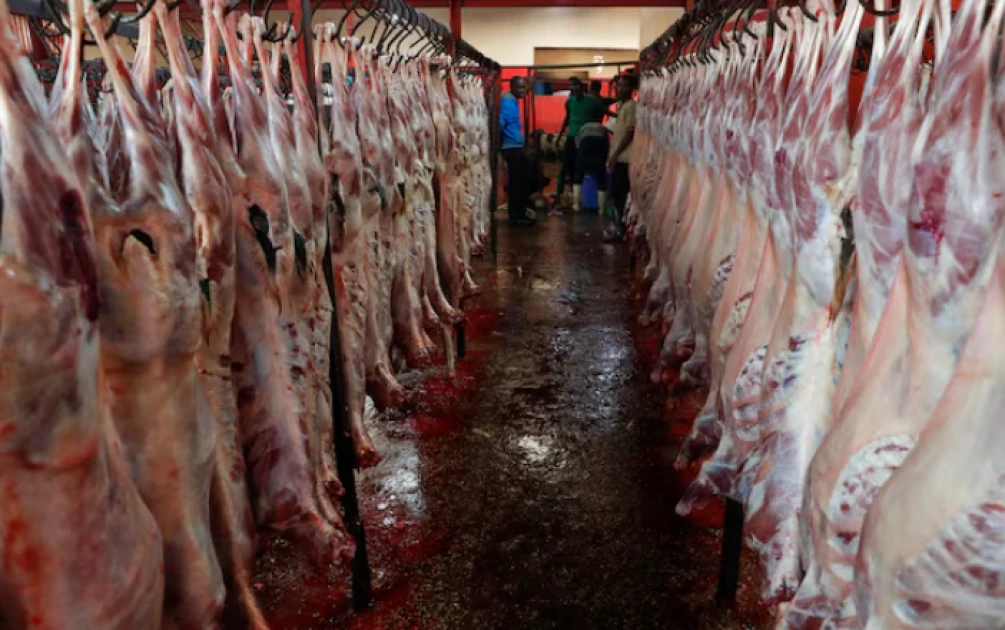
Butchers arrange meat inside a slaughterhouse in Nairobi, Kenya June 16, 2024. REUTERS/Thomas Mukoya/File Photo

Audio By Vocalize
The war in the Middle East has reduced Kenyan meat exports
to the region to below 5% of the expected level during the peak Ramadan season
as a sharp increase in air freight costs grounds shipments, industry officials
told Reuters.
The Middle East is Kenya's main market for meat exports, with
the United Arab Emirates traditionally accounting for 40% to 60% of shipments,
Nicholas Ngahu, chief executive of the Kenya Meat and Livestock Exporters
Industry Council, said.
But exporters of fresh chilled meat such as beef, lamb,
mutton and goat are currently only
able to send limited volumes to Abu Dhabi and Dubai, while exports to markets
such as Oman, Kuwait, Bahrain and Jordan have
also been disrupted.
"We are doing below 15% of our normal exports, and now
that it's Ramadan, we are doing less than 5% of what we are supposed to be
doing," Ngahu said.
Kenya typically sends around $2.3 million (Ksh.297.16 million) worth of meat and
animal products to the Middle East every week.
Dennis Muraya, director of Konza Clearing Agency, said most
airlines serving the region had cut operations, forcing exporters to rely on
costly cargo charters into the UAE.
"We usually pay $1 to $1.50 per kilo," Muraya said.
"But at the current moment, we're even paying up to $3 to $3.50 per kilo."
He said airlines had attributed the surge in rates to higher
insurance costs linked to the conflict.
Ngahu said the industry would normally ship around 200
metric tons of meat a day during the holy month, but volumes had fallen to
roughly 5 to 15 tons a day.
Since Sunday, March 8, exports would have been expected to
total a million kilograms, Ngahu said. "We have not done even 50,000."
One consignment of about 20 tons on its way to Sharjah had
to be sent back on February 28 as airspace closed, saddling Konza with a $5,000
bill for handling, storage and cold-room charges, Muraya said.
Exporters say the impact is rippling through the supply chain, from freight
forwarders and slaughterhouses to livestock traders and farmers.
With shipments delayed, slaughterhouses are unable to clear
meat quickly enough to make room for new stock, while some exporters are forced
to divert meat to the local
market at lower prices. Ngahu said some
abattoirs had cut casual labour by as much as 80%.
If the conflict drags on beyond Ramadan, Muraya warned
demand could weaken further, making freight costs unsustainable.
"If this war continues, we won't be in business,"
he said.
Leave a Comment