

IMF to audit Kenya’s governance system
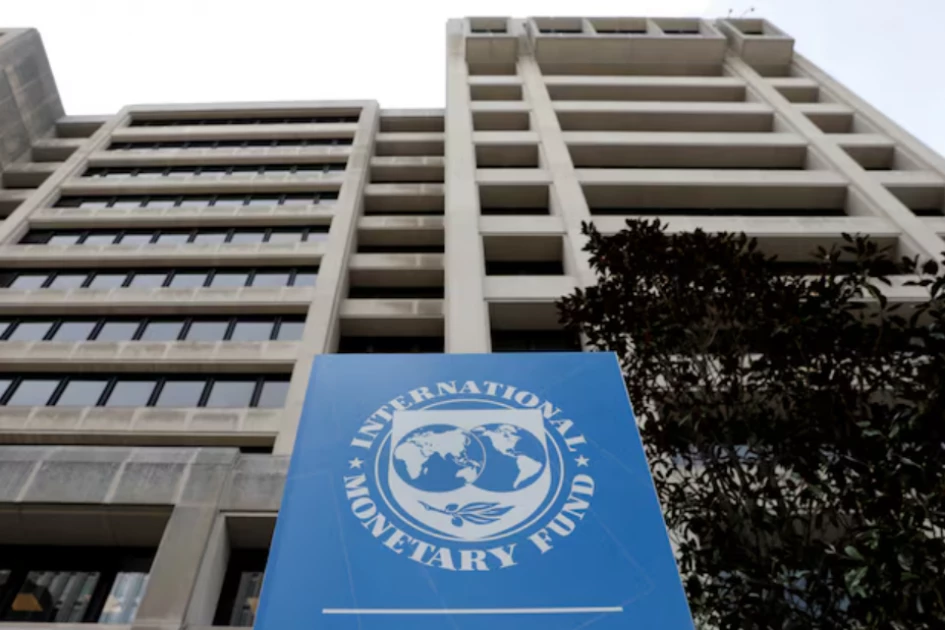
The International Monetary Fund (IMF) headquarters building is seen in Washington, U.S., April 8, 2019. REUTERS/Yuri Gripas/File Photo

Audio By Vocalize
National Treasury Cabinet Secretary John Mbadi has given a
progress update on the ongoing International Monetary Fund (IMF) Diagnostics
Program.
With the program due to conclude in October this year, the CS
says he sees no reason why the report should not be made public.
The assessment program, requested by the Kenyan Government, is
set to identify the weaknesses in the country's governance system and outline
key recommendations for effective governance.
It is a process that is expected to expose the country's
governance underbelly to strengthen critical governance systems, ranging from
revenue mobilisation, expenditure, procurement processes, fiscal governance, as
well as corruption and the rule of law among others.
According to the Treasury CS, the move to invite the IMF to
audit Kenya’s system is aimed at equipping the government with the tools to
seal all the governance gaps.
“The Government of Kenya requested Government Diagnostics from
IMF, which is a normal practice in many jurisdictions. Many countries have
sought for such. IMF is an institution that helps countries or economies to stabilize,”
said CS Mbadi.
TISA Executive Director Diana Gichengo said: “For IMF to
regain its legitimacy in Kenya, they need a Governance Diagnostic based on what
happened and the outright failure of their most recent program. They now have
no choice but to go deeper and wider beyond just fiscal measures. It is very
clear that the US Embassy, EU Ambassadors told Kenya you need a Governance
Diagnostic.”
Ms. Gichengo says the International Monetary Fund will rely on
numerous sources of information such as government reports from the Auditor
General, EACC, Controller of Budget, media reports as well as civil society
reports even as she warns against government interference in the process to
paint a rosy picture.
“Because of the political governance in the fiscal space we
are perceived as irresponsible borrowers, an irresponsible spender, and a
country with very low accountability standards,” she stated.
But according to Dr. Abraham Rugo, the Executive Director of
Bajeti Hub, the report may not reveal any new information that has not been revealed
by local institutions.
He further emphasized on the importance of political goodwill
for the outcome to be effective.
“The interesting bit of it that will be interesting to watch
is how different it will be from what the EACC has already revealed, what the
Auditor General has already revealed. There are enough reports,” noted Dr.
Rugo.
The consequence of the report however is the most concerning,
with experts warning that a damning report from the IMF could further
complicate Kenya's ability to access to funding from the international market.
“The outcome should be that then we have an agreed position,
but largely it’s the international bodies both public and private because they
use that a lot to be able to assess their risk exposure, their investment both
to government and the investment they are making in Kenya,” added Dr. Rugo.
Ms. Gichengo opined: “The international market reads it very
keenly and it informs how they interact with us, but it is not so much the
report, it is the leadership and how the leadership takes up the report.”
The civil society has further warned the government against
concealing the report.
“It’ll be an abomination for this government not to publish
this report. It is a Kenyan report. It cannot be on a shelf and it cannot be
private,” stated the TISA boss.
CS Mbadi noted: “I was very careful to say, from where I sit,
I didn't see what that should not be made public but that will be a Cabinet
decision.”
According to experts, the outcome of the IMF Governance
Diagnostics will be dependent on how forthcoming the government will be with
information, while its impact will be based on how the government implements
the recommendations from the IMF.
Leave a Comment