

From ‘stupid idea’ to a financial revolution: Michael Joseph reveals how M-Pesa almost didn’t happen
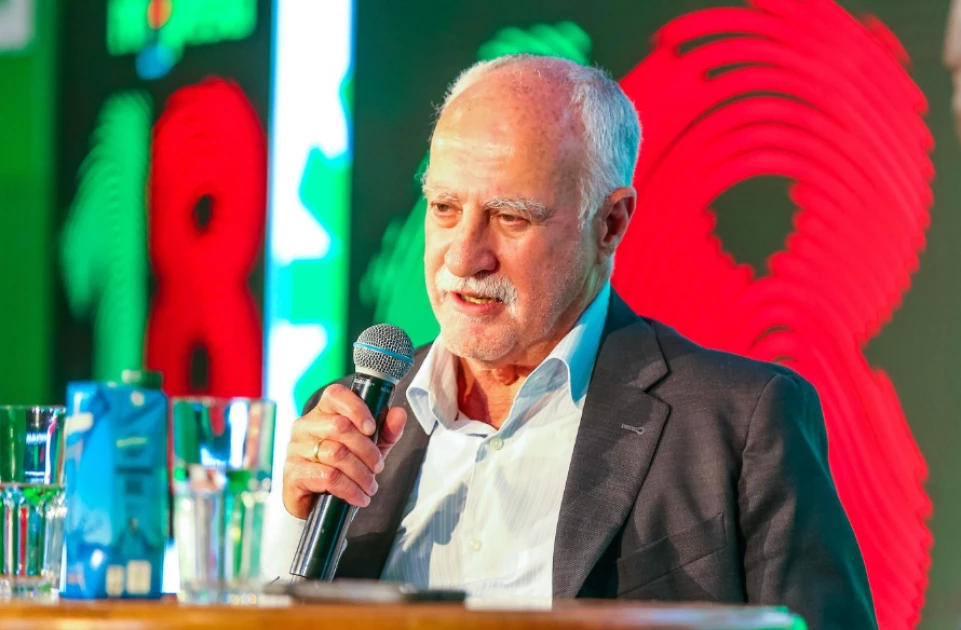
Safaricom Board Chair and former CEO Michael Jpseph speaks at an event to mark M-Pesa’s 18th anniversary on March 7, 2025. PHOTO | COURTESY

Audio By Vocalize
Safaricom Board Chairperson Michael Joseph has
revealed how at the beginning, almost 18 years ago, M-Pesa was dismissed as
nothing but a stupid idea and a costly gamble.
According to Joseph, when presented with the idea
for the mobile money service, Vodafone shareholders were
skeptical, calling it a waste of time and money.
Speaking at an event to mark M-Pesa’s 18th anniversary, the
former Safaricom Chief Executive Officer (CEO) went on to note that he however had
other ideas, and was hell-bent on pushing M-Pesa through.
"It cost us a lot of money, and during that time,
Vodafone shareholders came in and said we were wasting time and money, that
this was a stupid idea. But I said, ‘I’m going to do it anyway,’” Joseph
recalled.
That gamble would go on to
transform Kenya’s financial landscape. Today, M-Pesa processes over 80 million
transactions daily, moving more than Ksh.90 billion every single day and
accounting for over 55% of Kenya’s Gross Domestic Product (GDP).
The telco’s current CEO, Peter Ndegwa, described the M-Pesa service
as more than just a technological innovation, but also as a financial
revolution.
“It brought financial services to the fingertips of millions
of Kenyans, enabling them to send and receive money, pay bills and access
credit with unprecedented ease and convenience. It transformed the way people
did business, empowered small entrepreneurs and drove economic growth, M-Pesa was
not just a technological innovation, it was a social revolution,” said Ndegwa.
As part of the anniversary
celebrations, Safaricom launched Ziidi, a mobile-based money
market fund that allows Kenyans to save and invest from as little as Ksh.100,
with a return of at least 7.9% on savings.
“If you look at money market quite exponentially, I believe
it’s in the rate north of 15 percent on an annual basis so it means people want
to get enhanced return, especially in a period such as last year when we saw
elevated interest rates in the country,” said Safaricom’s Chief Financial
Services Officer, Esther Waititu.
“Money market funds being short term investment, people
started moving money towards that but sometime entry barriers for consumers
become a bit of a hindrance, that’s why part of the experiment there was
to see how people can invest.”
While M-Pesa has driven financial inclusion in Kenya, its expansion
has come with rising operational costs. The company now manages over 300,000
agents across the country, with agent commissions making up the bulk of
expenses.
“When you think about the agent's commissions, they are our
largest cost. When you think of this from a business perspective in running M-Pesa
on its own, because they are part of our infrastructure, and we make a point to
ensure they are adequately compensated,” added Waititu.
Beyond Kenya, M-Pesa now operates in seven other countries and
has integrated with over 47 banks, fintech firms, and other platforms to
enhance its services.
As Safaricom looks to the future, the company has reaffirmed
its commitment to innovation and expansion, targeting a larger share of the
African market.
What was once dismissed as an impractical idea has grown into
a financial powerhouse, reshaping how people save, invest, and transact across
the continent.
Leave a Comment