
The Kiharu paradox: What Ndindi Nyoro is doing right, and why it’s making MPs uncomfortable
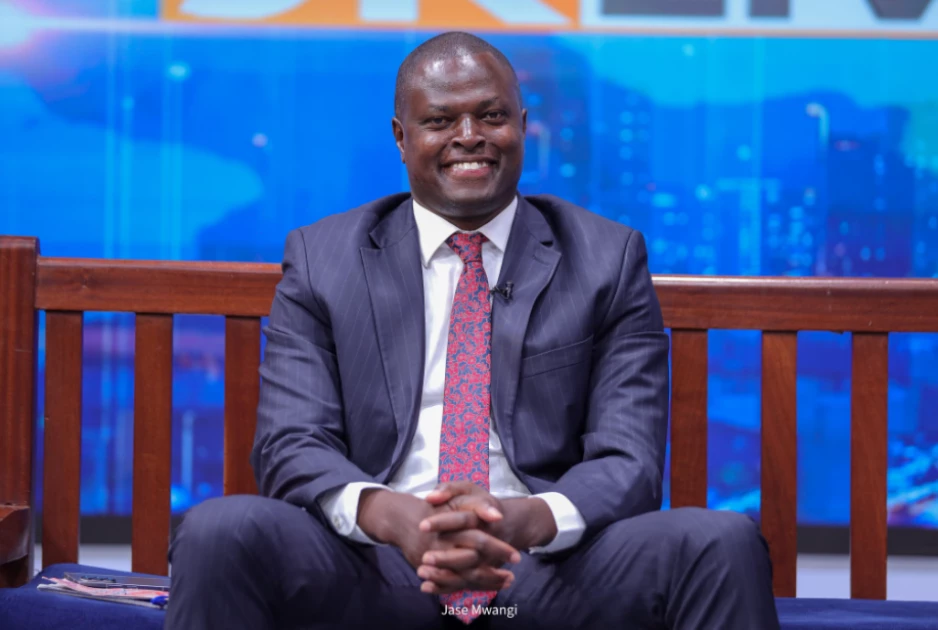
Kiharu MP Ndindi Nyoro speaking on Citizen TV’s JKLive show on January 14, 2026. PHOTO | JASE MWANGI | CITIZEN DIGITAL

Audio By Vocalize
After his ignominious expulsion from the National Assembly’s Budget
and Appropriations Committee, Kiharu Member of Parliament Ndindi Nyoro
retreated quietly, eschewing an all-out confrontation with his tormentors and
renewing his commitment to his constituents with renergized vigour and urgent
gusto.
As the then Deputy
President Rigathi Gachagua impeachment galvanised the nation, the clear-headed
Nyoro sought to avoid the maddening frenzy, measuring his public statements
while at the same time remaining studiously focused on the mandate handed to
him by his esteemed Kiharu voters.
Obsessively wrapped up in
his legislative duties, Nyoro appeared to be a man on a firm mission; a man not
easily distracted by political theatre, and a man who, even after falling out
of the graces of the big boys at State House, still maintained a righteousness
to the people who put him in office.
On March 19, 2025, weeks
after his booting from the prestigious Parliamentary body, Nyoro unveiled
newly-constructed administrative offices in the Mjini area of his constituency,
a function that witnessed an unusual boycott from local government officials including
the County Commissioner due to political tensions. This left the new offices
unoccupied as the national officials stayed away for days on end.
The project, funded by
National Government Constituency Development Fund (NG-CDF), was intended to
provide better working conditions for administrators and bring services closer
to the people and was to house various government offices, including those of the
Assistant County Commissioner (ACC), Chiefs, Assistant Chiefs, as well as the
Office of Social Services & Lands Board, under one roof.
Even before his removal
from the Budget and Appropriations Committee, Nyoro had gotten into the
crosshairs of his Parliamentary mates, many jealously accusing him of selfishly
directing national funds to his constituency in order to improve his political
image and secure himself a favourable ranking amongst colleagues.
Over the years, MPs
watched as Ndindi Nyoro upgraded schools, built classrooms, constructed roads,
carpeted school pathways with cabro, rehabilitated infrastructure, boosted
education and remodelled small businesses, lifting thousands out of penury and
uplifting the face of Kiharu.
Speaking on Citizen TV’s
JKL interview on Wednesday, January 21, 2026, Suna East MP Junet Mohamed repeated
his old assertions, again accusing Nyoro of favouring his constituency while
chairing the budget committee, a claim that appeared to fuel the long-running
equity arguments nationally.
“When he was the chairman,
he was giving his county and his constituency more money than any other part,”
Junet said during the interview.
This came after Nakuru
Town East MP David Gikaria claimed Nyoro's school fees initiative creates
unrealistic pressure on other MPs.
He alleged that Nyoro exploited his Budget Committee
chairmanship to secure extra funding, demanding scrutiny.
Of course, these are grossly exaggerated falsehoods. But
the renergized onslaught against Nyoro isn't new.
Back in March 2025, National Assembly Deputy Majority Leader
Owen Baya asked the Treasury to release geographical data on development
projects per county and constituency.
While addressing the House, the Kilifi North MP demanded that
the Treasury release the data to allow lawmakers to assess whether some
constituencies have received disproportionately higher allocations.
“The Ministry of Treasury
should now submit geographical information of development projects per county
and constituency by 30th April 2025,” Baya asserted.
He added: “This is
fundamental. This is very important. Because we have had skewed development in
this country, where other regions have had more resources and other regions
have had fewer resources, areas... that have been purposely underdeveloped and
underserved because of political reasons or otherwise.”
Backing his Kilifi North
colleague, Majority Leader Kimani Ichung'wah also called for an audit of the
members of the Budget Committee, an obvious dig at Ndindi Nyoro.
He said: "This House
will not sit and allow members who sit in the Budget and Appropriations
Committee to use the position they hold in that committee to appropriate money
to only their constituency at the expense of Kenyans."
Early January, Ndindi
Nyoro announced a major reduction in day secondary school fees from Ksh1,000 to
just Ksh500 per term for all learners from Grade 10 to Form Four under the
Kiharu Masomo Bora Programme 2026.
The move is expected to
benefit more than 12,000 students across 65-day secondary schools in the
constituency, making secondary education more affordable and accessible to
thousands of families.
As usual, many MPs
criticised the move, linking Kiharu's development to unfair resource allocation.
Obviously challenged, Kericho
Senator Aaron Cheruiyot defended MPs unable to replicate the Ksh.500 fee cap,
explaining that constituencies face varying school requirements and regional
funding disparities that prevent uniform implementation nationwide.
Inspired by the Nyoro
model, which has left Kenyans sufficiently impressed and even shocked at just
how an MP can really achieve, former DP Gachagua provoked a conversation around
underdevelopment especially in Northern Kenya, blaming the chronic
underdevelopment in the region on poor leadership and lack of accountability,
not the people.
Repeatedly, and obviously
inspired by Nyoro's tangible success in Kiharu, Gachagua has been highlighting
the disparity between the region’s vast resources and the persistent poverty
its residents face.
Nyoro's near-magical
transformation of Kiharu has ignited a fierce national conversation over misuse
of funds in constituencies, with Kenyans openly questioning their MPs and
demanding explanations on how CDF funds were being (mis)appropriated.
Lawyer and politician
Willis Otieno has even turned his X account into a chronograph on
poorly-managed and hopelessly underdeveloped constituencies especially from the
Nyanza region.
So far, Otieno has
highlighted woeful cases ranging from schools to roads in Ugunja, Suba North,
Bondo, Uwasi and Alego Usoga.
He wrote: "If a
leader has time for State House pilgrimages and chant rehearsals, why doesn’t
he have time to fix classrooms that threaten children’s lives? What exactly are
we rewarding; loyalty to power or responsibility to pupils? At what point did
chanting slogans become a substitute for roofs, desks, and safety? If public
money exists for rallies, fuel, and helicopters, why is there none for cement
and iron sheets?"
Available NG-CDF data from
the Treasury Ministry shows Ndindi Nyoro’s Kiharu constituency received about
Ksh.1.53 billion over twelve years, compared to his biggest critic Junet Mohamed’s
Suna East, which received roughly Ksh.1.47 billion over the same period
nationally.
The raw figures suggest an
advantage, but a population-adjusted analysis flips the narrative, revealing
that Suna East residents received an estimated Ksh.12,048 per person, on
average, nationally.
By contrast, Kiharu’s per
capita share stands at Ksh.7,840, meaning each Suna East resident effectively
benefited by about Ksh.4,208 more over the period.
Recent disbursements show
a similar trend, with Suna East allocated Ksh.166.59 million in the 2023/24
financial year, compared with Kiharu’s Ksh.151.96 million in 2022/23.
Despite the constant
attacks from the political world, Nyoro still appears intent on the one thing
that his people entrusted him most with - improving their livelihood, educating
their children, protecting their businesses, safeguarding their future and
heeding to their pleas.
And that, according to
Nyoro, is all that truly matters. At least for now.
Join the Discussion
Share your perspective with the Citizen Digital community.
No comments yet
This discussion is waiting for your voice. Be the first to share your thoughts!