
Tackling the high cost of unclean water, poor sanitation through smart solutions in Kenya
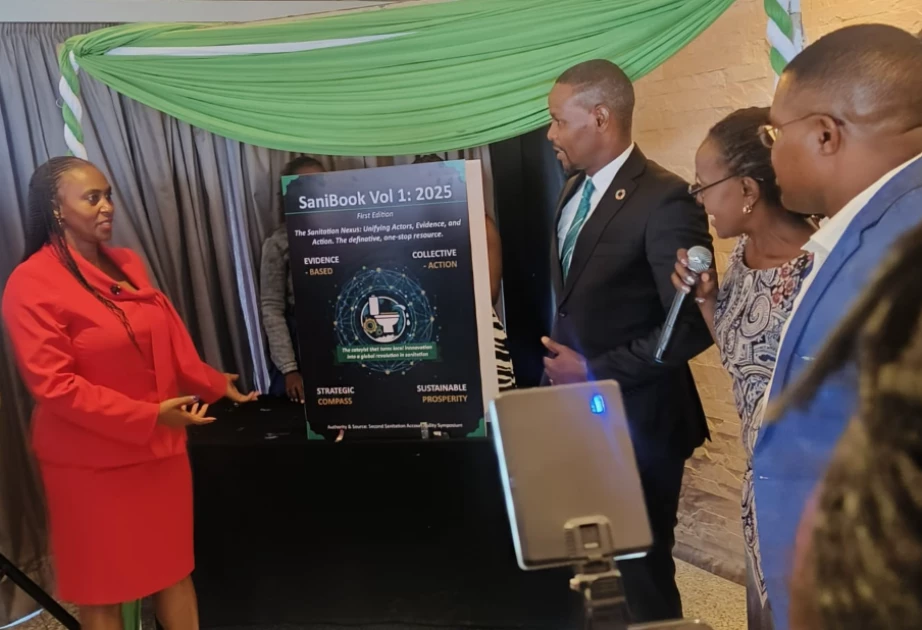
SaniBook is a comprehensive digital platform and publication pushing for smarter sanitation solutions in Kenya, in a bid to help the country meet SDG 6.2 by 2030.

Audio By Vocalize
Kenya spends an estimated Ksh.4.3 billion every year
treating diseases linked to unclean water and poor sanitation. The country also
incurs losses of about ksh.2.1 billion in
productivity when illness forces people out of work.
This is according to Dr. Mary Muthoni, Principal Secretary in
the State Department for Public Health and Professional Standards, who spoke
during a water, sanitation and hygiene (WASH) stakeholder engagement
held during the launch of SaniBook.
SaniBook is a comprehensive
digital platform and publication pushing for smarter sanitation solutions in
Kenya, in a bid to help the country meet SDG 6.2 by 2030.
According to Dr. Muthoni, unsafe
water, poor sanitation and hygiene contribute to about 1.4
million deaths globally every year.
“When you come back home, almost 20,000 people die. These are not just
figures but a reality. When sewage is left to flow into drains and rivers, it
pollutes the environment, contaminates water sources and quickly shows up as
cholera, diarrhoea and worm infections,” she emphasized.
Thomas Odongo, Chairman of the Water and
Sanitation Providers Association (WASPA), said that while Kenya has undertaken
several sanitation pilot projects, many fail to progress beyond the pilot
stage.
“We have a lot of pilots in
sanitation, but it ends there for reasons that we know, like funding. There is
no sustainability because we come up with pilots but we don’t engage
communities,” Odongo said.
He added that the water and
sanitation sector also suffers from challenges related to data availability and
consistency.
“With this digital tool, we are
able to track, make corrections, scale, and have sustainable innovations,” he
added.
Elizabeth Wamboi Mwangi,
WaSHVoice Program Director, said the SaniBook innovation is a premier knowledge
management tool meant to transform isolated projects into proven national
systems, moving Kenya from trial and error towards a trajectory of
evidence-based knowledge.
Eng. Festus Ng’eno, Principal Secretary in
the Ministry of Environment and Climate Change, who also attended the
stakeholder engagement, acknowledged that the digital tool will play a critical
role in addressing climate change challenges within the water sector.
“For my State department, it
compiles fragmented efforts into a unified resource that will actively shape
our national strategy and work plans. I am particularly impressed that this
first edition of SaniBook does not shy away from the hard truth. It unpacks the
seven sanitation bottlenecks that have historically hindered our progress,
moving beyond mere observation to validated progress for our interventions,” he
said.
SaniBook is a one-of-a-kind
digital publication that brings together scattered information on water,
sanitation and hygiene from research institutions, as well as public and
private sector players across the country.
This will ensure effective tracking of projects, comparison of
interventions, and scaling of successful solutions.
The platform is expected to help
WASH stakeholders identify what is working, existing gaps, and how resources
can be better channelled into impactful projects.
Join the Discussion
Share your perspective with the Citizen Digital community.
No comments yet
This discussion is waiting for your voice. Be the first to share your thoughts!