
Relief for pastoralist farmers as Kenya hosts Pan-African gathering in Nairobi
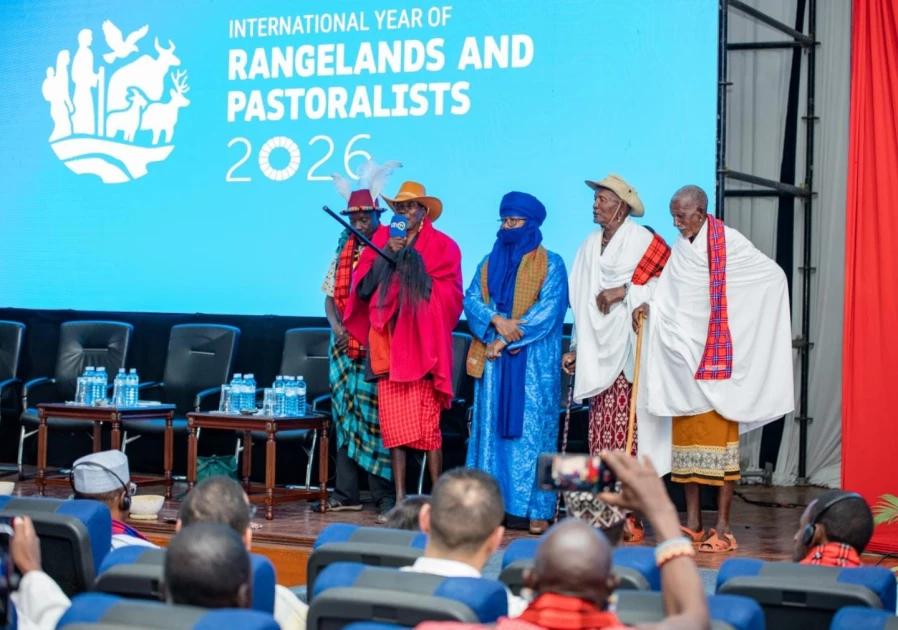
Indigenous pastoralists hold a prayer session during the launch of the African Indigenous Pastoralists Gathering ahead of the UN International Year of Rangelands and Pastoralists 2026. Photo | Moses Mwakisha

Audio By Vocalize
The meeting, running from January 25 to 29 at the Kenya School of Monetary Studies in Nairobi, has brought together about 100 pastoralist representatives from East, West, Central, North and Southern Africa.
It is jointly organised by IMPACT Kenya, the African Federation of Pastoralists (AFPAT), the National Drought Management Authority (NDMA) and the State Department for Arid and Semi-Arid Lands (ASALs) and Regional Development.
Organisers say the forum is designed to amplify pastoralist participation in global discussions on climate change, land governance and rangeland management, particularly in the lead-up to the United Nations Convention to Combat Desertification (UNCCD) COP17, where rangelands and land degradation are expected to feature prominently.
Speaking at the launch, Defence Cabinet Secretary Soipan Tuya said Kenya has undertaken constitutional and sectoral reforms over the past decade to address the historical marginalisation of pastoralist communities, noting that these changes are beginning to open space for stronger inclusion in national development and climate policy.
Across Africa, pastoralism supports an estimated 258 million people and spans roughly 43 per cent of the continent’s land area. Beyond livestock production, pastoralist communities manage vast rangeland ecosystems that contribute to biodiversity conservation and carbon storage. However, the sector continues to face mounting pressures from climate variability, recurrent droughts, land-use conflicts and insecure land tenure, especially in arid and semi-arid regions.
Principal Secretary for ASALs and Regional Development Kello Harsama said the government is promoting agro-pastoralism to diversify livelihoods and reduce climate risks. He highlighted planned investments in water infrastructure across ASAL counties, alongside efforts to strengthen awareness and protection of community land rights at the county level.
Harsama also pointed to regional frameworks under IGAD and the East African Community that support cross-border pastoral mobility, helping reduce conflict and improve access to grazing during dry seasons.
Hindou Oumarou Ibrahim, President of the Association for Indigenous Women and Peoples of Chad, said delegates are working towards a unified African pastoralist position in global climate and environmental processes, including calls for funding mechanisms that directly reach affected communities rather than stopping at national level.
The forum will culminate in a field visit to Suswa in Narok County on January 28, where participants will engage with local pastoralist communities and observe climate resilience, rangeland restoration and land management practices on the ground.
Join the Discussion
Share your perspective with the Citizen Digital community.
No comments yet
This discussion is waiting for your voice. Be the first to share your thoughts!