
Refugee youth use film to share stories of digital violence

Audio By Vocalize
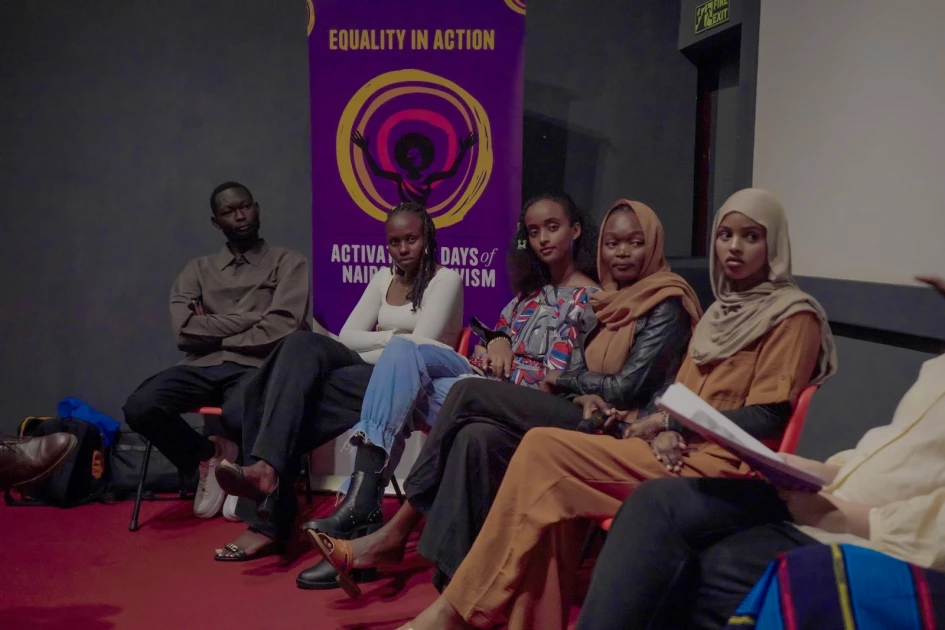
For many, this screening was the first time their voices, stories of resilience, creativity, and profound hope were shared beyond the confines of a refugee camp. Among the works showcased at the Voices Without Borders screening were films by The Kamp, a collective of young Sudanese refugees from Kakuma Refugee Camp.
These youths, once invisible to the wider world, wielded the camera as a powerful tool to address a threat impacting millions: the pervasive and borderless nature of digital harm.
A Nightmare in the Real World
For Mary Tariku, a young refugee from Kakuma, the virtual world became a battlefield. Her nightmare began when someone stole her photos to create a fake social media profile. The online violation quickly morphed into a terrifying real-life assault.
Mary’s identity and sense of security were stolen. Her innocent pictures became weapons. One day, a furious woman appeared at her doorstep, convinced Mary had ruined her marriage. A knife flashed in front of Mary’s eyes. She froze. Though her mother intervened, Mary was no longer safe, even in her own home.
“It felt like my life was being taken away, piece by piece,” Mary said, recalling the terror. “No one believed me. No one understood how painful it was.”
Reporting the harassment offered no justice; there was no recourse. The digital invasion had real-world consequences, yet there were no clear lines of defense. She felt trapped; powerless in a world where her name was weaponized and her dignity stolen.
More Than a Personal Tragedy
At the screening, Mary’s story was not just a personal tragedy; it was a devastating reflection of a global crisis. The documentary, produced by her fellow refugee youth, brought her experience to the forefront, demonstrating how digital harassment transcends borders and disproportionately affects vulnerable women and girls in settings like refugee camps. It empasized a crucial point: digital violence is not just an online issue; it is a human rights issue with life-altering, real-world consequences.
As the film played, the audience sat in silence, processing the emotional weight. Nira Ismail, a lead producer on the project, emphasized the importance of their medium. “We want to show that refugee youth are not just victims; they are survivors and storytellers,” she stated.
“Through stories like Mary’s, we make people understand that the digital world is not a separate reality; it affects us all.”
The films also explored the broader experiences of women in the camps, weaving together themes of interfaith love, cultural resilience, and the fight for dignity amidst displacement and online abuse. The voices of these young filmmakers were raw and real, serving not just to tell their stories, but to reclaim their narrative and challenge the profound injustice they faced.
The Burden of Invisible Violence
For Mary, the real agony was not just the stolen photos, but the profound silence and lack of recourse. "I just wanted people to understand that this was not my fault. I didn’t ask for this. But there was nowhere to turn for help," she shared, her voice trembling. “It’s as if the world thinks we don’t matter, that our stories don’t matter.”
The Voices Without Borders event coincided with the 16 Days of Activism Against Gender-Based Violence, but for Mary and the filmmakers, it was more than a campaign. It was a chance to be seen and heard—to loudly declare: "This happened to us. We are not invisible. We matter."
Mary’s experience is tragically common. Across Kenya, digital violence is a silent epidemic, taking an immense emotional toll on women and girls who are often left to fight for their lives, dignity, and safety without support. “I’m just one of many,” Mary asserted.
“There are so many other girls like me. But it feels like no one sees us. We need to tell our stories, and we need people to listen.” Her quiet but firm voice conveyed the unspoken pain that millions carry daily. The road to justice is long, but the act of sharing her story on screen, of having people listen and understand was a hard-won victory in a fight that is far from over.
Digital violence is not confined to one community. The fight for safety, dignity, and justice in the digital age is one that all of us must be a part of. “Some days, I just want to forget, but I can’t. I can’t forget the fear, the anger, the feeling of being invisible. But speaking out, telling my story maybe that’s the only way to heal.”
Join the Discussion
Share your perspective with the Citizen Digital community.
No comments yet
This discussion is waiting for your voice. Be the first to share your thoughts!