

OPINION: Why a Proper Meal Still Matters in an Age of Rush, Snacks and Takeaways
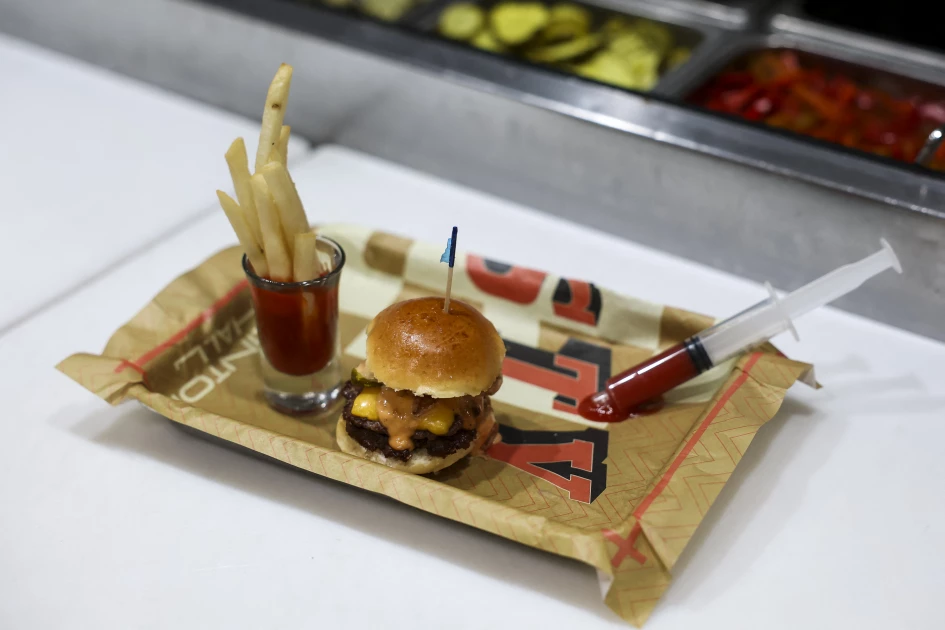
Clinton Hall’s "Teeny Weeny Mini Meal” is pictured on December 8, 2025 in New York City. Photo by ANGELA WEISS / AFP

Audio By Vocalize
At lunchtime in Nairobi, you can see the country in motion.
Office workers queue at kibandaski in
Westlands or Upperhill for Chapati beans ugali and beef, boda riders grab chips
and chicken, students open pizza boxes, and families share plates of rice or pilau.
Almost everyone is in a hurry. But almost everyone is still
doing one familiar thing: sitting down, even briefly, to eat a proper meal.
For generations, Kenyans have not just eaten to survive. We
have eaten to connect. Whether it is supper at home, lunch at a mama mboga, or
nyama choma on the weekend, meals have always been moments structured, social,
and intentional.
A proper meal has never meant only home cooking. It has
always meant pausing, sitting, and making eating a moment rather than an accident,
whether that meal comes from your kitchen, a kibandaski, or your favourite
takeaway spot.
But our eating habits are changing. Urban life has
compressed time. Traffic, deadlines, phones, and delivery apps have pushed many
of us toward constant snacking and eating on the move.
We no longer move
cleanly from breakfast to lunch to supper. We move from one bite to the next.
The result is not just cultural it is behavioural. When eating loses structure,
consumption becomes automatic.
It is impossible to ignore that Kenya, like many countries,
is having a wider conversation about sugar, health, and lifestyle diseases.
That conversation matters.
But lasting health habits are not built through fear or
finger-pointing. They are built through everyday choices, repeated over time,
about what, when, and how we consume.
This is where small choices matter. Consider the difference
between drinking something with a meal in a structured moment versus sipping
beverages between meals. One is a moment.
The other is a habit. Public health does not change when
people stop enjoying food. It changes when people become more aware of context,
portion, and frequency.
This is also why choice matters more than ever. Today,
Kenyans can choose from a wider range of options than before, including
zero-sugar and low-sugar alternatives alongside classic favourites, as well as
different pack sizes for different moments.
Whether it is ugali and beef, pilau, chicken and chips, or
pizza shared with friends, the drink is meant to be part of the moment not the
moment itself. Meals are where people talk, laugh, argue, and reconnect. They
are where families and friends check in with each other. In a country that moves
as fast as Kenya does, meals remain one of the few daily rituals that slow us
down.
Some will argue that in a country facing rising health
challenges, the focus should be on restriction rather than reframing. That view
is understandable. But food cultures do not change through bans and blame
alone. They change through habits. And habits change when people are given
better structures, better options, and better reasons to pause and choose.
The stakes here are not abstract. They are visible in our
homes, our workplaces, and our communities. A country that loses its meal
culture slowly loses its sense of balance. A country that keeps its meal
culture even as life gets faster and more digital keeps a powerful tool for
moderation, connection, and wellbeing.
Kenya does not need to stop being modern to live better. It
needs to be more intentional. That starts with something simple: treating meals
as moments again, not just interruptions between errands.
In a nation always on the move, the most radical thing we can sometimes do is sit down, eat properly, and make the moment count.
The writer, Martin Kariuki is SBC Kenya’s Business Development director
Leave a Comment