
OPINION: Mobile giants will soon be fighting over foldables

Audio By Vocalize
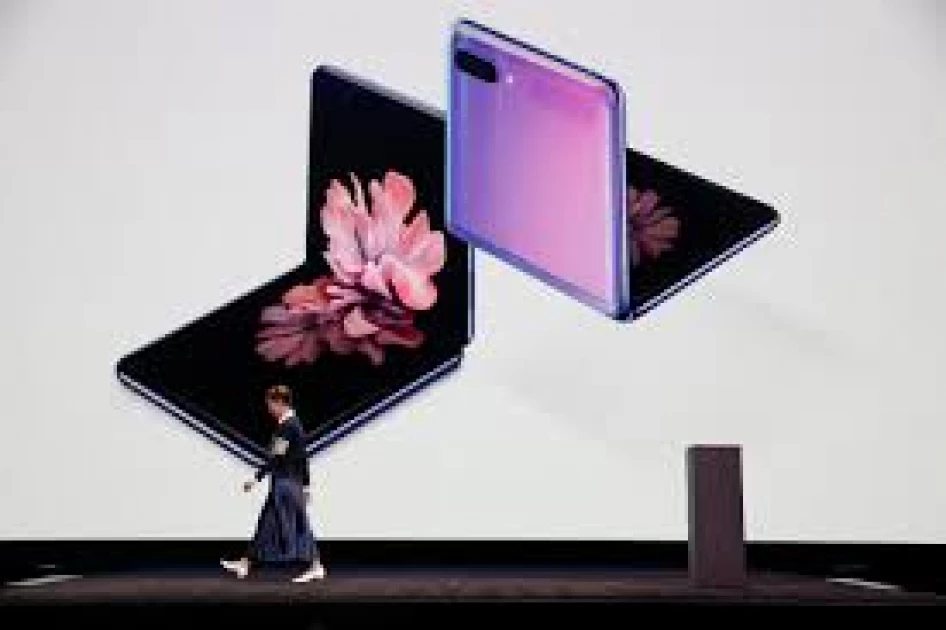
With the introduction of the Galaxy Z TriFold, Samsung has pushed foldable phones closer toward mainstream adoption.
Release was limited to South Korea, with just a few thousand units available (which quickly sold out), so this was not mass adoption. But it was a signal.
Scale isn’t Samsung’s priority. Shaping perception and demonstrating technological leadership is.
Samsung’s Foldable strategy: Lead, iterate, widen the funnel
Samsung’s foldable strategy has three layers: extreme hardware leadership; incremental normalisation; ecosystem lock-in.
Two hinges. Three panels. A 10-inch display when open. The Galaxy Z TriFold is a statement device – the objective is to show what Samsung can build before Apple enters the field.
Samsung’s stable also includes the Galaxy Z Fold 7 and Z Flip 7, and they want foldables to stop feeling like experiments.
Numbers show partial success. Foldables are still about 2.5% of the global smartphone market, but shipments hit a record in 2025. Samsung holds roughly 64% of global foldable share. China dominates volume. The US is smaller but growing.
Profitability matters more than share. Margins for foldables are healthier than slab phones—even with higher component cost—and for Samsung, this offsets slowing growth in conventional flagships and supports its display and component businesses; every foldable sold helps Samsung Display.
Multitasking is not a demo. It is the use case. Samsung bets that productivity, not novelty, justifies the premium. For that it focuses the device experience around multitasking and AI tools. Software is the quiet pillar here.
Galaxy AI features are tuned for large screens. Samsung’s DeX mode is the software UI (user interface) that turns these foldable phones into light PCs.
Durability and cost remain brakes. Hinges fail. Screens scratch. Batteries suffer. Samsung answers with iteration, not reinvention. Thinner builds. Better materials. Controlled rollouts. The TriFold’s limited supply reflects caution.
Competitors: Apple and others enter the fold
Apple is coming. Bloomberg reports the first foldable iPhone is expected in late 2026. It will be book-style—similar to Samsung’s Z Fold line—and likely priced above $2,000.
This is not unusual for Apple. It did not invent foldables. It waited. The category is seven years old. Apple believes technology, supply chain, and user expectations are now mature.
Apple’s impact will not be technical shock. It will be market shock. Analysts expect Apple to capture over 20% of foldable unit sales in its first year, despite entering late. Revenue share could be higher. Brand influence still works.
Apple’s foldable is expected to focus on three things Samsung still struggles with: near-invisible crease, hinge longevity, and software polish. And iOS will be adapted for the form factor, meaning Apple will sell the experience as seamless, not flexible.
China is a key motive. Foldables are fashionable there, and local brands dominate. Apple has lost ground, so a premium foldable gives it a new lever.
Others are not waiting. Huawei sells trifold phones in China. Mate XT and Mate XTs push aggressive designs and PC-like multitasking. Huawei claims mass production has been mastered. It controls its ecosystem with HarmonyOS.
Google plays differently. Pixel Fold devices showcase software. They push Android adaptation, multitasking APIs, AI integration. Volume is secondary. Influence is the goal.
Motorola, Oppo, Honor, Xiaomi compete on price, thinness, and regional taste. They move fast. Margins are thinner. Innovation is uneven.
The market remains small but volatile. For example, Counterpoint reports 45% year-on-year growth in foldables. From a low base, but real.
As Choi Won-Joon said, competition helps. Samsung wants Apple in. Apple’s entry legitimises the category. It also raises the stakes.
Implications for the mobile ecosystem
Foldables are not just phones that bend. They change the mobile ecosystem.
First, software must adapt. Apps built for single screens look stretched on foldables. Opportunity arises for productivity, creative, and multitasking apps. Developers who design for variable screens will win early.
Second, accessories return. Keyboards. Docks. Power solutions. Stylus alternatives. Foldables blur phones and tablets. Markets that died with the PC era will reopen.
Third, wearables gain leverage. Phones become hubs rather than constant-use screens. Watches, rings, earbuds, and glasses take more responsibility. Phones are less visible, but more central.
Fourth, the concept of “a phone” loosens. Foldables point toward devices used only when needed. Entrepreneurs should note that interfaces designed to assume phones stay closed will matter.
Finally, pricing stratification will deepen with ultra-premium foldables at the top. Mid-tier foldables below. Slabs remain at the base. The upgrade ladder is lengthening. Companies with broad portfolios and services will gain advantage.
Samsung’s TriFold did not change the market overnight. It did something more important. It reminded the industry that form factor is still a weapon. Apple will bring scale. Huawei brings speed. Google brings software pressure.
The slab phone is not dead. But it is no longer the end of the story.
The author, Dario Betti, is the CEO of the Mobile Ecosystem Forum
Join the Discussion
Share your perspective with the Citizen Digital community.
No comments yet
This discussion is waiting for your voice. Be the first to share your thoughts!