
One Health research unveiled to tackle heavy metals exposure, antimicrobial resistance in Kenya
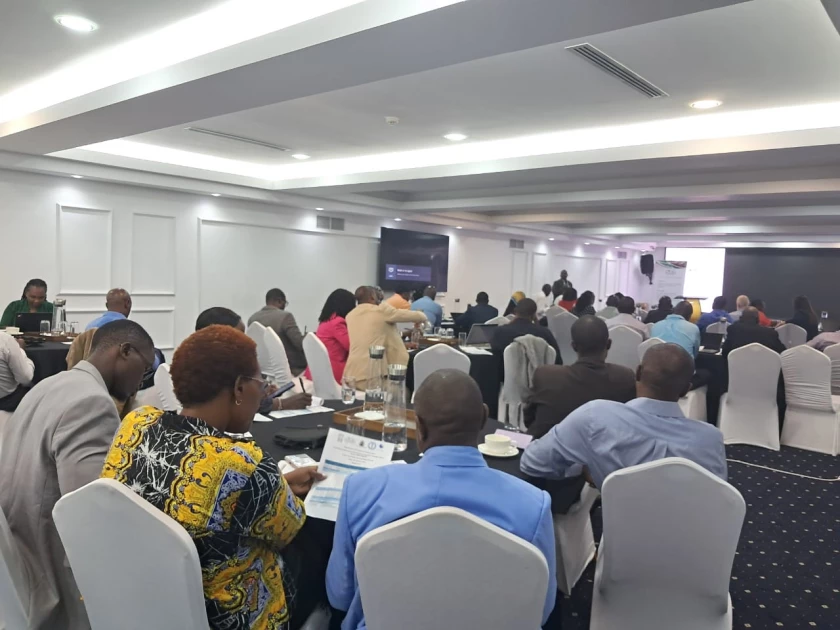
Delegates at the launch of One Health research initiative.

Audio By Vocalize
Funded by the Danish International Development Agency (DANIDA), the project involves research into the exposure to heavy metals and antimicrobial resistance in and around Kenyan dumpsites.
This project focuses on the risks that heavy metals and microbes, mostly found in dumping sites, cause to human health, animal health and the environment.
Due to urbanisation, a number of counties in Kenya are grappling with waste management practices as unmanaged waste continues to pose toxicity threats at different levels.
The One Health research initiative is a collaborative project to be undertaken by the Technical University of Denmark (DTU), the Kenya Agricultural and Livestock Research Organization (KALRO), the Kenya Medical Research Institute (KEMRI), and the University of Nairobi (UoN). Here, researchers from the various institutions will focus on investigating the heavy metal and antimicrobial resistance threats posed by Kenyan dumpsites, specifically major dumpsites in Nairobi, Mombasa and Nakuru Counties.
Through this project, the stakeholders intend to create awareness of the risks of unmanaged waste, protecting waste collectors and the communities near dumpsites. The project also aims to shed light on deaths caused by exposure to heavy metals and antimicrobial resistance.
“This project will be using a one health approach whereby we will be collecting samples from humans, animals and the environment around the dumping sites,” said Dr. Cecilia Mbae, a researcher at KEMRI.
For a long time, waste pickers and communities whose livelihoods are linked to dumpsites have been exposed to risks of exposure to heavy metals and antimicrobial resistance. A number of them have failed to understand the risks and, as a result, suffered health complications leading to death.
“We are looking at using this project as an awareness platform so that people know the risks of waste, manage and mitigate them. Then they can be able to utilise the waste through re-circulation and protect communities in the dumpsite” said Dr. Moses Olum, Deputy Institute Director at KALRO.
Other than waste pickers, the project also follows the transfer of microbial material to human beings. These microbes can be transmitted through direct consumption of food containing microbial material and those transferred through the food chain. Through the food chain, a number of Kenyans have unknowingly consumed meat from animals that have been exposed to microbial material by feeding in dumping sites.
Antimicrobial resistance occurs when germs like bacteria and fungi develop the ability to defeat the drugs designed to kill them. This leads to resistant infections that are difficult or impossible to treat.
According to the World Health Organisation, antimicrobial resistance (AMR) is one of the top global public health and development threats.
It is estimated that in 2019, antimicrobial resistance was directly responsible for 1.27 million global deaths and contributed to 4.95 million deaths.
Through the 5-year-long project, researchers intend to work with Kenya’s National Environment Management Authority (NEMA) to generate data that will support effective waste management systems in all 47 counties across Kenya.
“In our study, we will be referencing standards established by the Kenya Bureau of Standards (KEBS) to find levels of heavy metals that can be tolerated in certain products,” added Dr Olum.
Join the Discussion
Share your perspective with the Citizen Digital community.
No comments yet
This discussion is waiting for your voice. Be the first to share your thoughts!