

Kenya's Benard Koech slapped with four-year doping ban
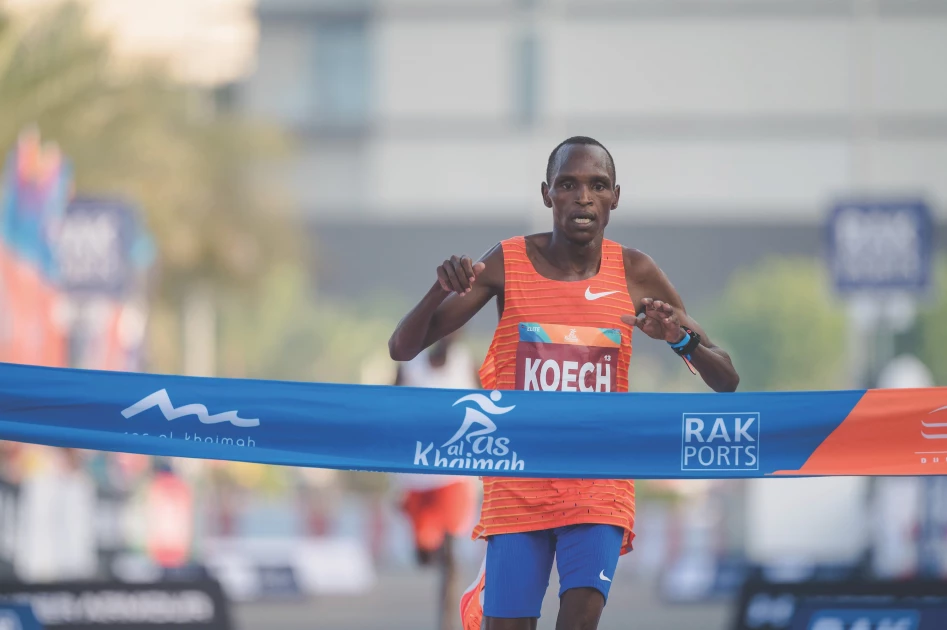
Benard Kibet Koech during a past race. (Photo: Courtesy)

Audio By Vocalize
Koech, 26, who finished an impressive fifth in the 10,000m final in Paris was found to have violated Rule 2.2 of the World Athletics Anti-Doping Rules, relating to the use of a prohibited substance or method.
In its decision, the three-member tribunal ruled that the abnormal blood values recorded between June and July 2024 were “highly likely the result of blood manipulation” rather than natural or medical causes
According to the Athletics Integrity Unit (AIU), Koech’s ABP showed a distinct and concerning sequence of elevated haemoglobin levels combined with suppressed reticulocyte production, a pattern experts say is consistent with the use or recent cessation of erythropoiesis-stimulating agents (ESAs) or blood transfusions.
“The consistent pattern of high haemoglobin with suppressed reticulocytes and elevated OFF-scores strongly supports the likelihood of blood doping,” the expert panel concluded in its joint opinion.
The most striking abnormalities were recorded just weeks before the Paris Olympics, with one sample showing a haemoglobin level of 17.2 g/dL and an OFF-score of 111.1, values described as “unphysiological” even for an altitude-based athlete.
“The abnormalities were neither isolated nor random. They formed a clear sequence aligned with preparation for a major championship,” the tribunal noted in its ruling.
Koech denied any wrongdoing and argued that the abnormal readings were caused by a combination of altitude exposure in Eldoret, oral iron supplementation, and a COVID-19 infection in late June 2024.
However, the tribunal rejected all three explanations, both individually and cumulatively.
“Viral infections, including COVID-19, are not known to increase haemoglobin or produce the sequence of high haemoglobin followed by reticulocyte suppression observed in this case,” the expert panel stated .
On iron supplementation, the experts were equally firm, noting that oral iron does not cause a sudden spike in haemoglobin or suppress reticulocyte production in athletes without iron-deficiency anaemia.
The tribunal also noted that Koech had lived and trained at around 2,100 metres above sea level for years, meaning altitude exposure could not account for the sudden and extreme blood changes.
The timing of the abnormalities proved critical in the ruling. Experts linked the peak blood values to the period immediately preceding the Paris Games, where Koech ran a personal best of 26:43.98 in the Olympic final.
“This temporal proximity enhances the probative value of the ABP abnormalities,” the tribunal said, adding that the blood profile suggested a “post-doping phase” designed to maximise performance while avoiding direct detection
As a result of the ruling, Koech has been banned for four years, with the sanction backdated to include his provisional suspension imposed on 10 June 2025. All results recorded from 26 June 2024 have been disqualified, including his Olympic performance.
World Athletics said the case underlined the strength of the ABP system.
“An abnormal Athlete Biological Passport does not rely on chance. It reflects sustained and scientifically verified deviations that cannot be explained by normal physiology,” the AIU submitted to the tribunal.
Leave a Comment