
Growing crisis of wetlands and livelihoods in Eastern Africa raises alarm
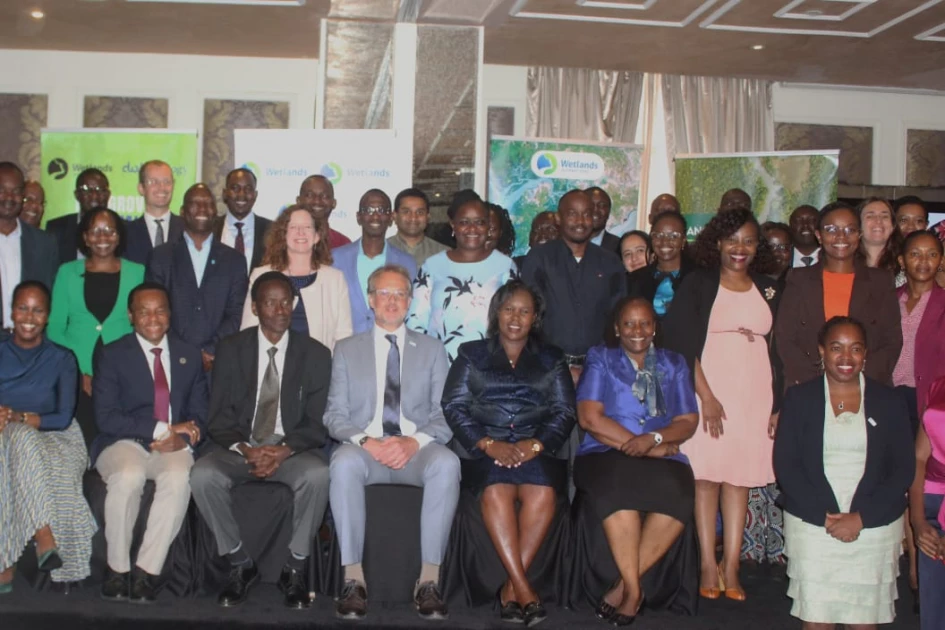
Wetlands Restoration Partners pose for a photo session during a stakeholders meeting in Nairobi in June 2025.

Audio By Vocalize
Biodiversity, forestry, seascapes, and freshwater ecosystems thrived freely in the past.
Experts say that the contribution of Indigenous peoples and local communities
was conspicuous—perhaps even without their own awareness of it. But at what
point did the tables turn? Today, experts are calling for urgent interventions
to counter the aggressive decline in biodiversity.
The restoration of water ecosystems, conservation of biodiversity, and
advancement of sustainable livelihoods across Eastern Africa are now the focus
of regional efforts to conserve and restore wetlands and their related
livelihoods.
A report by WWF released on Thursday warns that freshwater fish
populations across Africa are in steep decline—threatening food security,
income, and jobs for millions. The report urges urgent action to protect inland
fisheries for their economic, ecological, and cultural value.
During his first official mission to Kenya, Coenraad Kriger, Global CEO
of Wetlands International, expressed a strong commitment to scaling up
integrated solutions to save wetlands. He emphasized that Eastern Africa is a
priority region for investment in wetland restoration, given its acute exposure
to climate and water-related risks.
“We have a narrow window to act,” said Kriger. “But Eastern Africa has
what the world needs: visionary leadership, scientific knowledge, and local
commitment. By aligning those with the right financing tools, we can build a
blueprint for wetland recovery that delivers both climate resilience and
inclusive economic growth.”
As of 2025, more than 70% of Eastern Africa’s wetlands have been lost or
severely degraded, weakening critical ecosystems that once provided natural
flood regulation, groundwater recharge, and habitats for wildlife.
These losses have made communities more vulnerable to climate extremes
and water insecurity.
Across the region, agricultural fields and soil fertility have continued to decline significantly. Flood-prone zones are expanding, rivers are drying up earlier in the season, and former agricultural strongholds are experiencing productivity losses.
Wetlands—long overlooked in infrastructure planning—are
now recognised as climate-critical ecosystems that must be protected and restored
to ensure water security, public health, and livelihoods for future
generations.
The region also continues to face escalating water stress, erratic
rainfall, biodiversity collapse, and mounting climate-related losses—conditions
that are straining food systems, rural life, and national economies.
“Catalyzing strategic partnerships through advancing sustainable water
ecosystem restoration, biodiversity conservation, and sustainable livelihoods
in Eastern Africa is the way to go to save the wetlands.”
The conversation will be expanded during the Ramsar COP-15 in Zimbabwe, a global engagement taking place in a fortnight.
Join the Discussion
Share your perspective with the Citizen Digital community.
No comments yet
This discussion is waiting for your voice. Be the first to share your thoughts!