
Gladys Boss: It is wrong to link Ruto to Kiambaa 2007 church attack
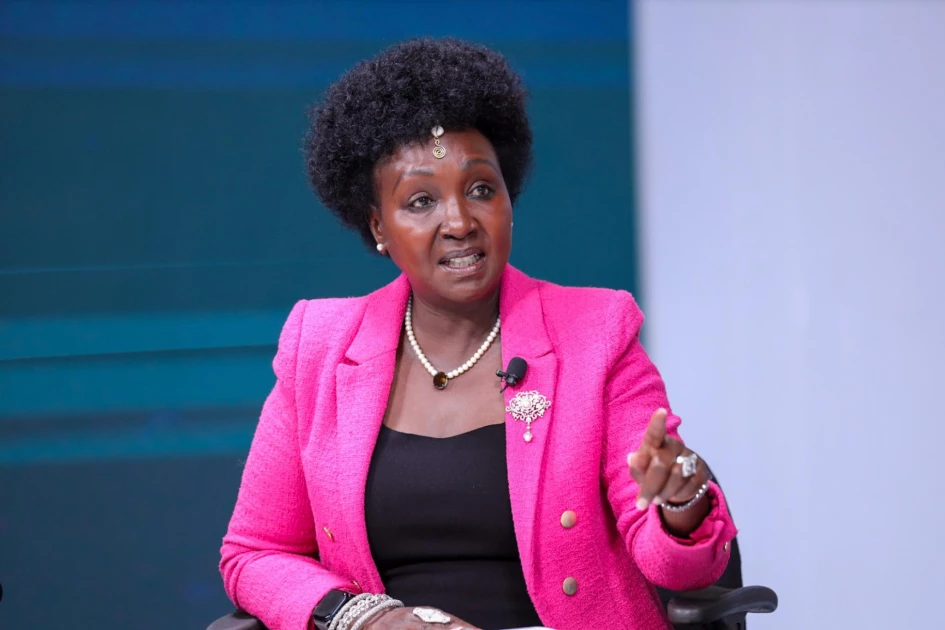
National Assembly Deputy Speaker Gladys Boss speaks to Citizen TV on January 14, 2025.

Audio By Vocalize
The Uasin Gishu Woman Representative argues that the claims are unfair, careless and politically motivated to villainise him.
In a panel discussion on Citizen TV DayBreak show, the Kajiado North legislator faulted President William Ruto for the recent church attack at ACK Witima in Nyeri County.
Ngogoyo further likened the attack to an incident at Kiambaa church in Uasin Gishu County, where nearly 250 people were burned to death during the 2007 election violence.
"In 2007, a church in Kiambaa was burned down, and there were no survivors. William Ruto was the Member of Parliament at that time. While Ruto is the President today, an attempted assassination," said the MP.
On the panel, Boss faulted Ngogoyo for linking the President to the Witima church attack, arguing that investigations into such matters should be left to established institutions.
“It has become fashionable and gives people bonga points to accuse the President, but that is very unfair and very careless,” Shollei said, speaking to Citizen TV on Monday.
She noted that Kenya has clear investigative structures established under the 2010 Constitution, including the Independent Policing Oversight Authority (IPOA), the Internal Affairs Unit of the National Police Service and the Ministry of Interior, all of which are currently handling the matter.
“We have institutions in this country. The Interior Cabinet Secretary has called for investigations, the Inspector General has spoken, and IPOA is in place. Let us allow investigations to be completed,” she said.
The Deputy Speaker dismissed assertions that President Ruto is linked to the church attack during the 2007/2008 post-election violence, insisting that the President was not even at the scene.
“It is very wrong for one to say that by the mere fact that Ruto was an MP for Eldoret North during that period, he is responsible. At that time, he was at KICC defending the vote count for Raila Odinga,” she stated.
Gladys also drew from her experience while working on Kenya’s reparations framework, saying records of victims of post-election violence exist and were formally documented.
“I interacted with the Kenya National Human Rights Commission when I was preparing the reparations bill. There is a list of those who were harmed, who lost property, and who died. That information was presented in 2018 when my bill was being processed,” she said, urging leaders to “study these things before casting aspersions.”
Her remarks come against the backdrop of heightened concern over rising political tension in churches, following recent incidents where leaders have clashed verbally during services.
President Ruto has warned against the politicisation of churches, saying places of worship must remain peaceful and respected.
“The President has already said it is wrong to use the church for politics and violence, and the Interior CS has echoed the same,” she said.
She also criticised leaders who have vowed not to report incidents to the police, saying such actions undermine the rule of law.
“Leadership demands resilience. You report, make it public, keep a copy of your statement and exhaust all legal channels. You cannot just throw your hands in the air and say you will not go to the police,” she said.
In the 2007 incident, dozens were brutally attacked and burned in the Kenya Assemblies of God Church in Kiambaa, which housed ethnic Kikuyus who fled from their farms and houses at the height of political unrest.
The post-election violence saw President Ruto being charged at the International Criminal Court (ICC) over accusations of orchestrating the melee.
The ICC then threw out the case in 2016, ruling that there was insufficient evidence, but it refused to acquit him.
Join the Discussion
Share your perspective with the Citizen Digital community.
No comments yet
This discussion is waiting for your voice. Be the first to share your thoughts!