
From resolution to reality: Delivering water and sanitation for 'the Africa we want'
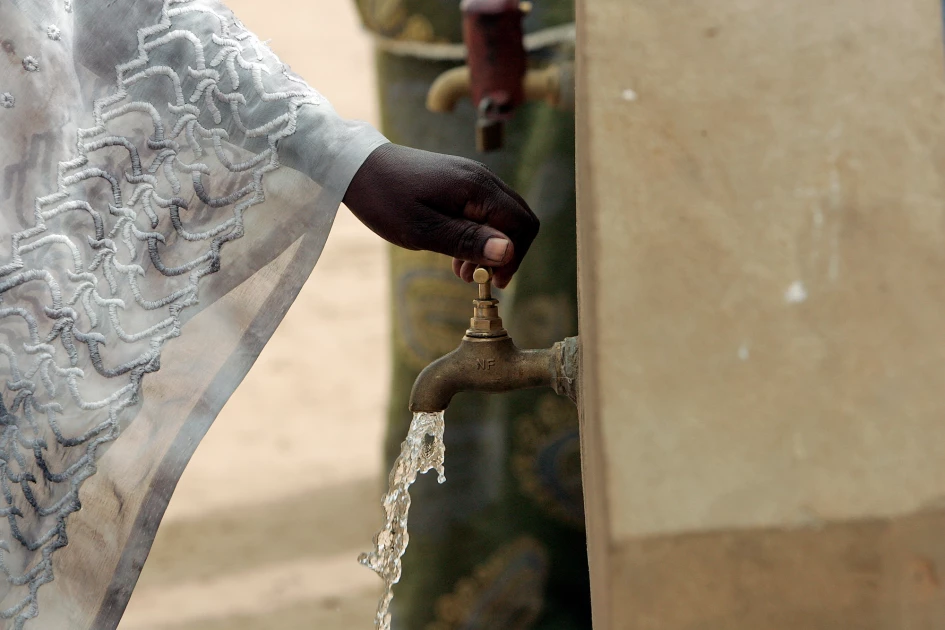
Clean drinking water runs from a tap in Senegal. Photo Credit: UN Photo/Evan Schneider

Audio By Vocalize
When Africa’s Heads of State and Government gathered in Addis Ababa on 14 February 2026 for the African Union’s 39th Ordinary Session, they did more than adopt another resolution.
They made a choice: to place at the centre of the agenda the most fundamental, life-sustaining and strategic resource our continent possesses: water.
The theme adopted by our leaders, “Assuring Sustainable Water Availability and Safe Sanitation Systems to Achieve the Goals of Agenda 2063,” is not a bureaucratic formality.
It is a declaration of intent. It reflects a simple but profound truth: without water security, there can be no food security, no industrialization, no public health, and no lasting peace or prosperity.
The scale of the challenge we face remains stark. Across Africa, water scarcity and inadequate sanitation continue to undermine economic growth and human dignity. Waterborne diseases remain among the leading causes of death in many parts of the continent.
Millions of Africans, disproportionately women and girls in rural communities, still walk long distances each day to collect water instead of attending school, pursuing livelihoods, or participating fully in the life of their communities.
This is not merely an inconvenience. It is an injustice. It is also a brake on the ambitions we have set for ourselves in Agenda 2063, Africa’s collective blueprint for inclusive growth, sustainable development and shared prosperity.
The year 2026 must therefore mark a turning point: the moment we move decisively from diagnosis to delivery.
The African Union Commission’s Department of Agriculture, Rural Development, Blue Economy and Sustainable Environment has been entrusted with advancing this agenda. Yet responsibility cannot rest with one department or with the Commission alone.
Achieving water security will require sustained collaboration among member states, regional organizations, civil society, the private sector and, critically, African communities themselves.
The urgency of this task is heightened by the accelerating climate crisis. Africa is already experiencing more frequent droughts and devastating floods.
Changing rainfall patterns are shrinking rivers, lakes and reservoirs in some regions while unleashing destructive flooding in others. These disruptions threaten the livelihoods of millions of Africans who depend on agriculture and pastoralism.
Sustainable water management is therefore not only a development priority; it is a resilience imperative.
Water also reminds us that cooperation is not optional. Nearly 60 percent of Africa’s freshwater resources are shared across national borders.
Rivers such as the Nile, the Niger, Congo, the Zambezi and the Volta link countries and communities in complex hydrological systems that transcend political boundaries.
These shared waters can become either sources of cooperation or sources of tension. The choice is ours. Strengthening collaborative frameworks for the equitable and sustainable management of transboundary water resources must be a priority for our continent. Water, after all, recognizes no borders.
Sanitation demands equal urgency. Safe sanitation is not a luxury; it is fundamental to human dignity, public health and economic productivity.
Yet millions of Africans, particularly in rural communities and rapidly expanding urban settlements still lack access to even basic sanitation facilities. In the twenty-first century, this reality is unacceptable.
Addressing these challenges will require investment, innovation and political will. It will also require a shift in how we design and implement solutions.
Sustainable progress cannot be imposed from above. Communities must be involved in planning, building and maintaining water and sanitation systems. Local ownership is essential if infrastructure is to endure and deliver real benefits.
The African Union is therefore developing a comprehensive implementation strategy to support the theme of the year. This strategy will promote innovative technologies for water purification and efficient resource management. It will encourage stronger water governance and expand access to sanitation infrastructure.
It will also prioritize the participation of youth, women and marginalized communities while facilitating the sharing of best practices across our continent.
Innovation, inclusion and cooperation must guide our collective efforts.
As I travel across Africa in my capacity as Chairperson of the African Union Commission, I am reminded repeatedly that water is not merely a matter of infrastructure or policy. It is about people.
It is about a mother who no longer fears losing her child to a preventable disease caused by contaminated water. It is about a girl who can remain in school because clean water flows in her village.
It is about a farmer who can irrigate crops through dry seasons. It is about an entrepreneur whose business can grow because a reliable water supply supports production.
These everyday transformations form the true foundation of Africa’s development.
The African Union’s theme for 2026 is therefore a clarion call for governments to prioritize water and sanitation in national development agendas. Because water touches every sector; agriculture, health, energy, industry and education — our response must be equally integrated.
African countries must strengthen cooperation, share expertise and mobilize resources to address common challenges.
Regional economic communities and river basin organizations have a crucial role to play in supporting collaborative water governance.
The African Union will continue to facilitate dialogue and partnerships that promote sustainable and equitable management of shared water resources.
But governments cannot act alone. Civil society organisations, the private sector, research institutions and development partners must also contribute their expertise and resources.
Investments in water infrastructure, sanitation systems and climate-resilient water management are investments in Africa’s stability, prosperity and future.
The stakes could not be higher. By 2050, Africa’s population is projected to double, placing increasing pressure on water resources and infrastructure.
Ensuring sustainable water access today will determine whether our growing cities thrive, whether our agriculture can feed our people, and whether our economies can realize their full potential.
This is why the African Union’s theme of the year is not simply a slogan. It is a continental commitment.
Together, we can ensure that every African has access to safe water and dignified sanitation. In doing so, we will not only protect lives and livelihoods; we will unlock the immense potential of sustainable development across our continent.
Ultimately, our success will not be measured by the eloquence of our declarations. It will be measured by the taps that flow, the sanitation systems that function and the millions of lives transformed.
The author, Mahmoud Ali Youssouf, is the Chairperson of the African Union Commission. He assumed office in March 2025 following his election by African Union Heads of State and Government.
Leave a Comment