
Children with diabetes in Kenya face uncertain future as insulin donors signal retreat
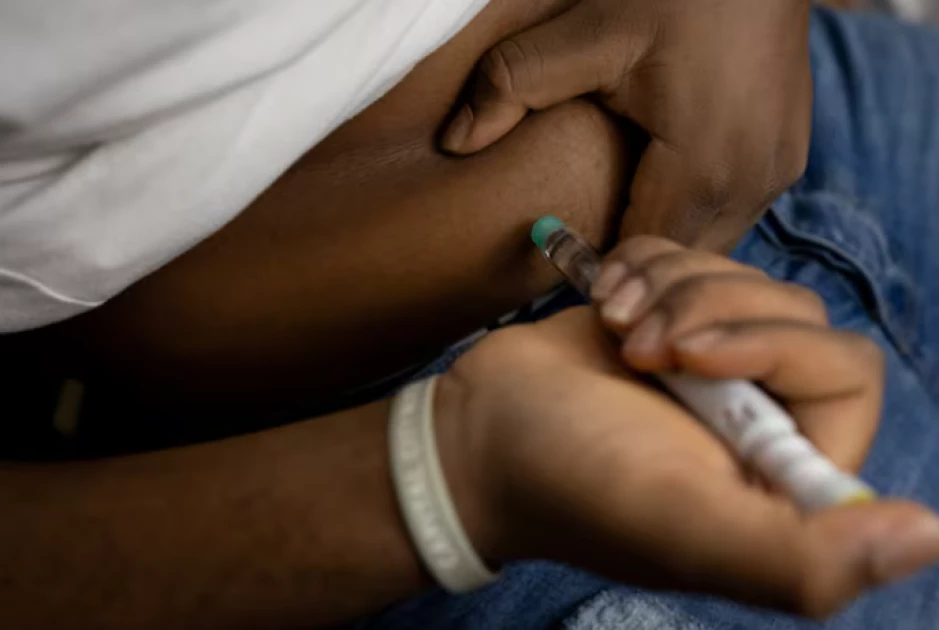
A Type 2 diabetes patient gives himself an insulin shot. REUTERS/Hannah Beier/File Photo

Audio By Vocalize
Global cases of Type 1 diabetes - an autoimmune disease common among Children
and Young People (CYP) - is expected to reach 2.2 million by 2040, this
according to a report by Access to Medicine Foundation based in Netherlands.
Speaking in a virtual address to journalists, the Foundation CEO Jayasree
Iyer said: “150,000 children are newly diagnosed with diabetes every year
across Africa, hence the need to better access which equate better care.”
The report alleges that children and young people living in low- and
middle-income countries face inequities when it comes to the diagnosis and
treatment of the disease in spite of donor support.
It adds that without sustainable access to diabetes care, CYP will be unable
to manage the chronic condition, leading to severe outcomes, hence the reason
for the recommendation that individual countries take responsibility.
Claudia Martínez, Director of Research, Access to Medicine Foundation
said: "Hundreds of thousands of children and young people in low-and
middle-income countries face significant barriers to accessing essential
insulin, supplies and care for managing Type 1 diabetes.
While the pharmaceutical industry is engaged in the effort to bridge
access gaps, as needs grow, initiatives must prioritise widespread coverage,
sustainability and affordability to save lives. Reliance on donations is a
fragile system and therefore should be withdrawn.”
In Kenya, approximately 6,500 children and young people (CYP) under the age of 20 live with Type 1 diabetes (T1D).
According to Access to Medicine Foundation, in 2024, approximately 570
CYP under the age of 20 in Kenya lost their lives due to T1D, while an
estimated 1,380 were newly diagnosed that same year.
The prevalence of T1D among CYP under the age of 20 in Kenya is 23 cases
per 100,000, lower than the average prevalence of 42.3 per 100,000 across the
113 low-and-middle- income countries (LMICs) analysed.
According to the report, CYP living with type 1 diabetes (T1D) in low-and
middle-income countries (LMICs) are currently receiving vital support through
donor initiatives that bridge gaps in access to treatment, monitoring devices,
essential supplies and diabetes education while strengthening local healthcare
systems.
The help has, however, raised a red flag with a report recommending the
responsibility back to individual governments.
The report recommendation reads in part: “Despite their meaningful
impact, the reality is that these programmes alone cannot fully support CYP who
remain in desperate need of diabetes care. While companies are collaborating
with partners to enhance initiatives and strengthen their sustainability, a
fundamental shift is required to truly scale up access and reach CYP with unmet
needs.
Companies must move beyond the donation-based models that largely define
diabetes care access efforts focused on CYP in LMICs. By taking actions to
address affordability and product availability, companies can help facilitate
the successful transition to government owned T1D care in LMICs. This way, all
CYP, regardless of where they live, can have access to lifesaving diabetes care
products.”
Out of the 113 LMICs included in the analysis, Kenya ranks 44th in the
prevalence of T1D among CYP under the age of 20. Kenya is one of the 19 LMICs
in scope that receive insulin from Lilly through the ‘Life for a Child’
initiative.
Through the Changing Diabetes in Children (CDiC) initiative, Kenya
stands out among 30 LMICs—ranking in the top three for both the number of
children reached (6,100) and the number of clinics refurbished (41) since the
initiative launched in 2009.
Kenya is also one of the two countries where the CDiC initiative was
assessed through a commissioned third-party review to measure and publicly
disclose the outcomes of its work.
This report examines 11 initiatives implemented or supported by Biocon,
Lilly, Novo Nordisk, and Sanofi, that focus on CYP living with T1D in LMICs.
Of the 11 initiatives, 2 were active in Kenya; Life for a Child–Lilly,
and Changing Diabetes in Children (CDiC)–NovoNordisk.
Join the Discussion
Share your perspective with the Citizen Digital community.
No comments yet
This discussion is waiting for your voice. Be the first to share your thoughts!