
Bamako Convention: A health crisis as Kenyans face polluted rivers, mercury-filled gold mines

Audio By Vocalize
Waterways that once sustained families, farms, and fisheries now carry a dangerous mix of industrial effluent, medical waste, and chemical runoff.
For the communities that depend on them, these rivers have become sources of daily exposure to toxic substances that threaten health, dignity, and survival. Women wash clothes in polluted water.
Children bathe and drink from contaminated streams. The hazardous waste is primarily a result of the mercury used in illegal mining in many gold mines. The elderly draw water knowing it may make them ill, but with no alternative.
This is not only an environmental failure. It is a public health emergency and a legal one.
Irene Asuwa, an environmental justice expert, has spent years documenting the links between hazardous waste, polluted water, and the disproportionate burden borne by rural communities, particularly women.
“Hazardous waste mismanagement and water contamination are two sides of the same coin. They directly threaten the health and dignity of communities, especially in rural areas,” Asuwa said.
Across Kenya, many households still rely on untreated river and surface water. When hazardous waste enters these ecosystems, whether from industry, health facilities, or informal dumping, it contaminates drinking water, crops, and livelihoods. The damage is cumulative and long-lasting.
For women, the exposure is constant as they are primarily responsible for fetching water, managing households, and farming.
“They face immediate health risks and long-term consequences because they work in polluted environments every day,” Asuwa explained.
Kenya is not without environmental laws. The Environmental Management and Coordination Act (EMCA), water-quality regulations, and public health statutes already prohibit pollution and unsafe waste disposal. On paper, protections exist.
But enforcement remains uneven, fragmented, and reactive.
Phyllis Omido, the executive director of the Center for Justice Governance and Environmental Action (CJGEA), has been instrumental in seeking justice for residents of Owino Uhuru in Changamwe, Mombasa County.
From her experience, she says “Kenyans should strive to participate in active citizenship and seek accountability from organizations and entities that have the authority to ensure the actualization of these laws.”
Kenya is also a signatory and a ratifying party to the Bamako Convention, Africa’s legally binding treaty that bans the import of hazardous waste into the continent and regulates its movement and management.
As a result, Kenya is obliged to report hazardous waste data to the Convention’s Regional Coordination and Harmonisation Mechanism (RCHM). This mechanism subjects the country to peer oversight, early-warning systems, and coordinated regional enforcement. It also gives environmental activists the legal framework to hold the country accountable.
“The laws are often vague, overlapping, or poorly enforced,” Asuwa said. “This makes it extremely difficult for marginalized communities to seek justice when hazardous waste affects their water and health.”
Implementing the Bamako Convention would not replace Kenya’s existing laws. It would strengthen them, closing gaps between waste regulation, water protection, and public health, while embedding Kenya within a regional system designed to track hazardous waste before it poisons communities.
Kristine Yakhama, an environmental advocate, explains the Convention’s importance: “The Bamako Convention is a crucial regional treaty aimed at eliminating the import and use of hazardous wastes and toxic chemicals, including mercury, in Africa.”
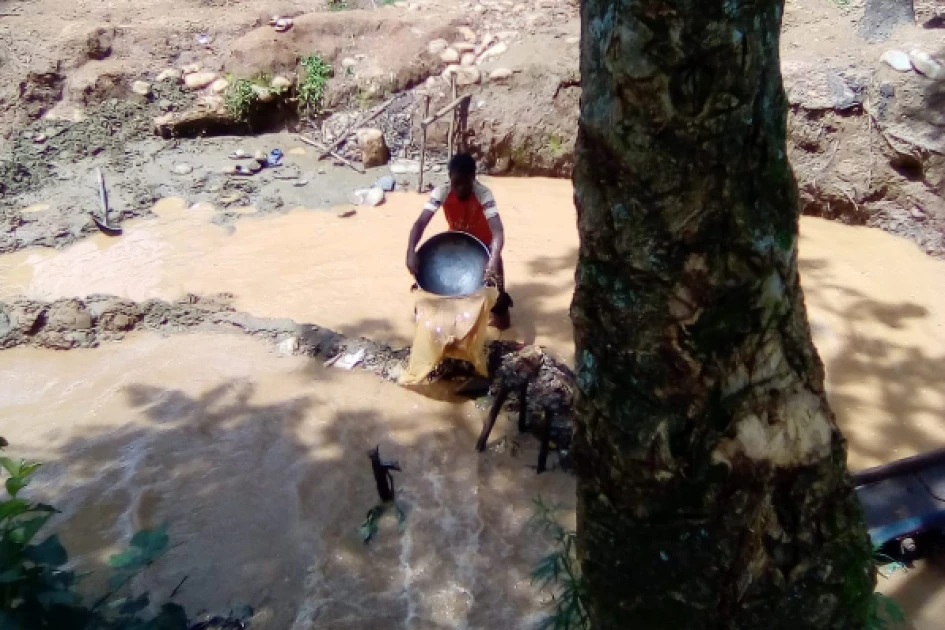
In Sing’oto, Kakamega County, the use of mercury in artisanal gold mining directly violates the Bamako Convention. Mercury, a highly toxic substance, poses significant risks to both people and the environment.
The Convention was designed to reduce the use of such dangerous chemicals, but the ongoing practice of using mercury in mining activities in Kakamega undermines this critical objective.
According to Yakhama, “The consequences of mercury exposure in these communities are severe, particularly for women and children.”
Mercury exposure leads to a variety of health problems that can have both immediate and long-term impacts. For many, the consequences are neurological, including tremors, memory loss, headaches, and mood disorders.
Children, in particular, are at risk for developmental delays, including learning disabilities and cognitive growth issues. The health risks are not limited to the brain; mercury also causes kidney damage and respiratory problems, as well as skin rashes and irritation from direct exposure to the toxic substance. For pregnant women, the danger extends to the fetus, where mercury can cause birth defects and cognitive impairments.
Despite the Bamako Convention and its objectives to eliminate hazardous substances like mercury, it remains in use in artisanal gold mining due to several persistent factors.
Yakhama explains, “Mercury is inexpensive and easy to obtain, making it a preferred choice for small-scale miners who cannot afford safer alternatives.”
Many miners in Kakamega are unaware of the health risks associated with mercury use and often lack education on the legal consequences of their actions. Moreover, the enforcement of environmental laws is weak at the local level, and the lack of affordable, safe alternatives for mercury in gold mining makes it difficult to transition to safer practices.
However, Yakhama emphasizes that the Bamako Convention provides a valuable legal framework that could help combat mercury pollution in regions like Kakamega.
“By supporting the ban on mercury and encouraging governments to enforce regulations, the Convention can strengthen local efforts to eliminate this toxic practice,” she says. It also plays a vital role in raising awareness by funding education campaigns that inform miners and communities about the dangers of mercury and the availability of safer, non-toxic alternatives for gold extraction. Through such initiatives, the Bamako Convention can empower miners to adopt safer mining methods and protect both their health and the environment.
“It is crucial to document the extent of the damage by collecting medical records and personal testimonies from affected individuals, which will serve as evidence in legal proceedings.” Local authorities, such as the National Environment Management Authority (NEMA) and the Ministry of Environment, should be informed of the mercury contamination and its impact. Furthermore, community organizations, NGOs, and human rights groups should be engaged to offer legal support to the victims, helping them seek justice and appropriate compensation.
Additionally, environmental clean-up programs should be implemented to remove toxic mercury from the affected areas and prevent further contamination.
“The fight is not just about saving the earth,” says Phyllis Omido. “It’s about saving the people who depend on it.” Her experience mirrors that of thousands of households across Kenya, where access to clean water remains inseparable from environmental governance.
The Bamako Convention was created because Africa had become a dumping ground for hazardous waste. Its protocols recognize that weak reporting, fragmented enforcement, and lack of regional coordination allow toxic materials to move unchecked — often from cities to informal settlements, from mining activities and industries to rivers.
Its implementation would see Kenya strengthening its hazardous waste tracking, improve data reporting, and align environmental enforcement with regional oversight through the RCHM. It would also send a clear signal that polluters, not communities, must bear responsibility.
For communities like Sing’oto, this is not an abstract legal debate. It is about whether rivers will remain sources of life or vectors of contamination and disease. Environmental justice is inseparable from human rights. Kenya has the laws, the institutions, and the expertise. What is missing is the implementation.
Join the Discussion
Share your perspective with the Citizen Digital community.
No comments yet
This discussion is waiting for your voice. Be the first to share your thoughts!