
An island without a drop: Lamu residents faced with chronic water shortage
In homes, the water shortage strains the most fundamental routines and relationships.

Audio By Vocalize
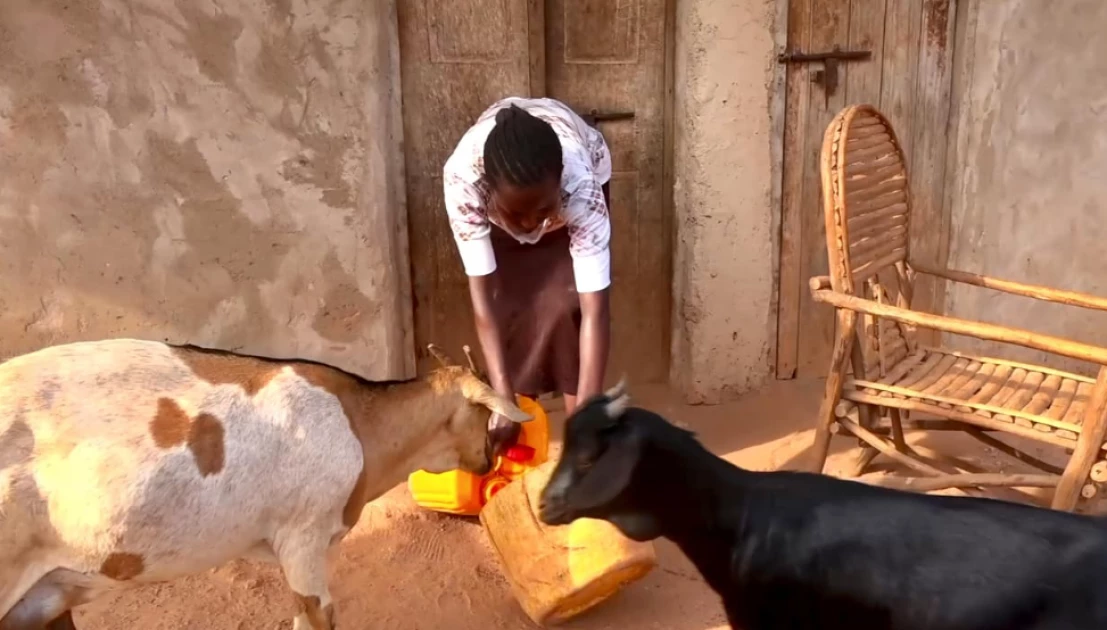
The image is a stark symbol of desperation: goats, driven by
thirst, knock over the very plastic jerrycans that hold a community’s most
precious commodity. This is the relentless reality on Manda Island, where a
chronic water crisis has left both humans and animals in a daily, exhausting
struggle for survival.
For years, residents of this scenic Lamu archipelago have
lived without a single reliable well. Their survival hinges on a precarious
aquatic lifeline: motorboats making the round trip to neighboring Amu Island to
ferry back water for sale. What should be a basic right has become a costly,
burdensome commodity.
“I have endured this challenge for so long,” says Julie
Wangeshi, a community health volunteer. “When I manage to get some water, I
have to guard it constantly. Even then, goats come knocking over the
containers, or neighbors come begging for a share.”
The crisis cripples daily life and strips away dignity. At the
Manda dispensary, the situation is dire. “If someone needs to deliver a baby or
have surgery today, where will the water come from?” Asks resident Julia
Ndichu. “You take what you can get, without asking where it was fetched from.”
In homes, the water shortage strains the most fundamental
routines and relationships. Many couples, unable to bathe with fresh water, are
forced to sleep apart. Others resort to washing in the salty Indian Ocean,
leaving their skin irritated.
“We women suffer terribly at home because of water,” explains
Tsuma Julo. “We can go a whole week bathing in saltwater. We cannot sleep
together [with our husbands]. It’s a real problem.”
Joseph Syonda, a local elder, mirrors the plight: “Look at me,
I am dirty. These clothes are dirty because there is no water to wash with.”
The sight of boats docked at the Manda jetty, waiting to make
the water run to Amu, is a daily reminder of the island’s failed
infrastructure. The cost is crippling. For a laborer earning Ksh.500 a day, Ksh.300
is immediately spent on water, leaving a mere Ksh.200 for food and other
essentials.
“The biggest wound here is water, it is our greatest problem
above all else,” says Tom Nyagilo. “If you earn Ksh.500 from a day’s work, Ksh.300
goes to water, Ksh.200 to vegetables. That’s it.”
This struggle persists despite government promises. A report
from the Office of the Auditor General reveals that Lamu County government spent
Ksh.14.9 million on a water supply project meant to pipe water from Shella to
Manda. The project remains incomplete, a ghost of a solution.
Efforts by journalists to get answers from the Lamu County
Water department have hit a wall. Repeated phone calls and formal letters have
gone unanswered, leaving the people of Manda to feel abandoned.
As the boats come and go, and the goats roam for a stray drop,
the people of Manda Island continue their weary wait—for accountability, for
completion, for the simple, transformative gift of clean, accessible water.
Join the Discussion
Share your perspective with the Citizen Digital community.
No comments yet
This discussion is waiting for your voice. Be the first to share your thoughts!